AQA · GCSE · Biology
Course version: 8461 · Version from Sept 2018
The natural resting heart rate is controlled by a group of cells located…
Full specification wording
The heart and blood vessels: The natural resting heart rate is controlled by a group of cells located in the right atrium that act as a pacemaker.
The heart contracts rhythmically without conscious control because a group of specialised cells in the wall of the right atrium generates electrical impulses.
Checked against the AQA 8461 specification (opens in a new tab) on .
- Point 7 of 11
- 3 key terms
Study notes
From the checked teaching notes for this specification point.
The idea
The heart contracts rhythmically without conscious control because a group of specialised cells in the wall of the right atrium generates electrical impulses. These cells act as a natural pacemaker, setting the resting heart rate, which is the number of beats per minute when a person is relaxed and inactive. The impulse spreads through the atria, causing them to contract, and then reaches the ventricles so that they contract slightly later, maintaining one-way flow. A concrete method is to think of the pacemaker cells as a timer: they fire at a steady rate, and the resulting wave of electrical activity coordinates atrial contraction followed by ventricular contraction. Changes in activity, adrenaline or body temperature can alter the rate, but the resting rate is set by this natural pacemaker.
What earns the marks
- States that the natural resting heart rate is controlled by a group of cells in the right atrium.
- Explains that these cells act as a pacemaker by generating electrical impulses.
- Links the pacemaker impulse to the coordinated contraction of the atria and then the ventricles.
- Defines resting heart rate as the number of beats per minute when the body is relaxed and inactive.
- Recognises that the pacemaker sets the rhythm automatically rather than requiring conscious control.
Common mistakes and how to put them right
Locating the pacemaker cells in the left atrium or in the ventricles.
Put it right: They are in the right atrium.
Describing the pacemaker as a valve or a vessel.
Put it right: It is a group of specialised cells that generate electrical impulses.
Confusing resting heart rate with heart rate during exercise.
Put it right: Resting heart rate is measured when the body is relaxed and inactive.
Exam tips
- Use the phrase 'group of cells in the right atrium' whenever asked where the natural pacemaker is, and add 'electrical impulses' to show the mechanism.
- When explaining the heartbeat, sequence the events as pacemaker impulse, atrial contraction, ventricular contraction, so the coordination is clear.
- Distinguish resting heart rate from exercise heart rate in your answer if the question uses the word 'resting'.
Try the lesson
The start of the The heart and blood vessels: The natural resting heart rate is controlled by a group of cells located in the right atrium that act as a pacemaker. lesson, made from checked teaching notes for this specification point.
Have a go first
In which chamber of the heart are the cells that control the natural resting heart rate found?
Listen
The heart contracts rhythmically without conscious control because a group of specialised cells in the wall of the right atrium generates electrical impulses. These cells act as a natural pacemaker, setting the resting heart rate, which is the number of beats per minute when a person is relaxed and inactive. The impulse spreads through the atria, causing them to contract, and then reaches the ventricles so that they contract slightly later, maintaining one-way flow. A concrete method is to think of the pacemaker cells as a timer: they fire at a steady rate, and the resulting wave of electrical activity coordinates atrial contraction followed by ventricular contraction. Changes in activity, adrenaline or body temperature can alter the rate, but the resting rate is set by this natural pacemaker. A strong answer earns marks for these points. States that the natural resting heart rate is controlled by a group of cells in the right atrium. Explains that these cells act as a pacemaker by generating electrical impulses. Links the pacemaker impulse to the coordinated contraction of the atria and then the ventricles. Defines resting heart rate as the number of beats per minute when the body is relaxed and inactive. A common slip: Locating the pacemaker cells in the left atrium or in the ventricles. Instead, they are in the right atrium. Exam tip: Use the phrase 'group of cells in the right atrium' whenever asked where the natural pacemaker is, and add 'electrical impulses' to show the mechanism.
See it
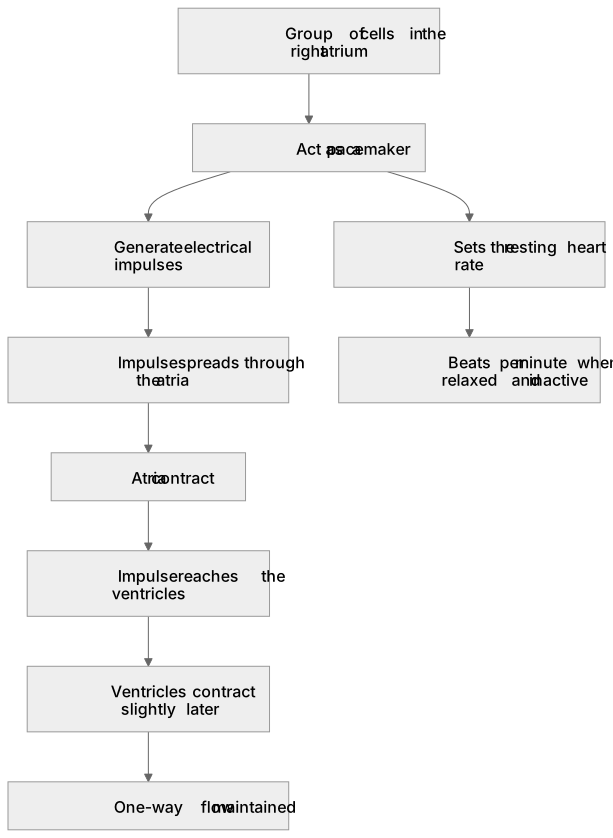
Key words
Say what each word means before you turn the card.
Control of heart rate
Try answering aloud or in your head before turning the card.
Electrical signalling in the heart
Try answering aloud or in your head before turning the card.
Coordination of contraction
Try answering aloud or in your head before turning the card.
See every definition
- Control of heart rate
- The natural resting heart rate is controlled by a group of cells located in the right atrium that act as a pacemaker.
- Electrical signalling in the heart
- A group of specialised cells in the wall of the right atrium generates electrical impulses, and the resulting wave of electrical activity coordinates contraction.
- Coordination of contraction
- The impulse spreads through the atria, causing them to contract, and then reaches the ventricles so that they contract slightly later, maintaining one-way flow.
Label the diagram
Some boxes have lost their names. Pick the right name for each number.
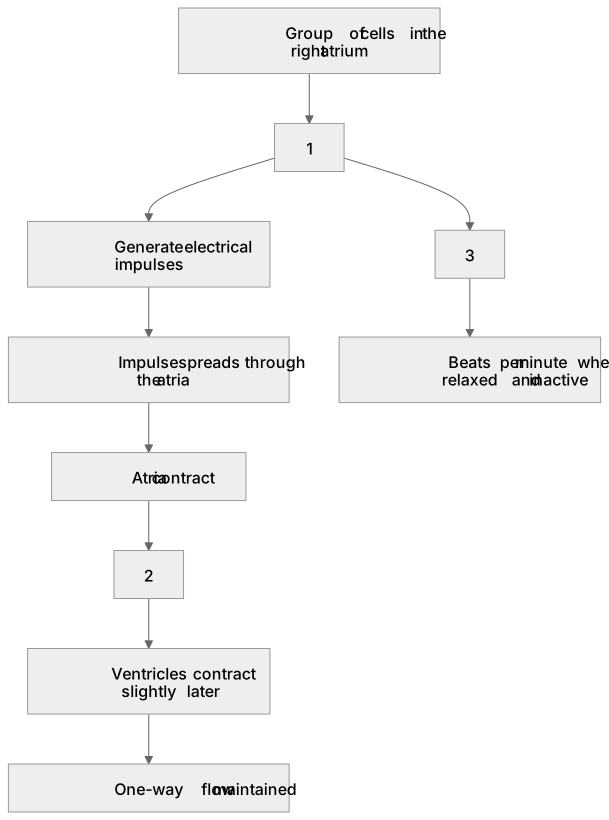
1Box 1
2Box 2
3Box 3
There is more to this lesson
The full lesson goes on to check your understanding and help you earn the marks. Create a free account to carry on, with your progress saved.
A week of Premium from your first lesson · Then the free plan continues · No card, no charge
Test your understanding of The heart and blood vessels: The natural resting heart rate is controlled by a group of cells located in the right atrium that act as a pacemaker.
Active recall beats re-reading. Take an instant quiz now to test what you’ve learned and lock it into long-term memory.
A week of Premium from your first lesson · Then the free plan continues · No card, no charge