AQA · GCSE · Biology
Course version: 8461 · Version from Sept 2018
Knowledge of the lungs is restricted to the trachea, bronchi, alveoli and…
Full specification wording
The heart and blood vessels: Knowledge of the lungs is restricted to the trachea, bronchi, alveoli and the capillary network surrounding the alveoli.
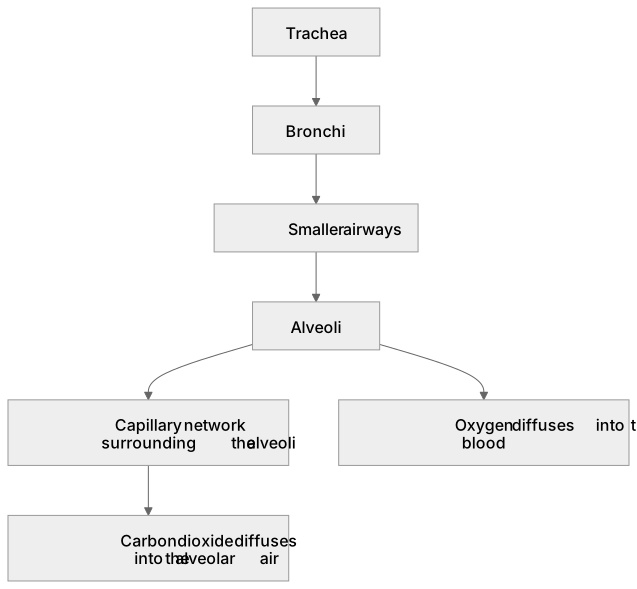
The lungs are the organs of gas exchange, and the required route is trachea → bronchi → alveoli, with a capillary network surrounding each alveolus.
Checked against the AQA 8461 specification (opens in a new tab) on .
- Point 6 of 11
- 4 key terms
Study notes
From the checked teaching notes for this specification point.
The idea
The lungs are the organs of gas exchange, and the required route is trachea → bronchi → alveoli, with a capillary network surrounding each alveolus. The trachea is the windpipe that carries air from the mouth and nose towards the lungs; it divides into two bronchi, one entering each lung. The bronchi branch into smaller airways that end at alveoli, tiny air sacs where gas exchange occurs. Each alveolus is surrounded by a dense capillary network, so oxygen diffuses from the alveolar air into the blood, and carbon dioxide diffuses from the blood into the alveolar air. A useful method is to trace one oxygen molecule from the trachea to a red blood cell, naming each structure in order and stating that the capillary network brings blood close to the alveolar surface.
What earns the marks
- Names the trachea as the airway that carries air from the mouth and nose towards the lungs.
- Names the bronchi as the two tubes that branch from the trachea and enter the lungs.
- Names the alveoli as the air sacs where gas exchange takes place.
- Names the capillary network surrounding the alveoli as the blood supply that receives oxygen and releases carbon dioxide.
- Describes the direction of diffusion of oxygen and carbon dioxide across the alveolar surface.
- Sequences the structures correctly as trachea, bronchi, alveoli and surrounding capillaries.
Common mistakes and how to put them right
Writing that the bronchi lead directly to the capillary network.
Put it right: The bronchi branch into smaller airways that end at alveoli, and the capillaries surround the alveoli.
Confusing the trachea with the bronchi.
Put it right: The trachea is a single tube before it divides into two bronchi.
Stating that gas exchange happens in the bronchi.
Put it right: Gas exchange occurs across the alveolar surface into the surrounding capillary network.
Exam tips
- Practise drawing a simple lung diagram with the trachea, two bronchi, a cluster of alveoli and surrounding capillaries, then label the direction of oxygen and carbon dioxide movement.
- Use the phrase 'trachea, bronchi, alveoli, capillary network' as a checklist when answering questions about the route of air or the site of gas exchange.
- If asked to explain gas exchange, link each structural feature to a function, such as a thin alveolar surface for a short diffusion distance.
Try the lesson
The start of the The heart and blood vessels: Knowledge of the lungs is restricted to the trachea, bronchi, alveoli and the capillary network surrounding the alveoli. lesson, made from checked teaching notes for this specification point.
Have a go first
Which part of the lungs is the primary site of gas exchange?
Listen
The lungs are the organs of gas exchange, and the required route is trachea → bronchi → alveoli, with a capillary network surrounding each alveolus. The trachea is the windpipe that carries air from the mouth and nose towards the lungs; it divides into two bronchi, one entering each lung. The bronchi branch into smaller airways that end at alveoli, tiny air sacs where gas exchange occurs. Each alveolus is surrounded by a dense capillary network, so oxygen diffuses from the alveolar air into the blood, and carbon dioxide diffuses from the blood into the alveolar air. A useful method is to trace one oxygen molecule from the trachea to a red blood cell, naming each structure in order and stating that the capillary network brings blood close to the alveolar surface. A strong answer earns marks for these points. Names the trachea as the airway that carries air from the mouth and nose towards the lungs. Names the bronchi as the two tubes that branch from the trachea and enter the lungs. Names the alveoli as the air sacs where gas exchange takes place. Names the capillary network surrounding the alveoli as the blood supply that receives oxygen and releases carbon dioxide. A common slip: Writing that the bronchi lead directly to the capillary network. Instead, the bronchi branch into smaller airways that end at alveoli, and the capillaries surround the alveoli. Exam tip: Practise drawing a simple lung diagram with the trachea, two bronchi, a cluster of alveoli and surrounding capillaries, then label the direction of oxygen and carbon dioxide movement.
See it
Key words
Say what each word means before you turn the card.
Trachea
Try answering aloud or in your head before turning the card.
Bronchi
Try answering aloud or in your head before turning the card.
Alveoli
Try answering aloud or in your head before turning the card.
Capillary network
Try answering aloud or in your head before turning the card.
See every definition
- Trachea
- The windpipe that carries air from the mouth and nose towards the lungs, and which divides into two bronchi.
- Bronchi
- The two tubes that branch from the trachea and enter the lungs, then branch into smaller airways that end at alveoli.
- Alveoli
- Tiny air sacs where gas exchange occurs, each surrounded by a dense capillary network.
- Capillary network
- The blood supply surrounding the alveoli that receives oxygen and releases carbon dioxide, bringing blood close to the alveolar surface.
Label the diagram
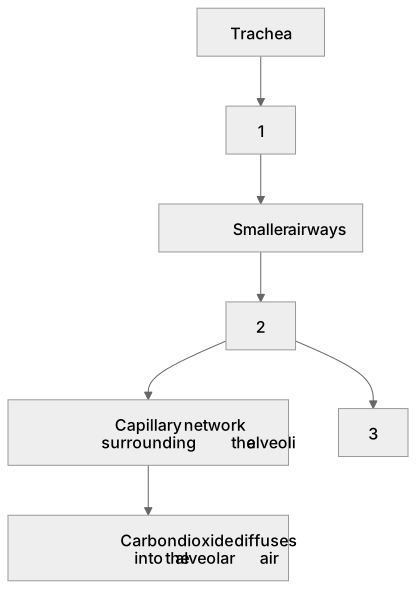
Some boxes have lost their names. Pick the right name for each number.
1Box 1
2Box 2
3Box 3
There is more to this lesson
The full lesson goes on to check your understanding and help you earn the marks. Create a free account to carry on, with your progress saved.
A week of Premium from your first lesson · Then the free plan continues · No card, no charge
Test your understanding of The heart and blood vessels: Knowledge of the lungs is restricted to the trachea, bronchi, alveoli and the capillary network surrounding the alveoli.
Active recall beats re-reading. Take an instant quiz now to test what you’ve learned and lock it into long-term memory.
A week of Premium from your first lesson · Then the free plan continues · No card, no charge