AQA · GCSE · Biology
Course version: 8461 · Version from Sept 2018
It is alkaline to neutralise hydrochloric acid from the stomach.
Full specification wording
The human digestive system: It is alkaline to neutralise hydrochloric acid from the stomach.
Bile is alkaline, so when it enters the small intestine it neutralises the acidic chyme arriving from the stomach.
Checked against the AQA 8461 specification (opens in a new tab) on .
- Point 15 of 25
- 4 key terms
Study notes
From the checked teaching notes for this specification point.
The idea
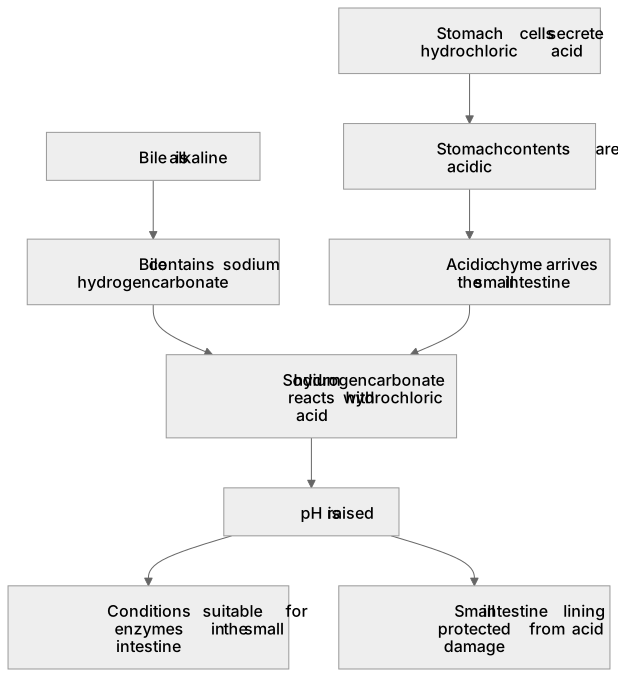
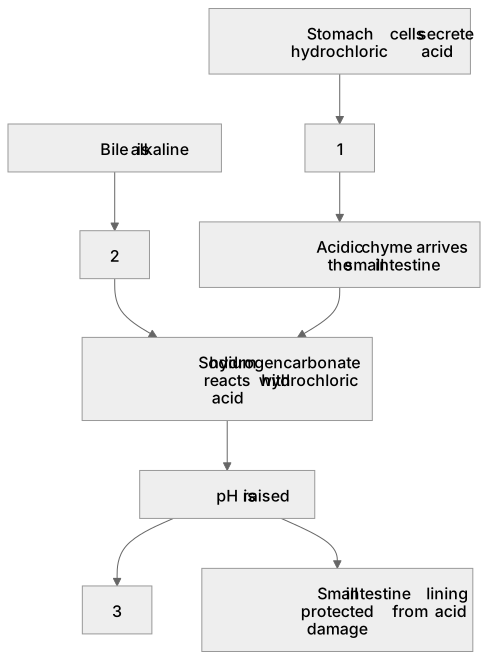
Bile is alkaline, so when it enters the small intestine it neutralises the acidic chyme arriving from the stomach. Stomach cells secrete hydrochloric acid, producing a low pH that helps activate stomach enzymes and kill microbes. That acidity would reduce the activity of pancreatic and intestinal enzymes, which work best at around neutral to slightly alkaline pH. Bile contains sodium hydrogencarbonate, which reacts with hydrochloric acid to raise the pH. This neutralisation protects the lining of the small intestine and provides suitable conditions for enzymes such as lipase, amylase and protease. The alkaline conditions are therefore not a digestive action by bile itself but a necessary preparation for efficient chemical digestion in the duodenum.
What earns the marks
- Bile is alkaline, so it raises the pH of the material entering the small intestine.
- Hydrochloric acid from the stomach makes the stomach contents acidic.
- Neutralisation of the acid creates conditions suitable for enzymes in the small intestine.
- Bile contains sodium hydrogencarbonate, which neutralises the acid.
- The alkaline conditions help protect the small intestine lining from acid damage.
Common mistakes and how to put them right
Saying bile is acidic because it comes from the digestive system.
Put it right by stating that bile is alkaline and neutralises stomach acid.
Saying bile digests food chemically.
Put it right by stating that bile neutralises acid and emulsifies fat, while enzymes carry out chemical digestion.
Saying stomach acid is neutralised in the stomach.
Put it right by stating that neutralisation occurs when bile enters the small intestine.
Exam tips
- Name hydrochloric acid as the acid from the stomach and state that bile neutralises it.
- Link alkaline conditions to the optimum pH of small intestine enzymes.
- Use the term neutralise rather than vague words such as cancel out.
Try the lesson
The start of the The human digestive system: It is alkaline to neutralise hydrochloric acid from the stomach. lesson, made from checked teaching notes for this specification point.
Have a go first
Bile is alkaline. Which acid from the stomach does bile neutralise?
Listen
Bile is alkaline, so when it enters the small intestine it neutralises the acidic chyme arriving from the stomach. Stomach cells secrete hydrochloric acid, producing a low pH that helps activate stomach enzymes and kill microbes. That acidity would reduce the activity of pancreatic and intestinal enzymes, which work best at around neutral to slightly alkaline pH. Bile contains sodium hydrogencarbonate, which reacts with hydrochloric acid to raise the pH. This neutralisation protects the lining of the small intestine and provides suitable conditions for enzymes such as lipase, amylase and protease. The alkaline conditions are therefore not a digestive action by bile itself but a necessary preparation for efficient chemical digestion in the duodenum. A strong answer earns marks for these points. Bile is alkaline, so it raises the pH of the material entering the small intestine. Hydrochloric acid from the stomach makes the stomach contents acidic. Neutralisation of the acid creates conditions suitable for enzymes in the small intestine. Bile contains sodium hydrogencarbonate, which neutralises the acid. A common slip: Saying bile is acidic because it comes from the digestive system. Instead, stating that bile is alkaline and neutralises stomach acid. Exam tip: Name hydrochloric acid as the acid from the stomach and state that bile neutralises it.
See it
Key words
Say what each word means before you turn the card.
pH and enzyme activity
Try answering aloud or in your head before turning the card.
Chemical digestion
Try answering aloud or in your head before turning the card.
Protection of intestinal tissue
Try answering aloud or in your head before turning the card.
Homeostasis within the digestive system
Try answering aloud or in your head before turning the card.
See every definition
- pH and enzyme activity
- Pancreatic and intestinal enzymes work best at around neutral to slightly alkaline pH, and acidity would reduce their activity.
- Chemical digestion
- Efficient chemical digestion in the duodenum needs alkaline conditions as a necessary preparation, not a digestive action by bile itself.
- Protection of intestinal tissue
- Neutralisation protects the lining of the small intestine from acid damage and provides suitable conditions for enzymes.
- Homeostasis within the digestive system
- Bile is alkaline, so when it enters the small intestine it neutralises the acidic chyme arriving from the stomach.
Label the diagram
Some boxes have lost their names. Pick the right name for each number.
1Box 1
2Box 2
3Box 3
There is more to this lesson
The full lesson goes on to check your understanding and help you earn the marks. Create a free account to carry on, with your progress saved.
A week of Premium from your first lesson · Then the free plan continues · No card, no charge
Test your understanding of The human digestive system: It is alkaline to neutralise hydrochloric acid from the stomach.
Active recall beats re-reading. Take an instant quiz now to test what you’ve learned and lock it into long-term memory.
A week of Premium from your first lesson · Then the free plan continues · No card, no charge