AQA · GCSE · Biology
Course version: 8461 · Version from Sept 2018
Ethene is used in the food industry to control ripening of fruit during…
Full specification wording
Use of plant hormones (HT only): Ethene is used in the food industry to control ripening of fruit during storage and transport.
Ethene is a gaseous plant hormone that promotes fruit ripening.
Checked against the AQA 8461 specification (opens in a new tab) on .
- Point 4 of 4
- 3 key terms
Study notes
From the checked teaching notes for this specification point.
The idea
Ethene is a gaseous plant hormone that promotes fruit ripening. In the food industry, it is applied to unripe fruit during storage and transport so that ripening occurs at a controlled time, often just before sale. For example, bananas are harvested unripe, transported in controlled conditions, then exposed to ethene to ripen uniformly. They should also recognise that ethene is a plant hormone, not a nutrient or pesticide, and that its use allows fruit to be stored and transported without over-ripening. The skill involves explaining how ethene is used and why this benefits the food industry, using correct terminology such as hormone, ripening, storage and transport.
What earns the marks
- Ethene is a plant hormone that promotes the ripening of fruit.
- Fruit is often harvested unripe and exposed to ethene when ripening is required, for example before sale.
- Ethene is applied as a gas in controlled conditions during storage or transport.
Common mistakes and how to put them right
Confusing ethene with ethylene glycol or other chemicals.
Put it right: Ethene is the correct name for the plant hormone.
Thinking ethene is used to prevent ripening.
Put it right: Ethene promotes or controls ripening, not prevents it.
Believing ethene is a nutrient for fruit.
Put it right: It is a hormone that regulates ripening.
Exam tips
- Link ethene to its role as a plant hormone and its effect on ripening.
- Use examples such as bananas to explain how ethene is used in storage and transport.
- Explain the benefit to the food industry, such as reducing waste or ensuring fruit ripens at the right time.
Try the lesson
The start of the Use of plant hormones (HT only): Ethene is used in the food industry to control ripening of fruit during storage and transport. lesson, made from checked teaching notes for this specification point.
Have a go first
A supermarket chain wants to delay the ripening of bananas while they are being transported by ship. Which plant hormone is used in the food industry to control the ripening of fruit during storage and transport?
Listen
Ethene is a gaseous plant hormone that promotes fruit ripening. In the food industry, it is applied to unripe fruit during storage and transport so that ripening occurs at a controlled time, often just before sale. For example, bananas are harvested unripe, transported in controlled conditions, then exposed to ethene to ripen uniformly. They should also recognise that ethene is a plant hormone, not a nutrient or pesticide, and that its use allows fruit to be stored and transported without over-ripening. The skill involves explaining how ethene is used and why this benefits the food industry, using correct terminology such as hormone, ripening, storage and transport. A strong answer earns marks for these points. Ethene is a plant hormone that promotes the ripening of fruit. Fruit is often harvested unripe and exposed to ethene when ripening is required, for example before sale. Ethene is applied as a gas in controlled conditions during storage or transport. A common slip: Confusing ethene with ethylene glycol or other chemicals. Instead, ethene is the correct name for the plant hormone. Exam tip: Link ethene to its role as a plant hormone and its effect on ripening.
See it
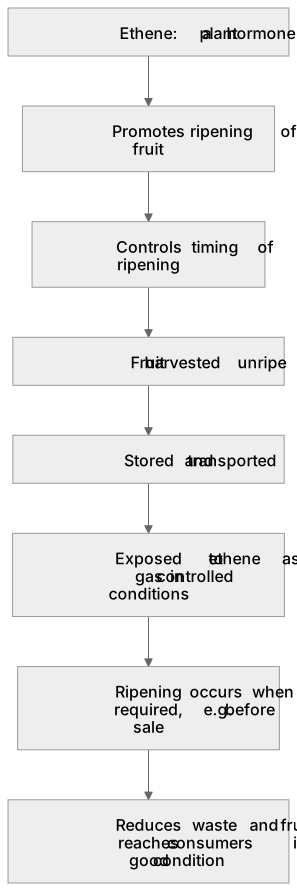
Put it in order
Put these steps in the order they happen.
- 1. Stored and transported
- 2. Reduces waste and fruit reaches consumers in good condition
- 3. Exposed to ethene as a gas in controlled conditions
- 4. Ethene: a plant hormone
- 5. Promotes ripening of fruit
- 6. Ripening occurs when required, e.g. before sale
- 7. Controls timing of ripening
- 8. Fruit harvested unripe
Key words
Say what each word means before you turn the card.
Control of ripening
Try answering aloud or in your head before turning the card.
Food industry applications
Try answering aloud or in your head before turning the card.
Storage and transport
Try answering aloud or in your head before turning the card.
See every definition
- Control of ripening
- Ethene controls the rate and timing of ripening, so fruit can be stored and transported before it ripens.
- Food industry applications
- In the food industry, ethene is applied to unripe fruit during storage and transport so that ripening occurs at a controlled time, often just before sale.
- Storage and transport
- Fruit is often harvested unripe and exposed to ethene when ripening is required, allowing fruit to be stored and transported without over-ripening.
Label the diagram
Some boxes have lost their names. Pick the right name for each number.
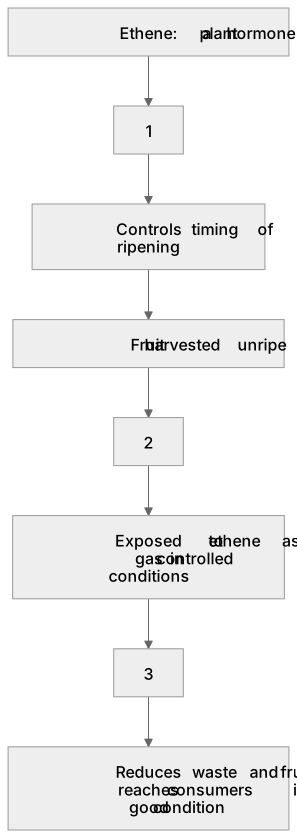
1Box 1
2Box 2
3Box 3
There is more to this lesson
The full lesson goes on to check your understanding and help you earn the marks. Create a free account to carry on, with your progress saved.
A week of Premium from your first lesson · Then the free plan continues · No card, no charge
Test your understanding of Use of plant hormones (HT only): Ethene is used in the food industry to control ripening of fruit during storage and transport.
Active recall beats re-reading. Take an instant quiz now to test what you’ve learned and lock it into long-term memory.
A week of Premium from your first lesson · Then the free plan continues · No card, no charge