AQA · GCSE · Biology
Course version: 8461 · Version from Sept 2018
Some examples include: • for diagnosis such as in pregnancy tests • in…
Full specification wording
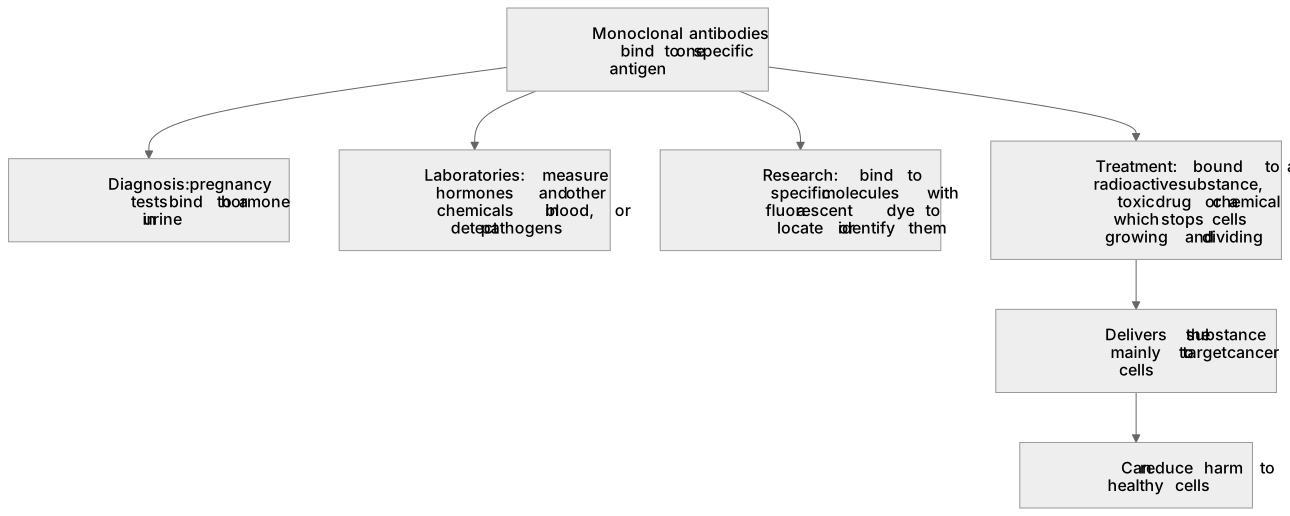
Uses of monoclonal antibodies: Some examples include: • for diagnosis such as in pregnancy tests • in laboratories to measure the levels of hormones and other chemicals in blood, or to detect pathogens • in research to locate or identify specific molecules in a cell or tissue by binding to them with a fluorescent dye • to treat some diseases: for cancer the monoclonal antibody can be bound to a radioactive substance, a toxic drug or a chemical which stops cells growing and dividing.
Monoclonal antibodies are identical antibodies produced from a single clone of cells.
Checked against the AQA 8461 specification (opens in a new tab) on .
- Point 2 of 5
- 4 key terms
Study notes
From the checked teaching notes for this specification point.
The idea
Monoclonal antibodies are identical antibodies produced from a single clone of cells. They bind to one specific antigen, which makes them useful in many ways. In diagnosis, pregnancy tests use monoclonal antibodies that bind to a hormone in urine, producing a visible signal. In laboratories, they measure levels of hormones and other chemicals in blood, or detect pathogens by binding to antigens on microorganisms. In research, they locate or identify specific molecules in a cell or tissue by binding to them with a fluorescent dye, so the target can be seen under a microscope. In treatment, monoclonal antibodies can be bound to a radioactive substance, a toxic drug or a chemical that stops cells growing and dividing; this delivers the agent to cancer cells carrying the target antigen, reducing damage to normal cells.
What earns the marks
- Monoclonal antibodies bind to one specific antigen, which allows them to target a particular molecule, cell or pathogen.
- In pregnancy tests, monoclonal antibodies bind to a hormone in urine and produce a visible result.
- In laboratories, monoclonal antibodies are used to measure levels of hormones and other chemicals in blood, or to detect pathogens.
- In research, monoclonal antibodies bind to specific molecules in a cell or tissue and are attached to a fluorescent dye so the molecules can be located or identified.
- In cancer treatment, monoclonal antibodies can be bound to a radioactive substance, a toxic drug or a chemical that stops cells growing and dividing.
- The specificity of monoclonal antibodies means the attached substance is delivered mainly to the target cells, which can reduce harm to healthy cells.
Common mistakes and how to put them right
Thinking monoclonal antibodies bind to many different antigens.
Put it right: Each monoclonal antibody binds to one specific antigen.
Confusing diagnosis with treatment.
Put it right: Pregnancy testing is a diagnostic use, while binding to radioactive or toxic substances is a therapeutic use.
Believing that the fluorescent dye itself kills cells.
Put it right: The dye allows molecules to be located or identified, whereas toxic drugs or growth-stopping chemicals are used to treat disease.
Exam tips
- When giving uses, name the purpose and then state what the monoclonal antibody binds to or carries, for example a fluorescent dye for locating molecules.
- For treatment questions, mention that the monoclonal antibody delivers the radioactive substance, toxic drug or growth-stopping chemical to the target cells.
- Avoid vague answers such as 'they are used in medicine'; specify diagnosis, laboratory measurement, research or treatment.
Try the lesson
The start of the Uses of monoclonal antibodies: Some examples include: • for diagnosis such as in pregnancy tests • in laboratories to measure the levels of hormones and other chemicals in blood, or to detect pathogens • in research to locate or identify specific molecules in a cell or tissue by binding to them with a fluorescent dye • to treat some diseases: for cancer the monoclonal antibody can be bound to a radioactive substance, a toxic drug or a chemical which stops cells growing and dividing. lesson, made from checked teaching notes for this specification point.
Have a go first
Which of the following describes how monoclonal antibodies are used in scientific research?
Listen
Monoclonal antibodies are identical antibodies produced from a single clone of cells. They bind to one specific antigen, which makes them useful in many ways. In diagnosis, pregnancy tests use monoclonal antibodies that bind to a hormone in urine, producing a visible signal. In laboratories, they measure levels of hormones and other chemicals in blood, or detect pathogens by binding to antigens on microorganisms. In research, they locate or identify specific molecules in a cell or tissue by binding to them with a fluorescent dye, so the target can be seen under a microscope. In treatment, monoclonal antibodies can be bound to a radioactive substance, a toxic drug or a chemical that stops cells growing and dividing; this delivers the agent to cancer cells carrying the target antigen, reducing damage to normal cells. A strong answer earns marks for these points. Monoclonal antibodies bind to one specific antigen, which allows them to target a particular molecule, cell or pathogen. In pregnancy tests, monoclonal antibodies bind to a hormone in urine and produce a visible result. In laboratories, monoclonal antibodies are used to measure levels of hormones and other chemicals in blood, or to detect pathogens. In research, monoclonal antibodies bind to specific molecules in a cell or tissue and are attached to a fluorescent dye so the molecules can be located or identified. A common slip: Thinking monoclonal antibodies bind to many different antigens: the error is ignoring specificity. Instead, each monoclonal antibody binds to one specific antigen. Exam tip: When giving uses, name the purpose and then state what the monoclonal antibody binds to or carries, for example a fluorescent dye for locating molecules.
See it
Key words
Say what each word means before you turn the card.
Medical diagnosis and laboratory testing
Try answering aloud or in your head before turning the card.
Research tools and fluorescent labelling
Try answering aloud or in your head before turning the card.
Targeted treatment of disease
Try answering aloud or in your head before turning the card.
Antigen-antibody specificity
Try answering aloud or in your head before turning the card.
See every definition
- Medical diagnosis and laboratory testing
- Monoclonal antibodies are used in pregnancy tests and in laboratories to measure levels of hormones and other chemicals in blood, or to detect pathogens.
- Research tools and fluorescent labelling
- In research, monoclonal antibodies bind to specific molecules in a cell or tissue with a fluorescent dye so the molecules can be located or identified.
- Targeted treatment of disease
- For cancer, the monoclonal antibody can be bound to a radioactive substance, a toxic drug or a chemical which stops cells growing and dividing.
- Antigen-antibody specificity
- Monoclonal antibodies bind to one specific antigen, which allows them to target a particular molecule, cell or pathogen.
Label the diagram
Some boxes have lost their names. Pick the right name for each number.
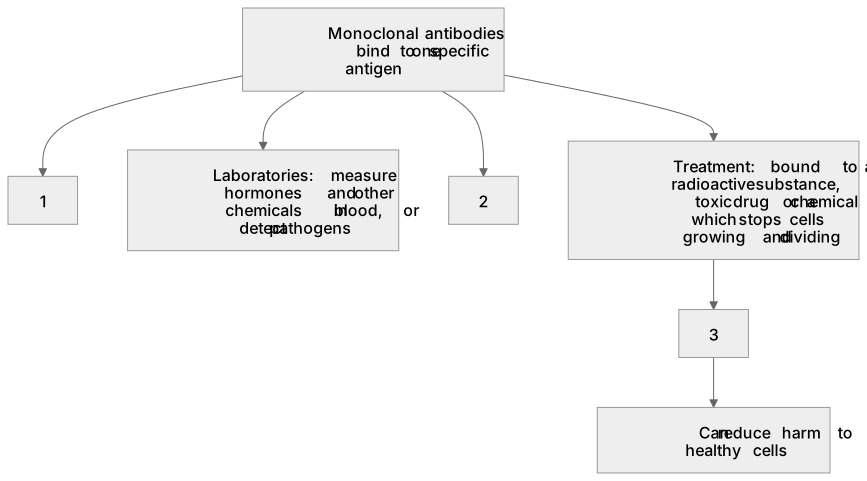
1Box 1
2Box 2
3Box 3
There is more to this lesson
The full lesson goes on to check your understanding and help you earn the marks. Create a free account to carry on, with your progress saved.
A week of Premium from your first lesson · Then the free plan continues · No card, no charge
Test your understanding of Uses of monoclonal antibodies: Some examples include: • for diagnosis such as in pregnancy tests • in laboratories to measure the levels of hormones and other chemicals in blood, or to detect pathogens • in research to locate or identify specific molecules in a cell or tissue by binding to them with a fluorescent dye • to treat some diseases: for cancer the monoclonal antibody can be bound to a radioactive substance, a toxic drug or a chemical which stops cells growing and dividing.
Active recall beats re-reading. Take an instant quiz now to test what you’ve learned and lock it into long-term memory.
A week of Premium from your first lesson · Then the free plan continues · No card, no charge