OCR · A-Level · Biology
Course version: H420 · Version from Sept 2025
(f) the structure, different roles and modes of action of B and T…
Full specification wording
Communicable diseases, disease prevention and the immune system: (f) the structure, different roles and modes of action of B and T lymphocytes in the specific immune response
Specific immunity depends on lymphocytes, each with a surface receptor of one shape.
Checked against the OCR H420 specification (opens in a new tab) on .
- Point 6 of 14
- 3 key terms
Study notes
From the checked teaching notes for this specification point.
The idea
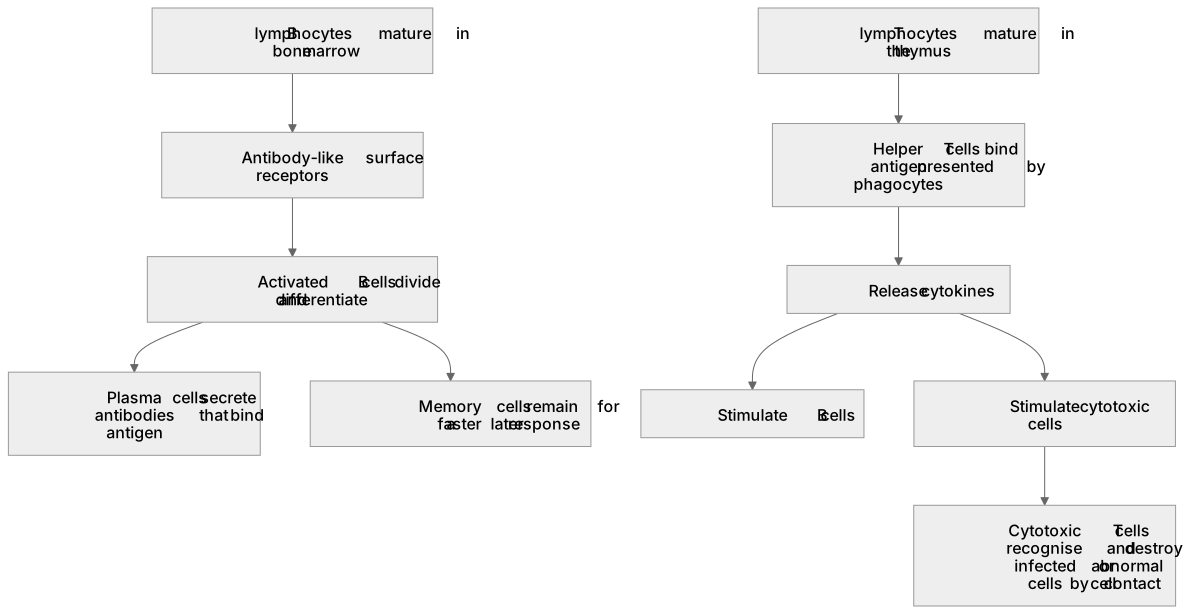
Specific immunity depends on lymphocytes, each with a surface receptor of one shape. B lymphocytes mature in bone marrow, carry antibody-like receptors and, once activated, divide and differentiate into plasma cells that secrete antibodies and memory cells that persist. T lymphocytes mature in the thymus. Helper T cells carry receptors that bind antigen presented by phagocytes and then release cytokines that stimulate B cells and cytotoxic T cells. Cytotoxic T cells recognise infected or abnormal cells and destroy them. So B cells act mainly through secreted antibody, while T cells act mainly through cell contact and signalling. A question may ask you to match a cell to its structure, its role or its mode of action, or to spot a mismatched pairing.
What earns the marks
- B lymphocytes mature in bone marrow and have antibody-like surface receptors; activated B cells divide and differentiate into plasma cells and memory cells.
- Plasma cells secrete antibodies that bind antigen, whereas memory cells remain to give a faster later response.
- T lymphocytes mature in the thymus; helper T cells bind antigen presented by phagocytes and release cytokines.
- Cytokines from helper T cells stimulate B cells and cytotoxic T cells.
- Cytotoxic T cells recognise and destroy infected or abnormal cells by cell contact, not by secreting antibody.
Common mistakes and how to put them right
Saying B cells destroy infected cells directly.
Put it right: Is that plasma cells secrete antibodies while cytotoxic T cells destroy infected cells.
Confusing where lymphocytes mature.
Put it right: Is that B cells mature in bone marrow and T cells in the thymus.
Claiming T cells secrete antibodies.
Put it right: Is that antibody secretion is a function of plasma cells derived from B cells.
Exam tips
- Read the stem to see whether it asks about structure, role or mode of action, then check the option against that specific demand.
- Eliminate options that swap B and T cell functions or their maturation sites.
- Check that any option naming cytokines links them to helper T cell signalling rather than to antibody production.
Try the lesson
The start of the Communicable diseases, disease prevention and the immune system: (f) the structure, different roles and modes of action of B and T lymphocytes in the specific immune response lesson, made from checked teaching notes for this specification point.
Have a go first
Which cell surface molecule allows a helper T lymphocyte to recognise and bind to an antigen that has been presented on the surface of an antigen-presenting cell?
Listen
Specific immunity depends on lymphocytes, each with a surface receptor of one shape. B lymphocytes mature in bone marrow, carry antibody-like receptors and, once activated, divide and differentiate into plasma cells that secrete antibodies and memory cells that persist. T lymphocytes mature in the thymus. Helper T cells carry receptors that bind antigen presented by phagocytes and then release cytokines that stimulate B cells and cytotoxic T cells. Cytotoxic T cells recognise infected or abnormal cells and destroy them. So B cells act mainly through secreted antibody, while T cells act mainly through cell contact and signalling. A question may ask you to match a cell to its structure, its role or its mode of action, or to spot a mismatched pairing. A strong answer earns marks for these points. B lymphocytes mature in bone marrow and have antibody-like surface receptors; activated B cells divide and differentiate into plasma cells and memory cells. Plasma cells secrete antibodies that bind antigen, whereas memory cells remain to give a faster later response. T lymphocytes mature in the thymus; helper T cells bind antigen presented by phagocytes and release cytokines. Cytokines from helper T cells stimulate B cells and cytotoxic T cells. A common slip: Saying B cells destroy infected cells directly. Instead, is that plasma cells secrete antibodies while cytotoxic T cells destroy infected cells. Exam tip: Read the stem to see whether it asks about structure, role or mode of action, then check the option against that specific demand.
See it
Key words
Say what each word means before you turn the card.
B lymphocyte structure and maturation
Try answering aloud or in your head before turning the card.
T lymphocyte structure and maturation
Try answering aloud or in your head before turning the card.
Roles of plasma, memory, helper and cytotoxic cells
Try answering aloud or in your head before turning the card.
See every definition
- B lymphocyte structure and maturation
- B lymphocytes mature in bone marrow and carry antibody-like surface receptors, each with a receptor of one shape.
- T lymphocyte structure and maturation
- T lymphocytes mature in the thymus, and helper T cells carry receptors that bind antigen presented by phagocytes.
- Roles of plasma, memory, helper and cytotoxic cells
- Activated B cells divide and differentiate into plasma cells that secrete antibodies and memory cells that persist, while helper T cells release cytokines and cytotoxic T cells destroy infected or abnormal cells.
Label the diagram
Some boxes have lost their names. Pick the right name for each number.
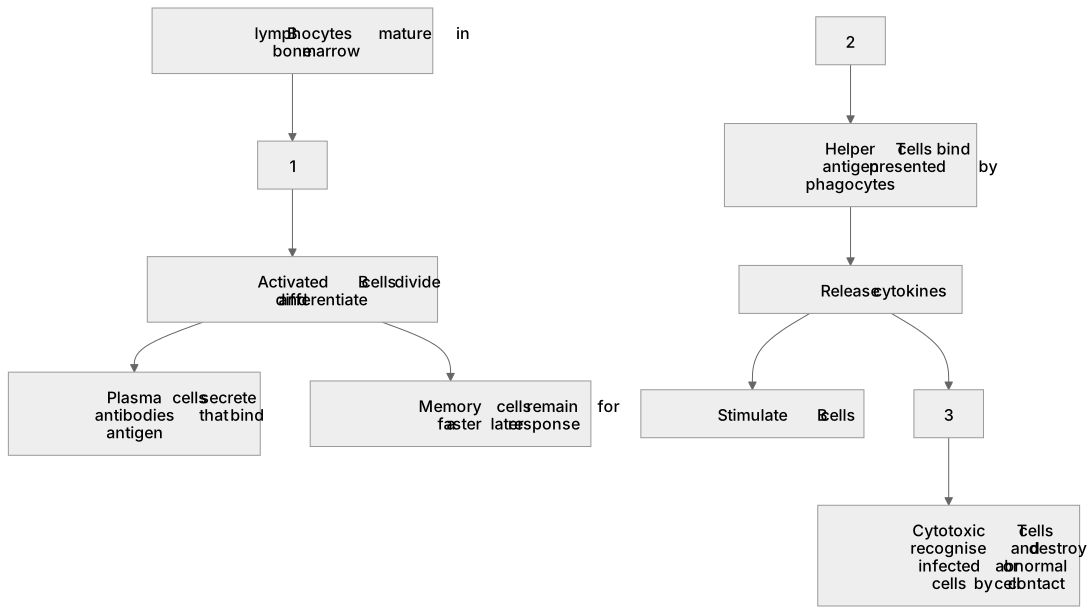
1Box 1
2Box 2
3Box 3
There is more to this lesson
The full lesson goes on to check your understanding and help you earn the marks. Create a free account to carry on, with your progress saved.
A week of Premium from your first lesson · Then the free plan continues · No card, no charge
Test your understanding of Communicable diseases, disease prevention and the immune system: (f) the structure, different roles and modes of action of B and T lymphocytes in the specific immune response
Active recall beats re-reading. Take an instant quiz now to test what you’ve learned and lock it into long-term memory.
A week of Premium from your first lesson · Then the free plan continues · No card, no charge