OCR · A-Level · Biology
Course version: H420 · Version from Sept 2025
(b) the structure and functions of the adrenal glands
Full specification wording
Hormonal communication: (b) the structure and functions of the adrenal glands
Each adrenal gland sits above a kidney and has two regions with different embryological origins and roles.
Checked against the OCR H420 specification (opens in a new tab) on .
- Point 2 of 6
- 4 key terms
Study notes
From the checked teaching notes for this specification point.
The idea
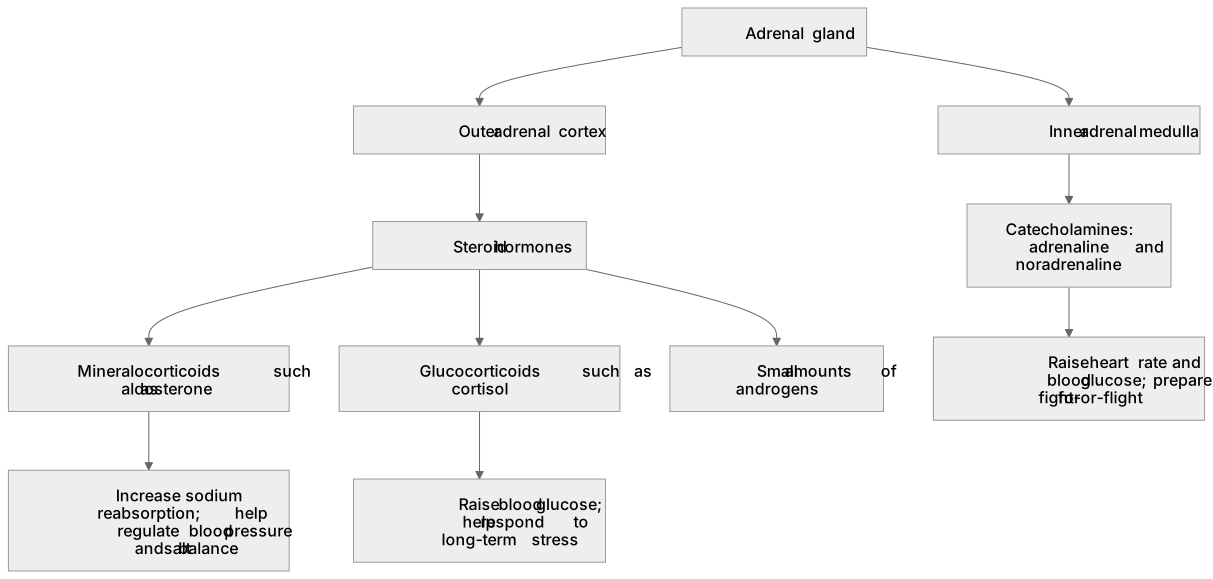
Each adrenal gland sits above a kidney and has two regions with different embryological origins and roles. The outer adrenal cortex is divided into zones that secrete steroid hormones: mineralocorticoids such as aldosterone, which increase sodium reabsorption and so help regulate blood pressure and salt balance; glucocorticoids such as cortisol, which raise blood glucose and help the body respond to long-term stress; and small amounts of androgens. The inner adrenal medulla consists of modified sympathetic nervous tissue and secretes adrenaline and noradrenaline, which raise heart rate, increase blood glucose and prepare the body for fight-or-flight responses. A reliable method is to link each region to its hormone class and its main effect: cortex gives steroid hormones with slower, longer actions; medulla gives catecholamines with rapid actions.
What earns the marks
- The adrenal gland has an outer cortex and an inner medulla, each with distinct hormones and functions.
- The adrenal cortex secretes steroid hormones, including mineralocorticoids such as aldosterone, which increase sodium reabsorption and help regulate blood pressure.
- Glucocorticoids such as cortisol raise blood glucose and support the response to long-term stress.
- The adrenal medulla secretes adrenaline and noradrenaline, which increase heart rate and blood glucose as part of the fight-or-flight response.
- Correctly matching each region to its hormone class and effect, for example cortex to steroids and medulla to catecholamines.
Common mistakes and how to put them right
Reversing the regions: correct this by stating that the cortex is the outer region secreting steroid hormones and the medulla is the inner region secreting adrenaline.
Treating adrenaline as a steroid.
Put it right by classifying adrenaline and noradrenaline as catecholamines from the medulla.
Giving aldosterone a role in raising blood glucose.
Put it right by linking aldosterone to sodium reabsorption and salt and water balance.
Exam tips
- Check whether the question asks about the cortex or the medulla before selecting a hormone.
- Match each hormone to its class (steroid or catecholamine) and its main physiological effect.
- Eliminate options that give a medullary hormone a cortical function or vice versa.
Try the lesson
The start of the Hormonal communication: (b) the structure and functions of the adrenal glands lesson, made from checked teaching notes for this specification point.
Have a go first
Which hormone is secreted by the adrenal medulla?
Listen
Each adrenal gland sits above a kidney and has two regions with different embryological origins and roles. The outer adrenal cortex is divided into zones that secrete steroid hormones: mineralocorticoids such as aldosterone, which increase sodium reabsorption and so help regulate blood pressure and salt balance; glucocorticoids such as cortisol, which raise blood glucose and help the body respond to long-term stress; and small amounts of androgens. The inner adrenal medulla consists of modified sympathetic nervous tissue and secretes adrenaline and noradrenaline, which raise heart rate, increase blood glucose and prepare the body for fight-or-flight responses. A reliable method is to link each region to its hormone class and its main effect: cortex gives steroid hormones with slower, longer actions; medulla gives catecholamines with rapid actions. A strong answer earns marks for these points. The adrenal gland has an outer cortex and an inner medulla, each with distinct hormones and functions. The adrenal cortex secretes steroid hormones, including mineralocorticoids such as aldosterone, which increase sodium reabsorption and help regulate blood pressure. Glucocorticoids such as cortisol raise blood glucose and support the response to long-term stress. The adrenal medulla secretes adrenaline and noradrenaline, which increase heart rate and blood glucose as part of the fight-or-flight response. A common slip: Treating adrenaline as a steroid. Instead, classifying adrenaline and noradrenaline as catecholamines from the medulla. Exam tip: Check whether the question asks about the cortex or the medulla before selecting a hormone.
See it
Key words
Say what each word means before you turn the card.
Adrenal cortex and medulla
Try answering aloud or in your head before turning the card.
Steroid hormone secretion
Try answering aloud or in your head before turning the card.
Adrenaline and fight-or-flight
Try answering aloud or in your head before turning the card.
Blood glucose and salt balance
Try answering aloud or in your head before turning the card.
See every definition
- Adrenal cortex and medulla
- The adrenal gland has an outer cortex and an inner medulla, each with distinct hormones and functions.
- Steroid hormone secretion
- The adrenal cortex secretes steroid hormones, including mineralocorticoids such as aldosterone and glucocorticoids such as cortisol.
- Adrenaline and fight-or-flight
- The adrenal medulla secretes adrenaline and noradrenaline, which increase heart rate and blood glucose as part of the fight-or-flight response.
- Blood glucose and salt balance
- Aldosterone increases sodium reabsorption and helps regulate blood pressure, while cortisol raises blood glucose and supports the response to long-term stress.
Label the diagram
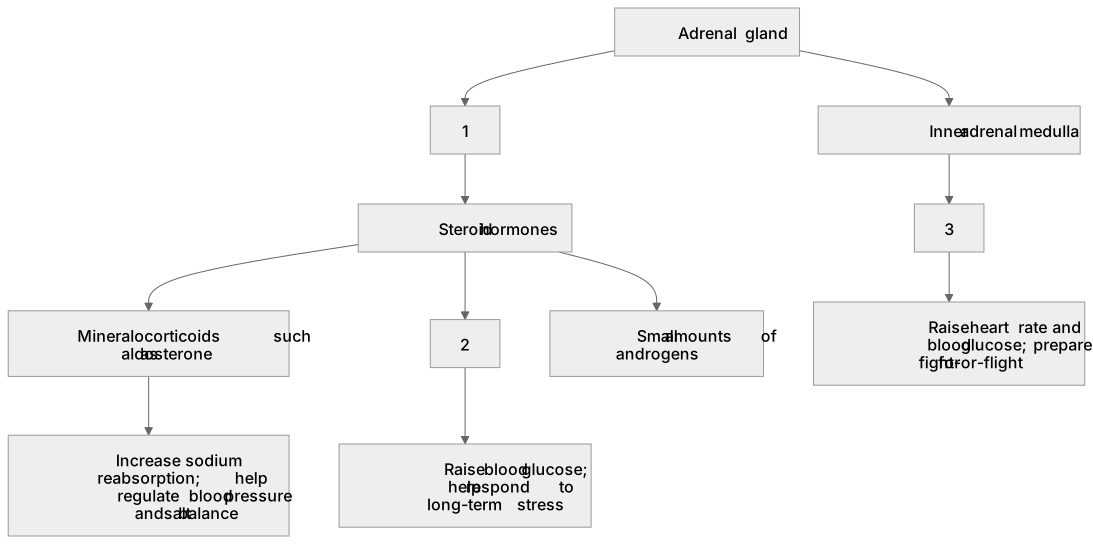
Some boxes have lost their names. Pick the right name for each number.
1Box 1
2Box 2
3Box 3
There is more to this lesson
The full lesson goes on to check your understanding and help you earn the marks. Create a free account to carry on, with your progress saved.
A week of Premium from your first lesson · Then the free plan continues · No card, no charge
Test your understanding of Hormonal communication: (b) the structure and functions of the adrenal glands
Active recall beats re-reading. Take an instant quiz now to test what you’ve learned and lock it into long-term memory.
A week of Premium from your first lesson · Then the free plan continues · No card, no charge