AQA · GCSE · Business
Course version: 8132 · Version from Sept 2017
Ethical and environmental considerations: disposing of waste
Disposing of waste means getting rid of the materials a business no longer needs, for example sending packaging offcuts to landfill, incinerating them or arranging collection for recycling.
Checked against the AQA 8132 specification (opens in a new tab) on .
- Point 8 of 13
- 4 key terms
Study notes
From the checked teaching notes for this specification point.
The idea
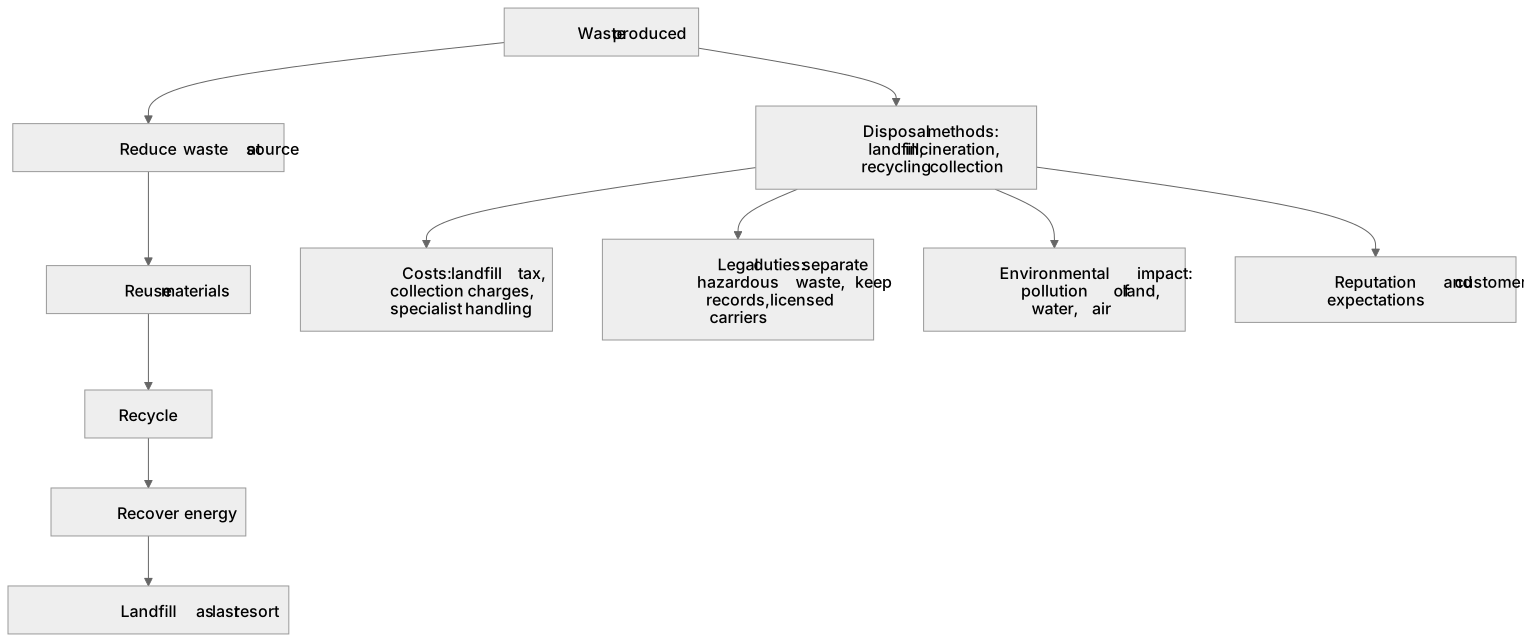
Disposing of waste means getting rid of the materials a business no longer needs, for example sending packaging offcuts to landfill, incinerating them or arranging collection for recycling. How a business disposes of waste affects its costs, because landfill taxes, collection charges and specialist handling add up, and it affects its environmental and ethical standing, because poor disposal can pollute land, water and air. Businesses must also comply with waste regulations, which may require separating hazardous waste, keeping records and using licensed carriers. Options include reducing waste at source, reusing materials, recycling, recovering energy and, as a last resort, landfill. Choosing between them involves weighing cost, legal duties, environmental impact and customer expectations.
What earns the marks
- Defines waste disposal as the removal or treatment of unwanted materials, including landfill, incineration, recycling and licensed collection.
- Explains a cost implication, such as landfill tax, collection fees or the expense of specialist handling for hazardous waste.
- Explains a legal implication, such as the duty to separate hazardous waste, keep records and use licensed waste carriers.
- Explains an environmental implication, such as pollution of land, water or air if waste is not disposed of responsibly.
- Explains a reputational implication, such as damage to brand image if a business is seen to dispose of waste irresponsibly.
- Explains a way to reduce disposal problems, such as cutting waste at source, reusing materials or recycling before considering landfill.
Common mistakes and how to put them right
Treating all waste as ordinary rubbish.
Put it right: Hazardous waste needs separate handling, storage and licensed disposal.
Ignoring the cost of disposal.
Put it right: Landfill tax, collection charges and specialist treatment are real business expenses that reduce profit.
Assuming disposal only matters legally.
Put it right: It also affects costs, reputation and customer trust, so it is both an ethical and a commercial issue.
Exam tips
- Name the disposal method you are discussing, such as landfill, incineration or recycling, so the answer is specific rather than vague.
- Connect disposal choices to a consequence for the business, such as higher costs, legal penalties or a damaged reputation.
- In evaluation questions, compare disposal options and justify which is most suitable for the business in the case study.
Try the lesson
The start of the Ethical and environmental considerations: disposing of waste lesson, made from checked teaching notes for this specification point.
Have a go first
Which of the following is a common, legal method for a business to dispose of its physical waste?
Listen
Disposing of waste means getting rid of the materials a business no longer needs, for example sending packaging offcuts to landfill, incinerating them or arranging collection for recycling. How a business disposes of waste affects its costs, because landfill taxes, collection charges and specialist handling add up, and it affects its environmental and ethical standing, because poor disposal can pollute land, water and air. Businesses must also comply with waste regulations, which may require separating hazardous waste, keeping records and using licensed carriers. Options include reducing waste at source, reusing materials, recycling, recovering energy and, as a last resort, landfill. Choosing between them involves weighing cost, legal duties, environmental impact and customer expectations. A strong answer earns marks for these points. Defines waste disposal as the removal or treatment of unwanted materials, including landfill, incineration, recycling and licensed collection. Explains a cost implication, such as landfill tax, collection fees or the expense of specialist handling for hazardous waste. Explains a legal implication, such as the duty to separate hazardous waste, keep records and use licensed waste carriers. Explains an environmental implication, such as pollution of land, water or air if waste is not disposed of responsibly. A common slip: Treating all waste as ordinary rubbish. Instead, hazardous waste needs separate handling, storage and licensed disposal. Exam tip: Name the disposal method you are discussing, such as landfill, incineration or recycling, so the answer is specific rather than vague.
See it
Key words
Say what each word means before you turn the card.
Legal compliance
Try answering aloud or in your head before turning the card.
Environmental impact
Try answering aloud or in your head before turning the card.
Cost control
Try answering aloud or in your head before turning the card.
Business ethics and reputation
Try answering aloud or in your head before turning the card.
See every definition
- Legal compliance
- Businesses must comply with waste regulations, which may require separating hazardous waste, keeping records and using licensed carriers.
- Environmental impact
- Poor disposal can pollute land, water and air, so the environmental standing of a business is affected.
- Cost control
- Landfill taxes, collection charges and specialist handling add up, so how a business disposes of waste affects its costs.
- Business ethics and reputation
- Disposal affects ethical standing, and a business seen to dispose of waste irresponsibly can suffer damage to brand image.
Label the diagram
Some boxes have lost their names. Pick the right name for each number.
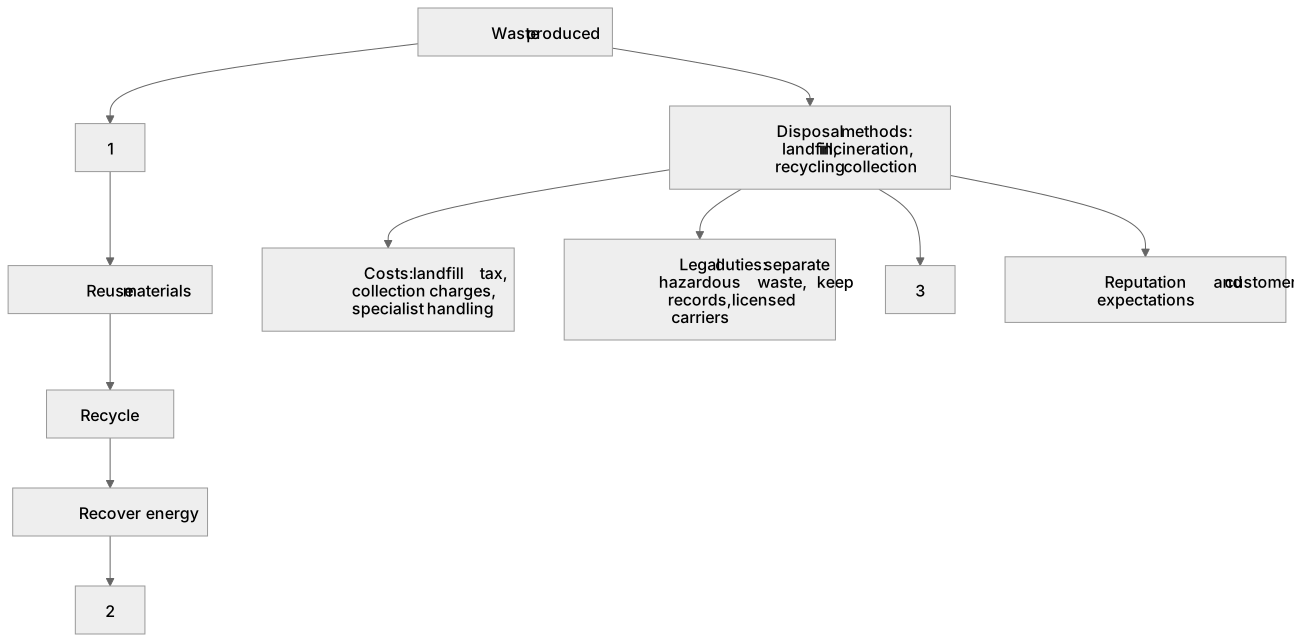
1Box 1
2Box 2
3Box 3
There is more to this lesson
The full lesson goes on to check your understanding and help you earn the marks. Create a free account to carry on, with your progress saved.
A week of Premium from your first lesson · Then the free plan continues · No card, no charge
Test your understanding of Ethical and environmental considerations: disposing of waste
Active recall beats re-reading. Take an instant quiz now to test what you’ve learned and lock it into long-term memory.
A week of Premium from your first lesson · Then the free plan continues · No card, no charge