AQA · GCSE · Business
Course version: 8132 · Version from Sept 2017
Ethical and environmental considerations: noise and air pollution.
Noise and air pollution are environmental costs that arise when business activity disturbs the surroundings.
Checked against the AQA 8132 specification (opens in a new tab) on .
- Point 9 of 13
- 4 key terms
Study notes
From the checked teaching notes for this specification point.
The idea
Noise and air pollution are environmental costs that arise when business activity disturbs the surroundings. Noise comes from machinery, deliveries, refrigeration units and construction; air pollution comes from vehicle exhausts, factory emissions and burning fuels. A business can reduce both by insulating buildings, scheduling noisy deliveries away from peak hours, switching to electric vehicles, servicing engines and using cleaner energy. These actions raise costs but can lower complaints, avoid fines and improve reputation. For example, a bakery running early-morning vans could group deliveries and use electric vans, cutting fumes and night noise. Learners should link each method to a benefit and a drawback, and judge whether the gain justifies the spending.
What earns the marks
- Identifies noise pollution sources such as machinery, deliveries, refrigeration and construction work.
- Identifies air pollution sources such as vehicle exhausts, factory emissions and fuel burning.
- Explains at least one method of reducing noise, for example insulation, quieter equipment or timed deliveries.
- Explains at least one method of reducing air pollution, for example electric vehicles, cleaner energy or engine servicing.
- Analyses a trade-off between the cost of the method and the benefit of fewer complaints, lower fines or better reputation.
- Reaches a supported judgement on whether the action is worthwhile for the business.
Common mistakes and how to put them right
Treating noise and air pollution as identical issues.
Put it right by separating their sources and the methods used to reduce each.
Listing a method without any consequence.
Put it right by adding what changes for the business, such as fewer complaints or lower costs.
Assuming all pollution control always raises profit.
Put it right by weighing the added cost against the possible savings and reputational gain.
Exam tips
- Name the specific source before suggesting a control, so the link is clear.
- Use connectives such as because and therefore to build a chain of reasoning.
- Finish with a short judgement that refers back to the business context given in the case.
Try the lesson
The start of the Ethical and environmental considerations: noise and air pollution. lesson, made from checked teaching notes for this specification point.
Have a go first
Which of the following is an example of air pollution caused by business activity?
Listen
Noise and air pollution are environmental costs that arise when business activity disturbs the surroundings. Noise comes from machinery, deliveries, refrigeration units and construction; air pollution comes from vehicle exhausts, factory emissions and burning fuels. A business can reduce both by insulating buildings, scheduling noisy deliveries away from peak hours, switching to electric vehicles, servicing engines and using cleaner energy. These actions raise costs but can lower complaints, avoid fines and improve reputation. For example, a bakery running early-morning vans could group deliveries and use electric vans, cutting fumes and night noise. Learners should link each method to a benefit and a drawback, and judge whether the gain justifies the spending. A strong answer earns marks for these points. Identifies noise pollution sources such as machinery, deliveries, refrigeration and construction work. Identifies air pollution sources such as vehicle exhausts, factory emissions and fuel burning. Explains at least one method of reducing noise, for example insulation, quieter equipment or timed deliveries. Explains at least one method of reducing air pollution, for example electric vehicles, cleaner energy or engine servicing. A common slip: Treating noise and air pollution as identical issues. Instead, separating their sources and the methods used to reduce each. Exam tip: Name the specific source before suggesting a control, so the link is clear.
See it
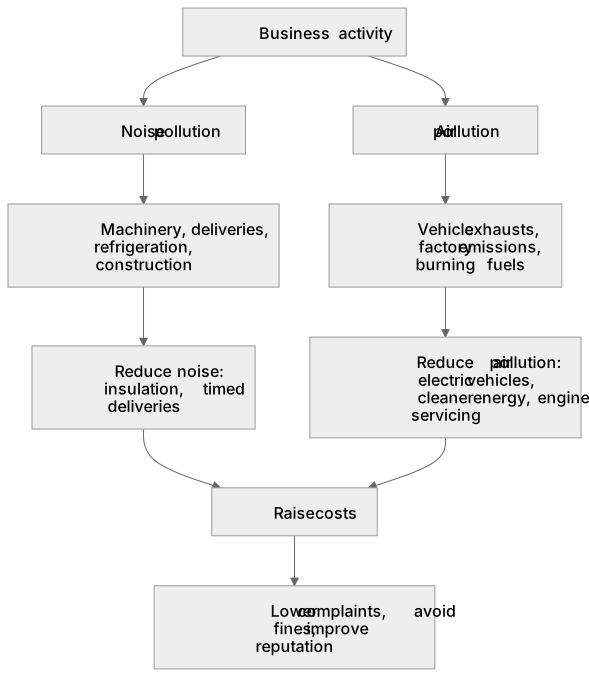
Key words
Say what each word means before you turn the card.
Environmental costs of business activity
Try answering aloud or in your head before turning the card.
Operational methods to reduce pollution
Try answering aloud or in your head before turning the card.
Trade-off between cost and reputation
Try answering aloud or in your head before turning the card.
Stakeholder complaints and regulation
Try answering aloud or in your head before turning the card.
See every definition
- Environmental costs of business activity
- Noise and air pollution that arise when business activity disturbs the surroundings.
- Operational methods to reduce pollution
- Actions such as insulating buildings, scheduling noisy deliveries away from peak hours, switching to electric vehicles, servicing engines and using cleaner energy.
- Trade-off between cost and reputation
- These actions raise costs but can lower complaints, avoid fines and improve reputation.
- Stakeholder complaints and regulation
- Fewer complaints, lower fines and better reputation are benefits that may justify the spending.
Label the diagram
Some boxes have lost their names. Pick the right name for each number.
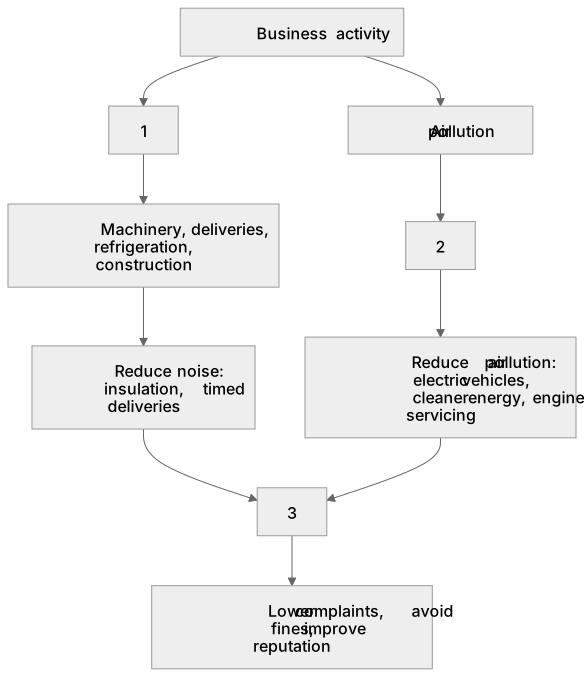
1Box 1
2Box 2
3Box 3
There is more to this lesson
The full lesson goes on to check your understanding and help you earn the marks. Create a free account to carry on, with your progress saved.
A week of Premium from your first lesson · Then the free plan continues · No card, no charge
Test your understanding of Ethical and environmental considerations: noise and air pollution.
Active recall beats re-reading. Take an instant quiz now to test what you’ve learned and lock it into long-term memory.
A week of Premium from your first lesson · Then the free plan continues · No card, no charge