AQA · GCSE · Business
Course version: 8132 · Version from Sept 2017
Ethical and environmental considerations: recycling
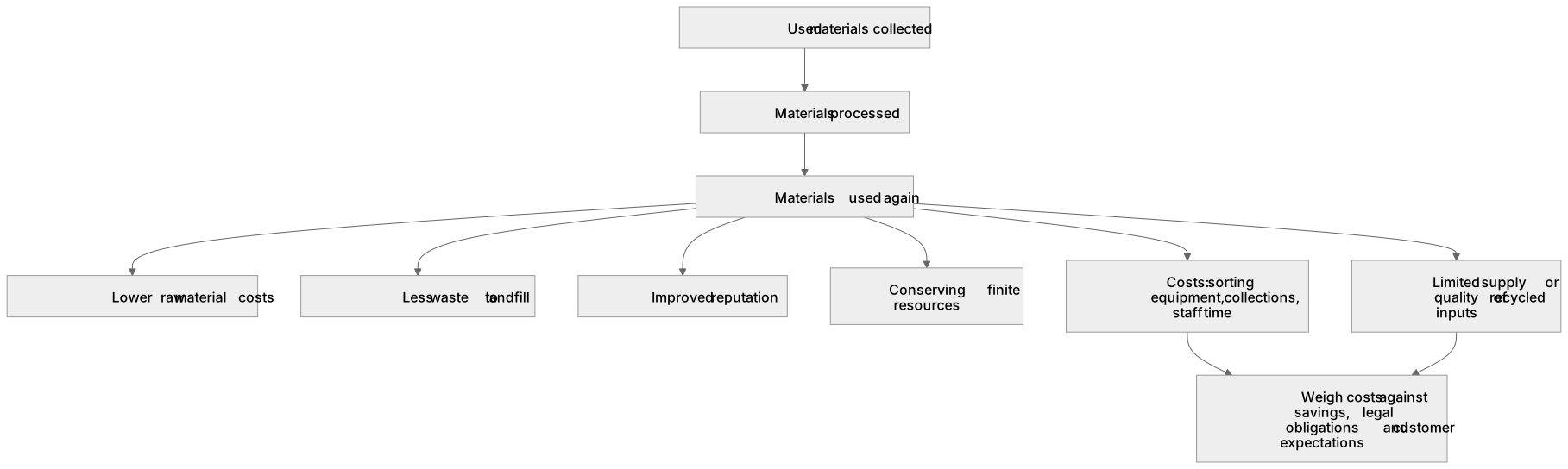
Recycling means collecting used materials and processing them so they can be used again, for example melting used glass bottles to make new jars.
Checked against the AQA 8132 specification (opens in a new tab) on .
- Point 7 of 13
Study notes
From the checked teaching notes for this specification point.
The idea
Recycling means collecting used materials and processing them so they can be used again, for example melting used glass bottles to make new jars. For a business, recycling can reduce the cost of buying raw materials and of sending waste to landfill, and it can improve reputation with customers who care about the environment. It also supports ethical and environmental aims by conserving finite resources and cutting energy use and pollution linked to extracting new materials. However, recycling brings trade-offs: sorting equipment, separate collections and staff time all cost money, and recycled inputs may be limited in supply or quality. A business must therefore weigh these costs against savings, legal obligations and customer expectations before deciding how much to recycle.
What earns the marks
- Defines recycling as collecting and reprocessing used materials so they can be used again, rather than simply reusing an item or throwing it away.
- Explains a financial benefit, such as lower raw material costs or reduced waste disposal charges, because fewer new materials are bought and less waste goes to landfill.
- Explains an environmental benefit, such as conserving finite resources and reducing energy use or pollution from extracting and processing virgin materials.
- Explains a reputational or marketing benefit, such as attracting environmentally conscious customers and strengthening the brand image.
- Explains a cost or limitation, such as investment in sorting and collection systems, staff time, or uncertainty over the quality and availability of recycled inputs.
- Applies the point to a context, for example a drinks manufacturer using recycled glass or a retailer offering recycling points for packaging.
Common mistakes and how to put them right
Confusing recycling with reuse.
Put it right: Reuse means using an item again in its current form, whereas recycling means processing the material so it can be made into something new.
Assuming recycling is always free or always profitable.
Put it right: Recycling usually involves set-up and running costs that must be compared with the savings it creates.
Treating recycling as only an ethical choice.
Put it right: It is also a business decision affecting costs, legal compliance and customer appeal.
Exam tips
- Link each recycling point to a business consequence, such as lower costs, higher costs or a stronger reputation, rather than describing recycling in general terms.
- Use the case study context, naming the product or material involved, so the answer shows application rather than a generic list.
- When asked to evaluate, give both a benefit and a drawback of recycling and reach a clear judgement about whether it is worthwhile for that business.
Try the lesson
The start of the Ethical and environmental considerations: recycling lesson, made from checked teaching notes for this specification point.
Have a go first
What is meant by recycling in a business context?
Listen
Recycling means collecting used materials and processing them so they can be used again, for example melting used glass bottles to make new jars. For a business, recycling can reduce the cost of buying raw materials and of sending waste to landfill, and it can improve reputation with customers who care about the environment. It also supports ethical and environmental aims by conserving finite resources and cutting energy use and pollution linked to extracting new materials. However, recycling brings trade-offs: sorting equipment, separate collections and staff time all cost money, and recycled inputs may be limited in supply or quality. A business must therefore weigh these costs against savings, legal obligations and customer expectations before deciding how much to recycle. A strong answer earns marks for these points. Defines recycling as collecting and reprocessing used materials so they can be used again, rather than simply reusing an item or throwing it away. Explains a financial benefit, such as lower raw material costs or reduced waste disposal charges, because fewer new materials are bought and less waste goes to landfill. Explains an environmental benefit, such as conserving finite resources and reducing energy use or pollution from extracting and processing virgin materials. Explains a reputational or marketing benefit, such as attracting environmentally conscious customers and strengthening the brand image. A common slip: Assuming recycling is always free or always profitable. Instead, recycling usually involves set-up and running costs that must be compared with the savings it creates. Exam tip: Link each recycling point to a business consequence, such as lower costs, higher costs or a stronger reputation, rather than describing recycling in general terms.
See it
Label the diagram
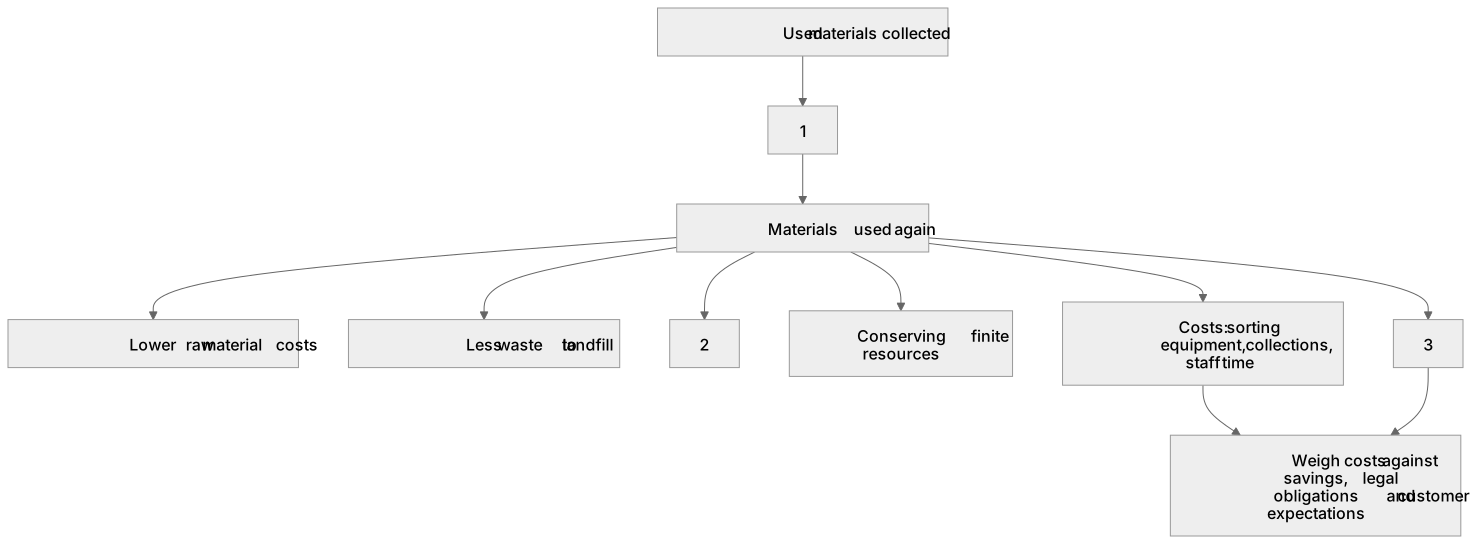
Some boxes have lost their names. Pick the right name for each number.
1Box 1
2Box 2
3Box 3
There is more to this lesson
The full lesson goes on to check your understanding and help you earn the marks. Create a free account to carry on, with your progress saved.
A week of Premium from your first lesson · Then the free plan continues · No card, no charge
Test your understanding of Ethical and environmental considerations: recycling
Active recall beats re-reading. Take an instant quiz now to test what you’ve learned and lock it into long-term memory.
A week of Premium from your first lesson · Then the free plan continues · No card, no charge