AQA · GCSE · Business
Course version: 8132 · Version from Sept 2017
Ethical and environmental considerations: Sustainability:
Sustainability means operating so that resources used today do not prevent future generations from meeting their needs.
Checked against the AQA 8132 specification (opens in a new tab) on .
- Point 10 of 13
- 4 key terms
Study notes
From the checked teaching notes for this specification point.
The idea
Sustainability means operating so that resources used today do not prevent future generations from meeting their needs. A sustainable business limits waste, uses renewable or recycled materials, cuts energy and water use, and designs products that last or can be repaired. For example, a furniture maker could source certified timber, reuse offcuts and offer a repair service. These choices can raise short-term costs but may lower long-run bills, meet customer expectations and protect reputation. Learners should explain what makes a practice sustainable, apply it to a business context and weigh the cost against the benefit before reaching a supported judgement.
What earns the marks
- Defines sustainability as meeting present needs without harming the ability of future generations to meet theirs.
- Gives examples of sustainable practice such as recycling, renewable energy, reduced packaging or durable products.
- Explains how a named business could adopt a sustainable practice in its operations.
- Analyses the trade-off between the cost of sustainable practice and benefits such as lower bills, reputation or customer loyalty.
- Reaches a supported judgement on whether the sustainable practice is worthwhile.
Common mistakes and how to put them right
Confusing sustainability with charity or ethical treatment of workers.
Put it right by focusing on resource use and long-term availability.
Claiming sustainability always cuts costs immediately.
Put it right by recognising that initial investment may be high before savings appear.
Describing a general green idea without applying it to the business in the case.
Put it right by naming the product, process or material involved.
Exam tips
- Anchor the answer in the case study business rather than writing generally about the environment.
- Develop each point with a because or therefore link to show the effect on the business.
- Keep the final judgement brief and tie it to the evidence you have already given.
Try the lesson
The start of the Ethical and environmental considerations: Sustainability: lesson, made from checked teaching notes for this specification point.
Have a go first
What does sustainability mean for a business?
Listen
Sustainability means operating so that resources used today do not prevent future generations from meeting their needs. A sustainable business limits waste, uses renewable or recycled materials, cuts energy and water use, and designs products that last or can be repaired. For example, a furniture maker could source certified timber, reuse offcuts and offer a repair service. These choices can raise short-term costs but may lower long-run bills, meet customer expectations and protect reputation. Learners should explain what makes a practice sustainable, apply it to a business context and weigh the cost against the benefit before reaching a supported judgement. A strong answer earns marks for these points. Defines sustainability as meeting present needs without harming the ability of future generations to meet theirs. Gives examples of sustainable practice such as recycling, renewable energy, reduced packaging or durable products. Explains how a named business could adopt a sustainable practice in its operations. Analyses the trade-off between the cost of sustainable practice and benefits such as lower bills, reputation or customer loyalty. A common slip: Confusing sustainability with charity or ethical treatment of workers. Instead, focusing on resource use and long-term availability. Exam tip: Anchor the answer in the case study business rather than writing generally about the environment.
See it
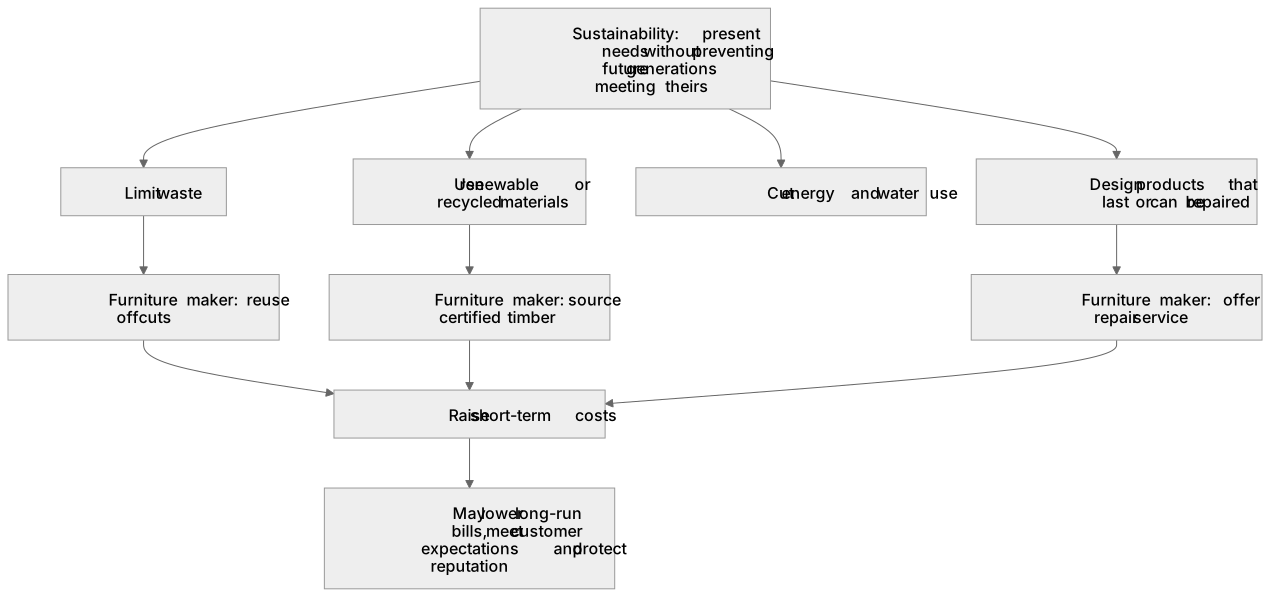
Key words
Say what each word means before you turn the card.
Sustainability
Try answering aloud or in your head before turning the card.
Sustainable operations and product design
Try answering aloud or in your head before turning the card.
Cost versus long-term benefit
Try answering aloud or in your head before turning the card.
Reputation and customer expectations
Try answering aloud or in your head before turning the card.
See every definition
- Sustainability
- Operating so that resources used today do not prevent future generations from meeting their needs.
- Sustainable operations and product design
- Limiting waste, using renewable or recycled materials, cutting energy and water use, and designing products that last or can be repaired.
- Cost versus long-term benefit
- Choices that can raise short-term costs but may lower long-run bills, meet customer expectations and protect reputation.
- Reputation and customer expectations
- Meeting what customers expect of a business and protecting how it is regarded.
Label the diagram
Some boxes have lost their names. Pick the right name for each number.
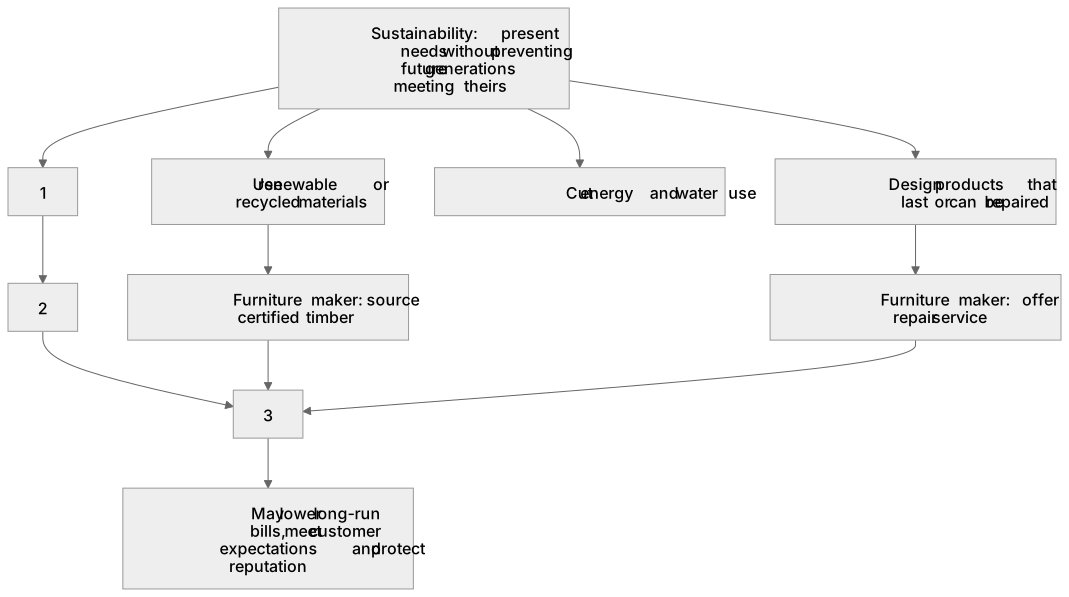
1Box 1
2Box 2
3Box 3
There is more to this lesson
The full lesson goes on to check your understanding and help you earn the marks. Create a free account to carry on, with your progress saved.
A week of Premium from your first lesson · Then the free plan continues · No card, no charge
Test your understanding of Ethical and environmental considerations: Sustainability:
Active recall beats re-reading. Take an instant quiz now to test what you’ve learned and lock it into long-term memory.
A week of Premium from your first lesson · Then the free plan continues · No card, no charge