AQA · GCSE · Business
Course version: 8132 · Version from Sept 2017
Good customer services: poor reputation via word of mouth
Word of mouth is informal communication between people about a business, such as friends, family, colleagues or online reviewers sharing their experiences.
Checked against the AQA 8132 specification (opens in a new tab) on .
- Point 14 of 19
- 2 key terms
Study notes
From the checked teaching notes for this specification point.
The idea
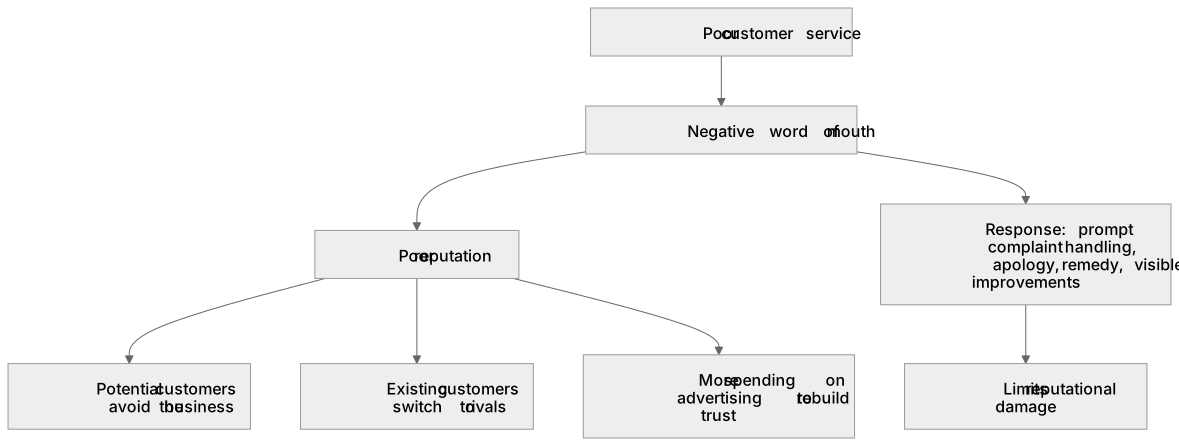
Word of mouth is informal communication between people about a business, such as friends, family, colleagues or online reviewers sharing their experiences. When customers receive poor service, they often tell others, and negative comments can spread quickly, especially through social media and review sites. This can create a poor reputation: potential customers may avoid the business, existing customers may switch to rivals, and the business may need to spend more on advertising to rebuild trust. Reputation is valuable because it influences whether people choose a business in the first place. Good customer service encourages positive word of mouth, which can attract new customers at little direct cost. Businesses can limit reputational damage by responding to complaints promptly, apologising where appropriate, putting things right and showing that lessons have been learned.
What earns the marks
- Defines word of mouth as informal communication between customers about a business, including online reviews and social media.
- Explains how poor customer service leads to negative comments being shared with potential customers.
- Explains the reputational consequence, such as lost sales, customers switching to rivals or higher spending needed to rebuild trust.
- Contrasts negative word of mouth with positive word of mouth, which can attract customers at little direct cost.
- Suggests a response that limits damage, such as prompt complaint handling, an apology, a remedy or visible improvements.
Common mistakes and how to put them right
Treating word of mouth as paid advertising.
Put it right: It is informal communication between people, though it may happen on public online platforms.
Assuming only spoken conversation counts.
Put it right: Reviews, ratings and social media posts are also forms of word of mouth.
Believing a poor reputation affects only existing customers.
Put it right: It also puts off potential new customers before they ever buy.
Exam tips
- Name the channel when giving an example, such as a negative online review or a friend warning another shopper.
- Chain the effect clearly: poor service leads to negative comments, which damage reputation, which reduces customer numbers or raises costs.
- For evaluation, weigh reputational damage against the cost and time needed to repair it, and consider how quickly negative comments can spread online.
Try the lesson
The start of the Good customer services: poor reputation via word of mouth lesson, made from checked teaching notes for this specification point.
Have a go first
What does a poor reputation spread by word of mouth most likely mean for a business?
Listen
Word of mouth is informal communication between people about a business, such as friends, family, colleagues or online reviewers sharing their experiences. When customers receive poor service, they often tell others, and negative comments can spread quickly, especially through social media and review sites. This can create a poor reputation: potential customers may avoid the business, existing customers may switch to rivals, and the business may need to spend more on advertising to rebuild trust. Reputation is valuable because it influences whether people choose a business in the first place. Good customer service encourages positive word of mouth, which can attract new customers at little direct cost. Businesses can limit reputational damage by responding to complaints promptly, apologising where appropriate, putting things right and showing that lessons have been learned. A strong answer earns marks for these points. Defines word of mouth as informal communication between customers about a business, including online reviews and social media. Explains how poor customer service leads to negative comments being shared with potential customers. Explains the reputational consequence, such as lost sales, customers switching to rivals or higher spending needed to rebuild trust. Contrasts negative word of mouth with positive word of mouth, which can attract customers at little direct cost. A common slip: Treating word of mouth as paid advertising. Instead, it is informal communication between people, though it may happen on public online platforms. Exam tip: Name the channel when giving an example, such as a negative online review or a friend warning another shopper.
See it
Key words
Say what each word means before you turn the card.
Reputation
Try answering aloud or in your head before turning the card.
Online reviews and social media
Try answering aloud or in your head before turning the card.
See every definition
- Reputation
- Something valuable because it influences whether people choose a business in the first place, and it can be poor when negative comments spread.
- Online reviews and social media
- Channels through which negative comments can spread quickly when customers receive poor service.
Label the diagram
Some boxes have lost their names. Pick the right name for each number.
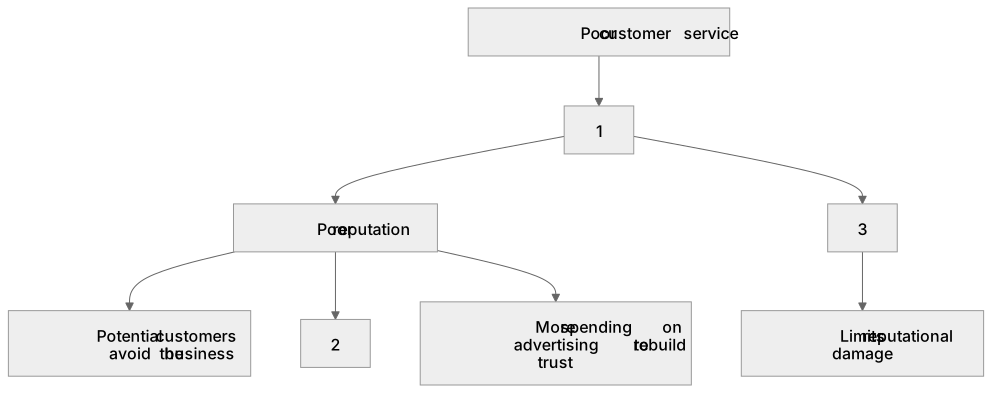
1Box 1
2Box 2
3Box 3
There is more to this lesson
The full lesson goes on to check your understanding and help you earn the marks. Create a free account to carry on, with your progress saved.
A week of Premium from your first lesson · Then the free plan continues · No card, no charge
Test your understanding of Good customer services: poor reputation via word of mouth
Active recall beats re-reading. Take an instant quiz now to test what you’ve learned and lock it into long-term memory.
A week of Premium from your first lesson · Then the free plan continues · No card, no charge