AQA · GCSE · Business
Course version: 8132 · Version from Sept 2017
Price, product, promotion and place (4Ps): Students should be able to…
Full specification wording
The elements of the marketing mix: price, product, promotion and place (4Ps): Students should be able to analyse the appropriateness of each distribution method for a given scenario.
Distribution methods move a product from producer to customer.
Checked against the AQA 8132 specification (opens in a new tab) on .
- Point 73 of 80
- 4 key terms
Study notes
From the checked teaching notes for this specification point.
The idea
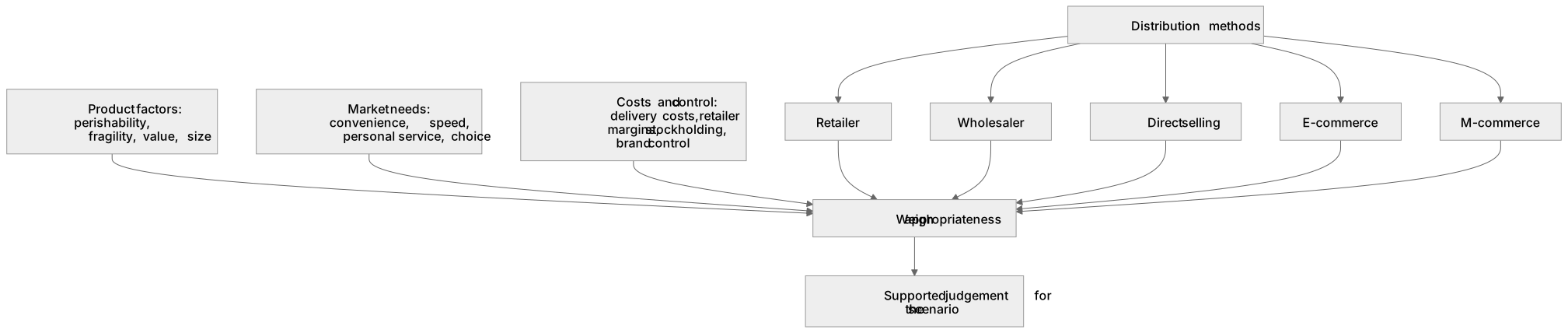
Distribution methods move a product from producer to customer. For a given scenario, analyse appropriateness by weighing the product, market, costs and control. A high-value, fragile item suits direct selling or specialist couriers; a low-value, fast-moving good suits retailers or wholesalers. E-commerce gives wide reach but needs fulfilment and returns systems. A small local business may use a physical shop for personal service; a global brand may use multiple channels. Compare methods against the scenario's aims, budget and customer needs, then justify the best fit.
What earns the marks
- Identifies the distribution methods relevant to the scenario, such as retailer, wholesaler, direct selling, e-commerce or m-commerce.
- Explains how the nature of the product, for example perishability, fragility, value or size, affects the suitability of a method.
- Analyses the needs of the target market, such as convenience, speed of delivery, personal service or wide product choice.
- Weighs the costs and control implications of each method, for example delivery costs, retailer margins, stockholding or brand control.
- Reaches a supported judgement about which method is most appropriate for the scenario, using the evidence given.
Common mistakes and how to put them right
Listing distribution methods without linking them to the scenario.
Put it right: Apply each method to the product, market and business aims stated.
Assuming e-commerce is always best because it reaches more customers.
Put it right: Consider fulfilment costs, returns, delivery expectations and the product type.
Ignoring the cost of each method.
Put it right: Compare set-up and running costs, such as shop rent, website fees, courier charges and retailer margins.
Exam tips
- Underline the key facts in the scenario, such as product type, budget, location and customer needs, and refer to them in each paragraph.
- Use comparative connectives such as whereas, however and therefore to show analysis rather than description.
- Finish with a clear judgement that answers the exact question, for example which method is most appropriate and why.
Try the lesson
The start of the The elements of the marketing mix: price, product, promotion and place (4Ps): Students should be able to analyse the appropriateness of each distribution method for a given scenario. lesson, made from checked teaching notes for this specification point.
Have a go first
A small, independent bakery produces fresh, highly perishable cream cakes and sells them exclusively from its own shop. Why is direct selling the most appropriate distribution method for this business?
Listen
Distribution methods move a product from producer to customer. For a given scenario, analyse appropriateness by weighing the product, market, costs and control. A high-value, fragile item suits direct selling or specialist couriers; a low-value, fast-moving good suits retailers or wholesalers. E-commerce gives wide reach but needs fulfilment and returns systems. A small local business may use a physical shop for personal service; a global brand may use multiple channels. Compare methods against the scenario's aims, budget and customer needs, then justify the best fit. A strong answer earns marks for these points. Identifies the distribution methods relevant to the scenario, such as retailer, wholesaler, direct selling, e-commerce or m-commerce. Explains how the nature of the product, for example perishability, fragility, value or size, affects the suitability of a method. Analyses the needs of the target market, such as convenience, speed of delivery, personal service or wide product choice. Weighs the costs and control implications of each method, for example delivery costs, retailer margins, stockholding or brand control. A common slip: Listing distribution methods without linking them to the scenario. Instead, apply each method to the product, market and business aims stated. Exam tip: Underline the key facts in the scenario, such as product type, budget, location and customer needs, and refer to them in each paragraph.
See it
Key words
Say what each word means before you turn the card.
Channels of distribution
Try answering aloud or in your head before turning the card.
Customer convenience and reach
Try answering aloud or in your head before turning the card.
Cost and control
Try answering aloud or in your head before turning the card.
Product characteristics
Try answering aloud or in your head before turning the card.
See every definition
- Channels of distribution
- Methods that move a product from producer to customer, such as retailer, wholesaler, direct selling, e-commerce or m-commerce.
- Customer convenience and reach
- The needs of the target market, such as convenience, speed of delivery, personal service or wide product choice, which affect the suitability of a method.
- Cost and control
- The implications of each method, for example delivery costs, retailer margins, stockholding or brand control, which must be weighed.
- Product characteristics
- The nature of the product, for example perishability, fragility, value or size, which affects the suitability of a method.
Label the diagram
Some boxes have lost their names. Pick the right name for each number.
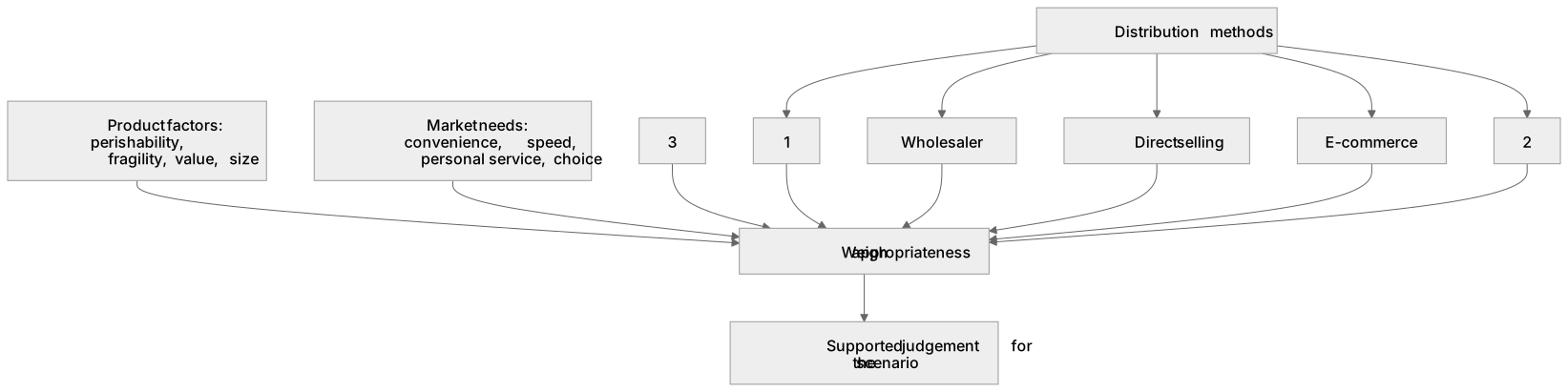
1Box 1
2Box 2
3Box 3
There is more to this lesson
The full lesson goes on to check your understanding and help you earn the marks. Create a free account to carry on, with your progress saved.
A week of Premium from your first lesson · Then the free plan continues · No card, no charge
Test your understanding of The elements of the marketing mix: price, product, promotion and place (4Ps): Students should be able to analyse the appropriateness of each distribution method for a given scenario.
Active recall beats re-reading. Take an instant quiz now to test what you’ve learned and lock it into long-term memory.
A week of Premium from your first lesson · Then the free plan continues · No card, no charge