AQA · GCSE · Business
Course version: 8132 · Version from Sept 2017
Understand what a business is and the reasons for starting a business…
Full specification wording
The purpose and nature of businesses: understand what a business is and the reasons for starting a business (including producing goods, supplying services, distributing products, fulfilling a business opportunity and providing a good or service to benefit others)
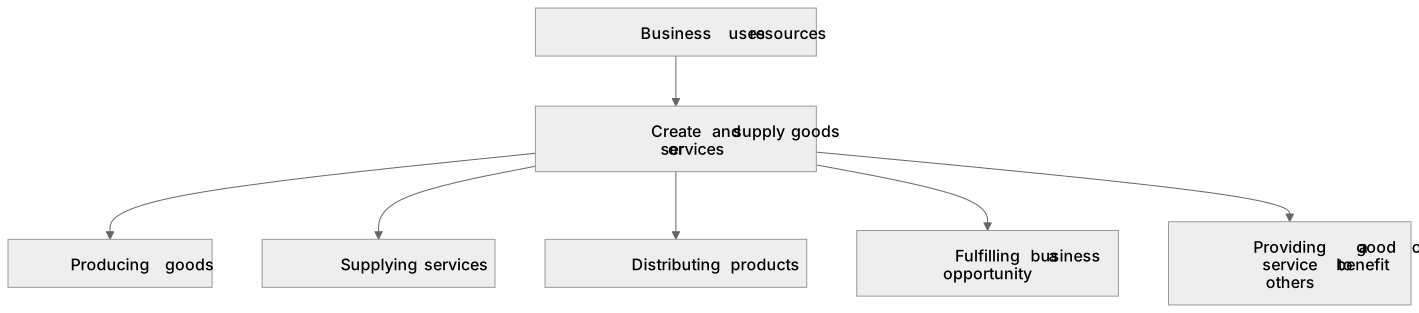
A business is an organisation that uses resources to create and supply goods or services to customers, usually aiming to make a profit or meet a need.
Checked against the AQA 8132 specification (opens in a new tab) on .
- Point 6 of 14
- 3 key terms
Study notes
From the checked teaching notes for this specification point.
The idea
A business is an organisation that uses resources to create and supply goods or services to customers, usually aiming to make a profit or meet a need. Reasons for starting one include producing goods, such as a bakery making bread; supplying services, such as a salon cutting hair; distributing products, such as a delivery firm moving goods from maker to buyer; fulfilling a business opportunity, such as spotting unmet demand for a local repair shop; and providing a good or service to benefit others, as a social enterprise might do. Owners may also seek independence or income, but the specification focuses on these purposes. Understanding them helps students explain why a business exists and how its activities create value for customers and the wider community.
What earns the marks
- Defines a business as an organisation that uses resources to create and supply goods or services.
- Explains producing goods with an example such as a manufacturer turning raw materials into finished items.
- Explains supplying services with an example such as a tutor or hairdresser providing an intangible activity.
- Explains distributing products as moving goods from producers to customers, for example through wholesalers or delivery firms.
- Explains fulfilling a business opportunity as meeting an unmet customer need or gap in the market.
- Explains providing a good or service to benefit others, for example a social enterprise or community project.
Common mistakes and how to put them right
Confusing goods with services.
Put it right: State that goods are tangible products while services are intangible activities.
Describing distribution as selling.
Put it right: Describe it as moving products from producer to customer.
Treating benefit to others as identical to profit.
Put it right: Recognise that a business may prioritise social or community benefit.
Exam tips
- Name the reason for starting the business, then add a short example to make the point specific.
- Use connectives such as because and so that to show the link between purpose and customer need.
- If asked for reasons, give more than one and keep each explanation brief and distinct.
Try the lesson
The start of the The purpose and nature of businesses: understand what a business is and the reasons for starting a business (including producing goods, supplying services, distributing products, fulfilling a business opportunity and providing a good or service to benefit others) lesson, made from checked teaching notes for this specification point.
Have a go first
Which of the following is a reason for starting a business that involves fulfilling a business opportunity?
Listen
A business is an organisation that uses resources to create and supply goods or services to customers, usually aiming to make a profit or meet a need. Reasons for starting one include producing goods, such as a bakery making bread; supplying services, such as a salon cutting hair; distributing products, such as a delivery firm moving goods from maker to buyer; fulfilling a business opportunity, such as spotting unmet demand for a local repair shop; and providing a good or service to benefit others, as a social enterprise might do. Owners may also seek independence or income, but the specification focuses on these purposes. Understanding them helps students explain why a business exists and how its activities create value for customers and the wider community. A strong answer earns marks for these points. Defines a business as an organisation that uses resources to create and supply goods or services. Explains producing goods with an example such as a manufacturer turning raw materials into finished items. Explains supplying services with an example such as a tutor or hairdresser providing an intangible activity. Explains distributing products as moving goods from producers to customers, for example through wholesalers or delivery firms. A common slip: Confusing goods with services. Instead, state that goods are tangible products while services are intangible activities. Exam tip: Name the reason for starting the business, then add a short example to make the point specific.
See it
Key words
Say what each word means before you turn the card.
Goods and services
Try answering aloud or in your head before turning the card.
Distribution
Try answering aloud or in your head before turning the card.
Business opportunity
Try answering aloud or in your head before turning the card.
See every definition
- Goods and services
- Tangible products such as a bakery making bread, and intangible activities such as a salon cutting hair.
- Distribution
- Moving products from producer to customer, for example through wholesalers or delivery firms.
- Business opportunity
- Meeting an unmet customer need or gap in the market, such as spotting unmet demand for a local repair shop.
Label the diagram
Some boxes have lost their names. Pick the right name for each number.
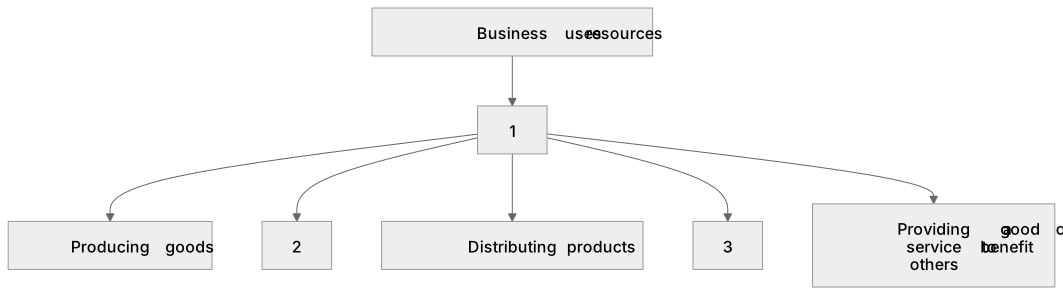
1Box 1
2Box 2
3Box 3
There is more to this lesson
The full lesson goes on to check your understanding and help you earn the marks. Create a free account to carry on, with your progress saved.
A week of Premium from your first lesson · Then the free plan continues · No card, no charge
Test your understanding of The purpose and nature of businesses: understand what a business is and the reasons for starting a business (including producing goods, supplying services, distributing products, fulfilling a business opportunity and providing a good or service to benefit others)
Active recall beats re-reading. Take an instant quiz now to test what you’ve learned and lock it into long-term memory.
A week of Premium from your first lesson · Then the free plan continues · No card, no charge