AQA · A-Level · Chemistry
Course version: 7405 · Version from Sept 2016
The nucleophilic addition–elimination reactions of water, alcohols,…
Full specification wording
Acylation (A-level only): The nucleophilic addition–elimination reactions of water, alcohols, ammonia and primary amines with acyl chlorides and acid anhydrides.
In each of these reactions the nucleophile's lone pair attacks the δ⁺ carbonyl carbon, and the chloride ion or a carboxylate is then eliminated, so the carbonyl group survives and only the group…
Checked against the AQA 7405 specification (opens in a new tab) on .
- Point 2 of 5
- 3 key terms
Study notes
From the checked teaching notes for this specification point.
The idea
In each of these reactions the nucleophile's lone pair attacks the δ⁺ carbonyl carbon, and the chloride ion or a carboxylate is then eliminated, so the carbonyl group survives and only the group attached to it changes. Ethanoyl chloride gives, with water, ethanoic acid; with an alcohol, an ester; with ammonia, ethanamide; and with a primary amine, an N-substituted amide. Hydrogen chloride is released each time, as misty fumes. With ammonia or an amine two moles are needed per mole of acyl chloride, because the second mole takes up the HCl as an ammonium salt. Ethanoic anhydride gives exactly the same organic products, but ethanoic acid instead of HCl, and reacts less violently.
What earns the marks
- The correct organic product with each named nucleophile.
- Hydrogen chloride given as the inorganic product with an acyl chloride.
- Ethanoic acid, not hydrogen chloride, when ethanoic anhydride is used.
- Two moles of ammonia or amine per mole of acyl chloride, the second forming the salt.
Common mistakes and how to put them right
Drawing the ester with the alkyl group of the acyl chloride on the single-bonded oxygen.
Giving an amine rather than an amide as the product with ammonia.
Writing only one mole of ammonia and leaving free HCl alongside the amide.
Writing HCl as a product of a reaction in which the reagent was an anhydride.
Exam tips
- Identify the atom that attacks: O of water, O of the alcohol, N of ammonia or of the amine. The product is that atom joined to the acyl group.
- Observations count: ethanoyl chloride with water gives steamy fumes, and with ammonia gives a white solid.
Try the lesson
The start of the Acylation (A-level only): The nucleophilic addition–elimination reactions of water, alcohols, ammonia and primary amines with acyl chlorides and acid anhydrides. lesson, made from checked teaching notes for this specification point.
Have a go first
Which products are formed when ethanoyl chloride reacts with water?
Listen
In each of these reactions the nucleophile's lone pair attacks the δ⁺ carbonyl carbon, and the chloride ion or a carboxylate is then eliminated, so the carbonyl group survives and only the group attached to it changes. Ethanoyl chloride gives, with water, ethanoic acid; with an alcohol, an ester; with ammonia, ethanamide; and with a primary amine, an N-substituted amide. Hydrogen chloride is released each time, as misty fumes. With ammonia or an amine two moles are needed per mole of acyl chloride, because the second mole takes up the HCl as an ammonium salt. Ethanoic anhydride gives exactly the same organic products, but ethanoic acid instead of HCl, and reacts less violently. A strong answer earns marks for these points. the correct organic product with each named nucleophile. hydrogen chloride given as the inorganic product with an acyl chloride. ethanoic acid, not hydrogen chloride, when ethanoic anhydride is used. two moles of ammonia or amine per mole of acyl chloride, the second forming the salt. Exam tip: Identify the atom that attacks: O of water, O of the alcohol, N of ammonia or of the amine. The product is that atom joined to the acyl group.
See it
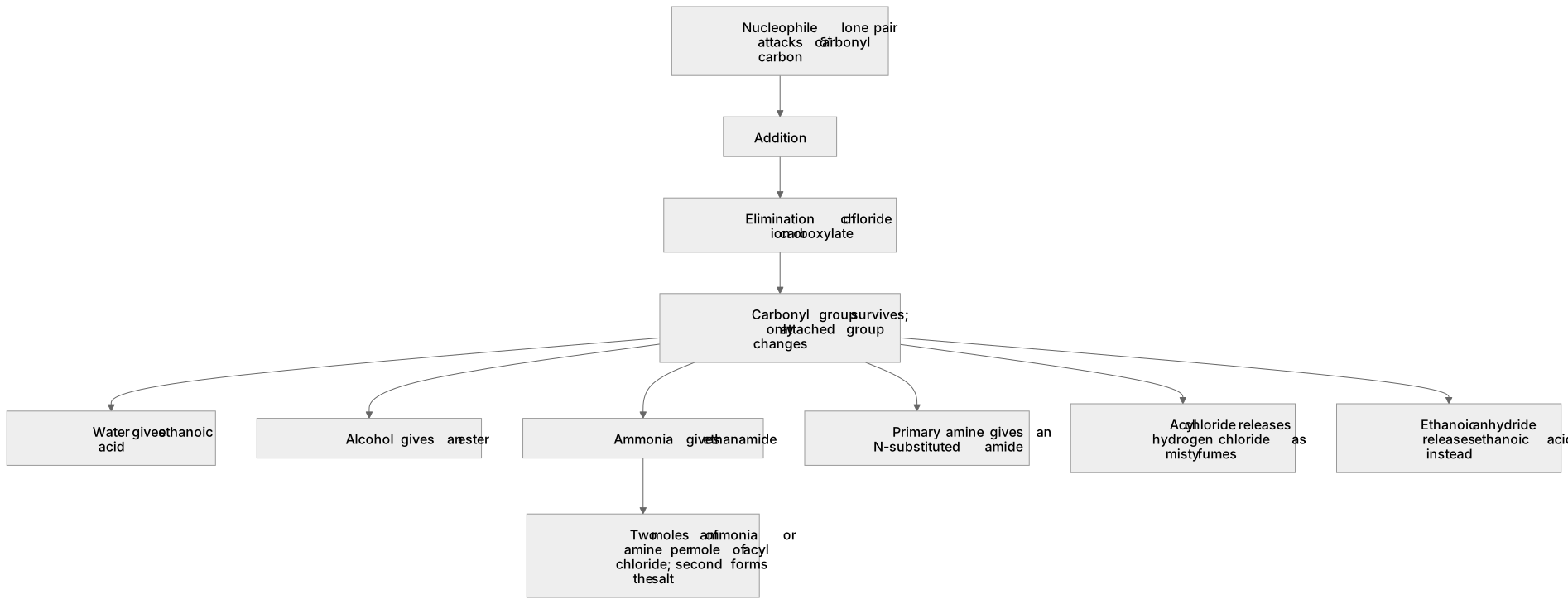
Key words
Say what each word means before you turn the card.
nucleophilic addition-elimination
Try answering aloud or in your head before turning the card.
acylation products
Try answering aloud or in your head before turning the card.
ammonium salt formation
Try answering aloud or in your head before turning the card.
See every definition
- nucleophilic addition-elimination
- A reaction in which the nucleophile's lone pair attacks the δ⁺ carbonyl carbon, and the chloride ion or a carboxylate is then eliminated, so the carbonyl group survives.
- acylation products
- With water an acid, with an alcohol an ester, with ammonia an amide, and with a primary amine an N-substituted amide.
- ammonium salt formation
- With ammonia or an amine two moles are needed per mole of acyl chloride, because the second mole takes up the HCl as a salt.
Label the diagram
Some boxes have lost their names. Pick the right name for each number.
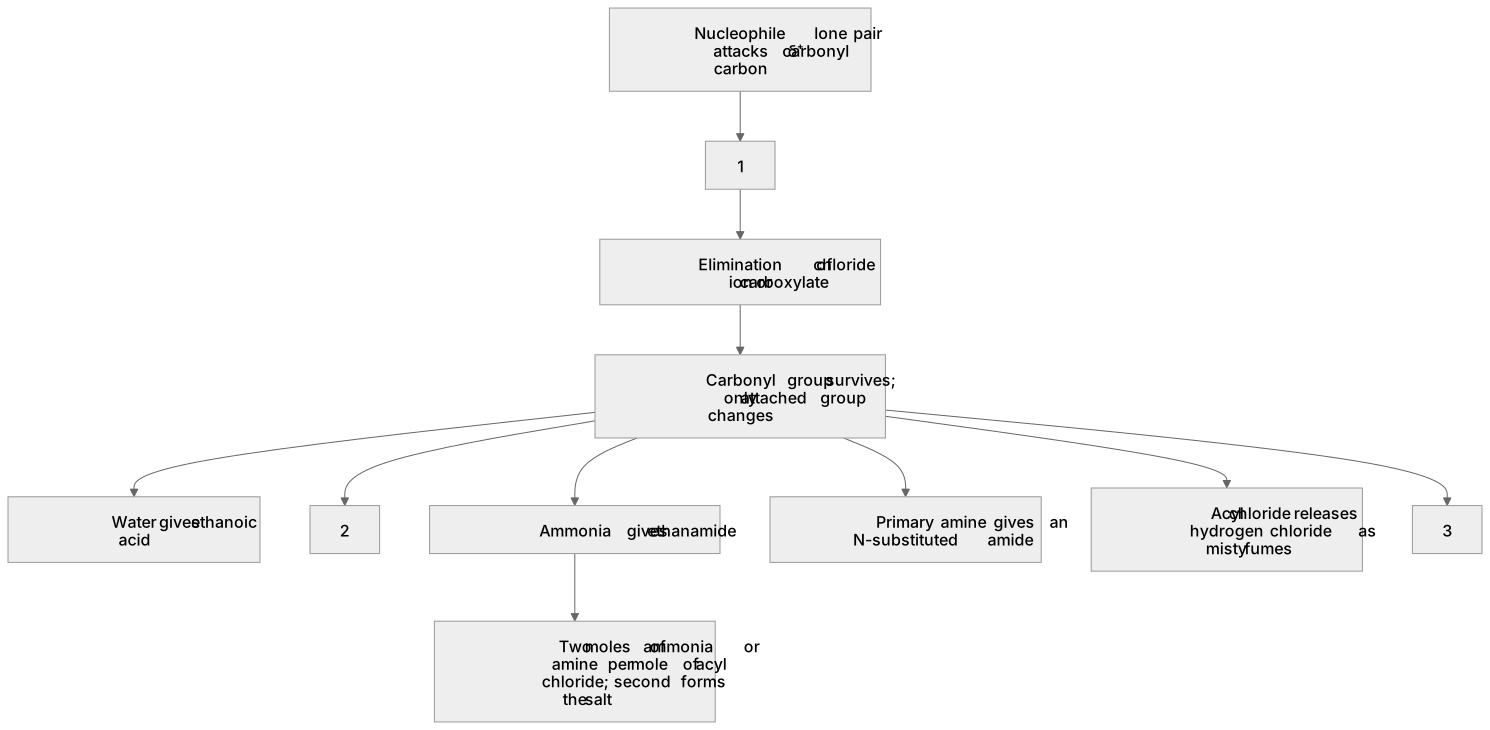
1Box 1
2Box 2
3Box 3
There is more to this lesson
The full lesson goes on to check your understanding and help you earn the marks. Create a free account to carry on, with your progress saved.
A week of Premium from your first lesson · Then the free plan continues · No card, no charge
Test your understanding of Acylation (A-level only): The nucleophilic addition–elimination reactions of water, alcohols, ammonia and primary amines with acyl chlorides and acid anhydrides.
Active recall beats re-reading. Take an instant quiz now to test what you’ve learned and lock it into long-term memory.
A week of Premium from your first lesson · Then the free plan continues · No card, no charge