AQA · A-Level · Chemistry
Course version: 7405 · Version from Sept 2016
Appreciate that results of research by different groups in the scientific…
Full specification wording
Ozone depletion: Appreciate that results of research by different groups in the scientific community provided evidence for legislation to ban the use of CFCs as solvents and refrigerants.
This statement is about how science becomes policy, so the credit is for the process, not the chemistry.
Checked against the AQA 7405 specification (opens in a new tab) on .
- Point 4 of 6
- 4 key terms
Study notes
From the checked teaching notes for this specification point.
The idea
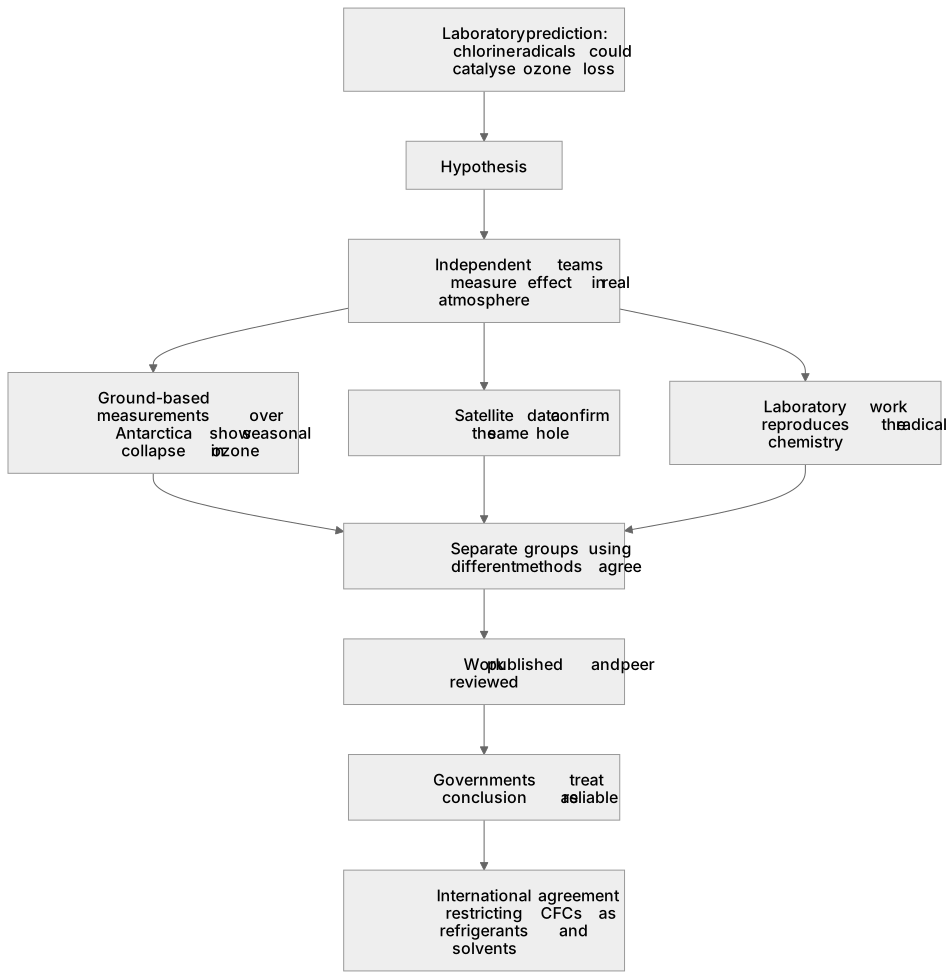
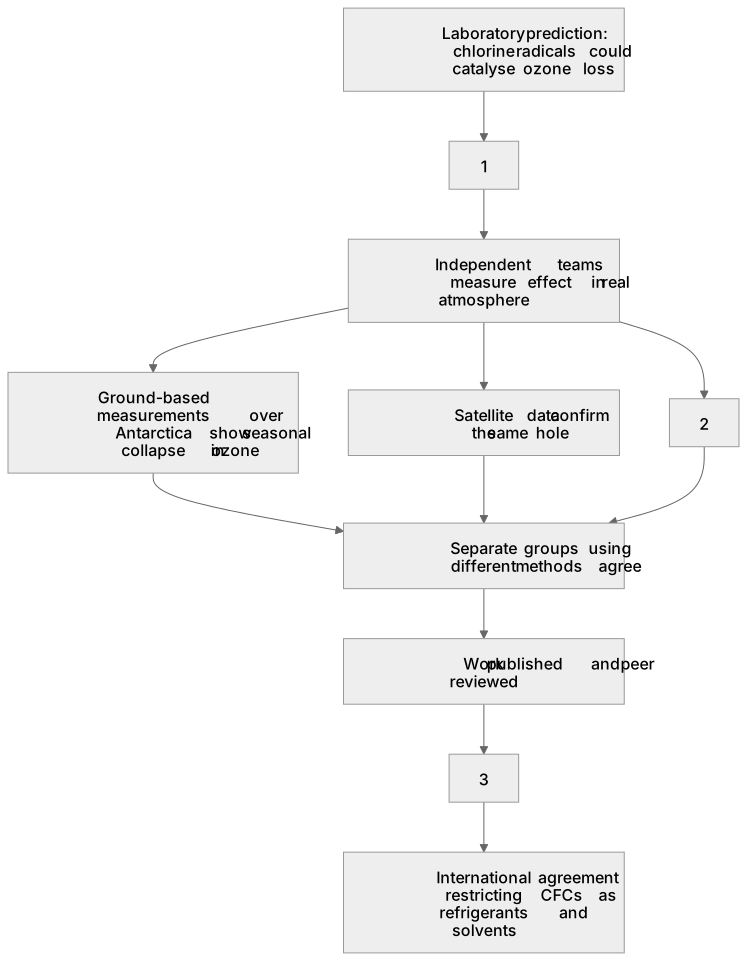
This statement is about how science becomes policy, so the credit is for the process, not the chemistry. A laboratory prediction in the 1970s that chlorine radicals could catalyse ozone loss was only a hypothesis. It gained weight when independent teams measured the effect in the real atmosphere: ground-based measurements over Antarctica showed a seasonal collapse in ozone, satellite data confirmed the same hole, and laboratory work reproduced the radical chemistry. Because separate groups using different methods agreed, and the work was published and peer reviewed, governments treated the conclusion as reliable and signed an international agreement restricting chlorofluorocarbons as refrigerants and solvents. Replication by independent groups, not the authority of any one scientist, is what turned evidence into legislation.
What earns the marks
- Saying the evidence came from more than one independent research group.
- Naming a check such as peer review, publication or reproducing the result.
- Naming the kind of evidence, such as measurements of falling ozone concentration over Antarctica.
- Linking the accepted evidence to legislation banning chlorofluorocarbons as solvents and refrigerants.
Common mistakes and how to put them right
Answering with the ozone depletion mechanism when the question asks how the evidence came to be accepted.
Claiming one scientist's result was enough to change the law.
Saying chlorofluorocarbons were banned because they are toxic or flammable, when they are neither.
Describing the ban as based on theory alone, ignoring the atmospheric measurements.
Exam tips
- Use the words independent, reproduced and peer reviewed; these are the terms the mark scheme looks for.
- Give one concrete example of evidence rather than a general claim that scientists did research.
- Finish by naming the outcome, the international restriction on chlorofluorocarbon use.
Try the lesson
The start of the Ozone depletion: Appreciate that results of research by different groups in the scientific community provided evidence for legislation to ban the use of CFCs as solvents and refrigerants. lesson, made from checked teaching notes for this specification point.
Have a go first
Which type of scientific work provided the evidence that led governments to ban CFCs as solvents and refrigerants?
Listen
This statement is about how science becomes policy, so the credit is for the process, not the chemistry. A laboratory prediction in the 1970s that chlorine radicals could catalyse ozone loss was only a hypothesis. It gained weight when independent teams measured the effect in the real atmosphere: ground-based measurements over Antarctica showed a seasonal collapse in ozone, satellite data confirmed the same hole, and laboratory work reproduced the radical chemistry. Because separate groups using different methods agreed, and the work was published and peer reviewed, governments treated the conclusion as reliable and signed an international agreement restricting chlorofluorocarbons as refrigerants and solvents. Replication by independent groups, not the authority of any one scientist, is what turned evidence into legislation. A strong answer earns marks for these points. saying the evidence came from more than one independent research group. naming a check such as peer review, publication or reproducing the result. naming the kind of evidence, such as measurements of falling ozone concentration over Antarctica. linking the accepted evidence to legislation banning chlorofluorocarbons as solvents and refrigerants. Exam tip: Use the words independent, reproduced and peer reviewed; these are the terms the mark scheme looks for.
See it
Key words
Say what each word means before you turn the card.
independent replication
Try answering aloud or in your head before turning the card.
peer review
Try answering aloud or in your head before turning the card.
atmospheric measurements
Try answering aloud or in your head before turning the card.
evidence into legislation
Try answering aloud or in your head before turning the card.
See every definition
- independent replication
- Separate groups using different methods agreed, which carries more weight than a single result.
- peer review
- The work was published and checked in this way, so governments treated the conclusion as reliable.
- atmospheric measurements
- Ground-based measurements over Antarctica showed a seasonal collapse in ozone, and satellite data confirmed the same hole.
- evidence into legislation
- Replication by independent groups, not the authority of any one scientist, is what turned evidence into legislation.
Label the diagram
Some boxes have lost their names. Pick the right name for each number.
1Box 1
2Box 2
3Box 3
There is more to this lesson
The full lesson goes on to check your understanding and help you earn the marks. Create a free account to carry on, with your progress saved.
A week of Premium from your first lesson · Then the free plan continues · No card, no charge
Test your understanding of Ozone depletion: Appreciate that results of research by different groups in the scientific community provided evidence for legislation to ban the use of CFCs as solvents and refrigerants.
Active recall beats re-reading. Take an instant quiz now to test what you’ve learned and lock it into long-term memory.
A week of Premium from your first lesson · Then the free plan continues · No card, no charge