AQA · A-Level · Chemistry
Course version: 7405 · Version from Sept 2016
Appreciate that the benefits to health of water treatment by chlorine…
Full specification wording
Uses of chlorine and chlorate(I): Appreciate that the benefits to health of water treatment by chlorine outweigh its toxic effects.
This is an evaluation, so the answer needs both sides and a conclusion.
Checked against the AQA 7405 specification (opens in a new tab) on .
- Point 5 of 6
- 4 key terms
Study notes
From the checked teaching notes for this specification point.
The idea
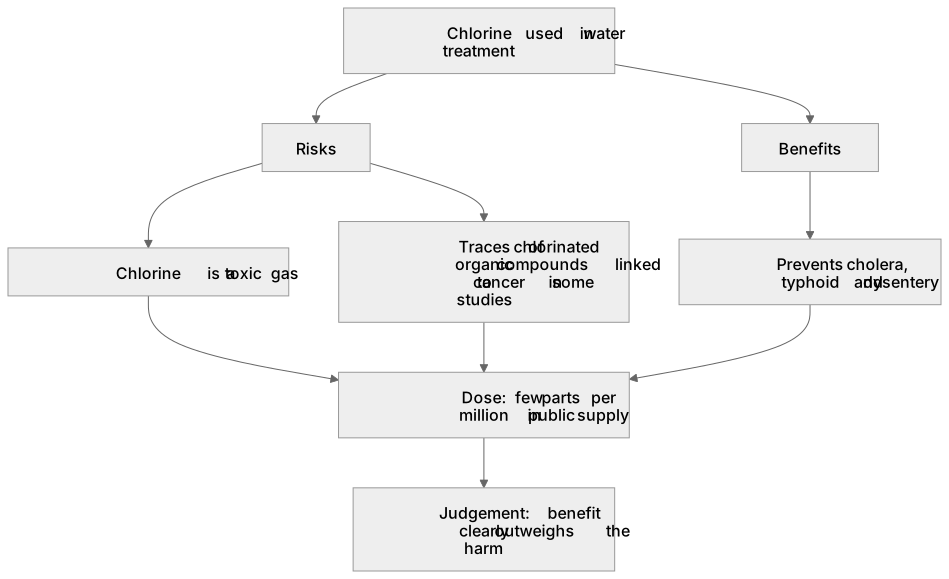
This is an evaluation, so the answer needs both sides and a conclusion. Against chlorination: chlorine is a toxic gas, used as a chemical weapon in the First World War, and chlorinating water produces traces of chlorinated organic compounds that some studies have linked to cancer. For chlorination: untreated supplies spread cholera, typhoid and dysentery, which killed people in enormous numbers before treatment became routine and still do where water is untreated. The resolution is dose. At the few parts per million used in a public supply, chlorine presents a very small risk, while the disease risk it removes is very large, so the accepted judgement is that the benefit clearly outweighs the harm.
What earns the marks
- Stating that chlorination prevents water-borne disease such as cholera or typhoid.
- Acknowledging that chlorine is toxic or that chlorinated organic compounds can form.
- Stating that the concentration used is far below a harmful level.
- A conclusion that the benefit outweighs the risk at the concentration used.
Common mistakes and how to put them right
Giving only the benefit, or only the risk, when the command word is evaluate.
Treating any amount of a toxic substance as equally dangerous, ignoring the dose.
Claiming that chlorinated water carries no risk at all.
Arguing the case without naming a disease or a named harmful effect.
Exam tips
- Structure the answer as: risk, benefit, then judgement. The judgement sentence is often the mark students miss.
- Quantify where you can, for instance parts per million, because it shows why the risk is small.
Try the lesson
The start of the Uses of chlorine and chlorate(I): Appreciate that the benefits to health of water treatment by chlorine outweigh its toxic effects. lesson, made from checked teaching notes for this specification point.
Have a go first
Which disease is a direct risk of failing to treat drinking water with chlorine?
Listen
This is an evaluation, so the answer needs both sides and a conclusion. Against chlorination: chlorine is a toxic gas, used as a chemical weapon in the First World War, and chlorinating water produces traces of chlorinated organic compounds that some studies have linked to cancer. For chlorination: untreated supplies spread cholera, typhoid and dysentery, which killed people in enormous numbers before treatment became routine and still do where water is untreated. The resolution is dose. At the few parts per million used in a public supply, chlorine presents a very small risk, while the disease risk it removes is very large, so the accepted judgement is that the benefit clearly outweighs the harm. A strong answer earns marks for these points. stating that chlorination prevents water-borne disease such as cholera or typhoid. acknowledging that chlorine is toxic or that chlorinated organic compounds can form. stating that the concentration used is far below a harmful level. a conclusion that the benefit outweighs the risk at the concentration used. Exam tip: Structure the answer as: risk, benefit, then judgement. The judgement sentence is often the mark students miss.
See it
Key words
Say what each word means before you turn the card.
evaluating a treatment
Try answering aloud or in your head before turning the card.
toxicity of chlorine
Try answering aloud or in your head before turning the card.
water-borne disease
Try answering aloud or in your head before turning the card.
dose determines risk
Try answering aloud or in your head before turning the card.
See every definition
- evaluating a treatment
- Giving both sides and a conclusion, here the benefits to health of water treatment by chlorine against its toxic effects.
- toxicity of chlorine
- Chlorine is a toxic gas, used as a chemical weapon in the First World War, and chlorinating water produces traces of chlorinated organic compounds that some studies have linked to cancer.
- water-borne disease
- Untreated supplies spread cholera, typhoid and dysentery, which killed people in enormous numbers before treatment became routine and still do where water is untreated.
- dose determines risk
- At the few parts per million used in a public supply, chlorine presents a very small risk, while the disease risk it removes is very large.
Label the diagram
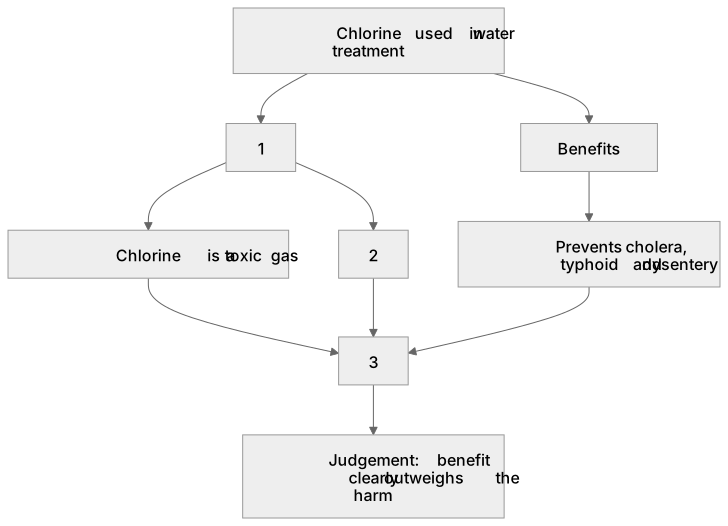
Some boxes have lost their names. Pick the right name for each number.
1Box 1
2Box 2
3Box 3
There is more to this lesson
The full lesson goes on to check your understanding and help you earn the marks. Create a free account to carry on, with your progress saved.
A week of Premium from your first lesson · Then the free plan continues · No card, no charge
Test your understanding of Uses of chlorine and chlorate(I): Appreciate that the benefits to health of water treatment by chlorine outweigh its toxic effects.
Active recall beats re-reading. Take an instant quiz now to test what you’ve learned and lock it into long-term memory.
A week of Premium from your first lesson · Then the free plan continues · No card, no charge