AQA · GCSE · Chemistry
Course version: 8462 · Version from Sept 2018
Rechargeable cells and batteries can be recharged because the chemical…
Full specification wording
Cells and batteries: Rechargeable cells and batteries can be recharged because the chemical reactions are reversed when an external electrical current is supplied.
A rechargeable cell, also called a secondary cell, produces electricity from chemical reactions like any cell.
Checked against the AQA 8462 specification (opens in a new tab) on .
- Point 6 of 7
- 4 key terms
Study notes
From the checked teaching notes for this specification point.
The idea
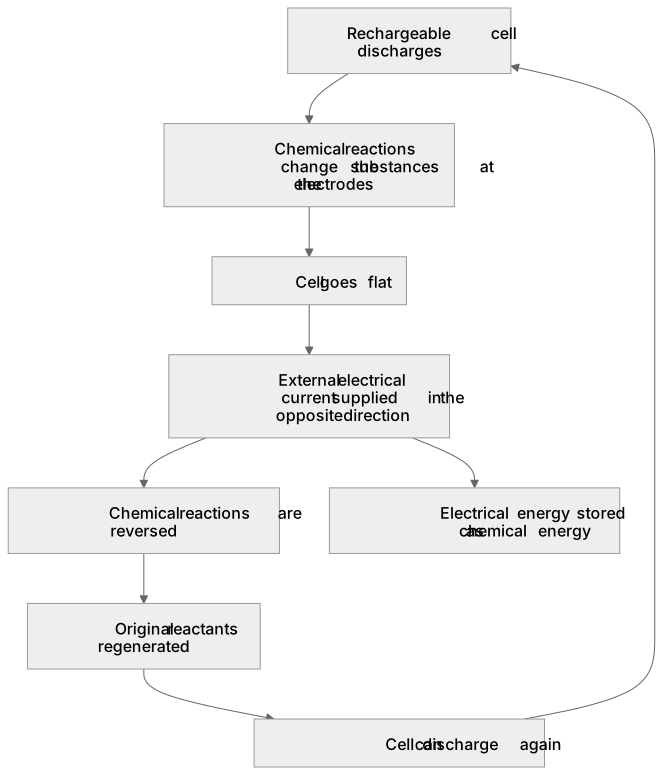
A rechargeable cell, also called a secondary cell, produces electricity from chemical reactions like any cell. When it discharges, the reactions at the electrodes change the chemicals and the cell eventually goes flat. The important difference is that these reactions can be reversed. If an external electrical current is supplied in the opposite direction, for example from a charger, the products are converted back into the original reactants. The cell can then discharge again. This cycle can be repeated many times, although the cell eventually wears out. Recharging does not create energy; it stores electrical energy as chemical energy, which is later converted back to electrical energy.
What earns the marks
- Rechargeable cells are secondary cells that can be recharged.
- During discharge, chemical reactions change the substances at the electrodes.
- Supplying an external electrical current in the reverse direction reverses those reactions.
- The original reactants are regenerated so the cell can produce a voltage again.
- Recharging stores electrical energy as chemical energy.
- The charge and discharge cycle can be repeated many times.
Common mistakes and how to put them right
Saying recharging creates new energy.
Put it right by stating that electrical energy is stored as chemical energy.
Thinking the reactions are different on recharge.
Put it right by saying the same reactions are reversed.
Believing a rechargeable cell lasts forever.
Put it right by noting that it eventually wears out after many cycles.
Exam tips
- Use the phrase reactions are reversed when an external current is supplied.
- State the direction of current is opposite to the discharge direction.
- Link recharging to storing electrical energy as chemical energy.
Try the lesson
The start of the Cells and batteries: Rechargeable cells and batteries can be recharged because the chemical reactions are reversed when an external electrical current is supplied. lesson, made from checked teaching notes for this specification point.
Have a go first
What happens inside a rechargeable cell when it is connected to a charger?
Listen
A rechargeable cell, also called a secondary cell, produces electricity from chemical reactions like any cell. When it discharges, the reactions at the electrodes change the chemicals and the cell eventually goes flat. The important difference is that these reactions can be reversed. If an external electrical current is supplied in the opposite direction, for example from a charger, the products are converted back into the original reactants. The cell can then discharge again. This cycle can be repeated many times, although the cell eventually wears out. Recharging does not create energy; it stores electrical energy as chemical energy, which is later converted back to electrical energy. A strong answer earns marks for these points. Rechargeable cells are secondary cells that can be recharged. During discharge, chemical reactions change the substances at the electrodes. Supplying an external electrical current in the reverse direction reverses those reactions. The original reactants are regenerated so the cell can produce a voltage again. A common slip: Saying recharging creates new energy. Instead, stating that electrical energy is stored as chemical energy. Exam tip: Use the phrase reactions are reversed when an external current is supplied.
See it
Key words
Say what each word means before you turn the card.
Rechargeable cells
Try answering aloud or in your head before turning the card.
Secondary cells
Try answering aloud or in your head before turning the card.
External current
Try answering aloud or in your head before turning the card.
Recharging
Try answering aloud or in your head before turning the card.
See every definition
- Rechargeable cells
- Cells that can be recharged because the chemical reactions are reversed when an external electrical current is supplied.
- Secondary cells
- Another name for rechargeable cells, which can discharge and then be recharged.
- External current
- A current supplied in the opposite direction, for example from a charger, which reverses the reactions so the products are converted back into the original reactants.
- Recharging
- Storing electrical energy as chemical energy, which is later converted back to electrical energy, rather than creating energy.
Label the diagram
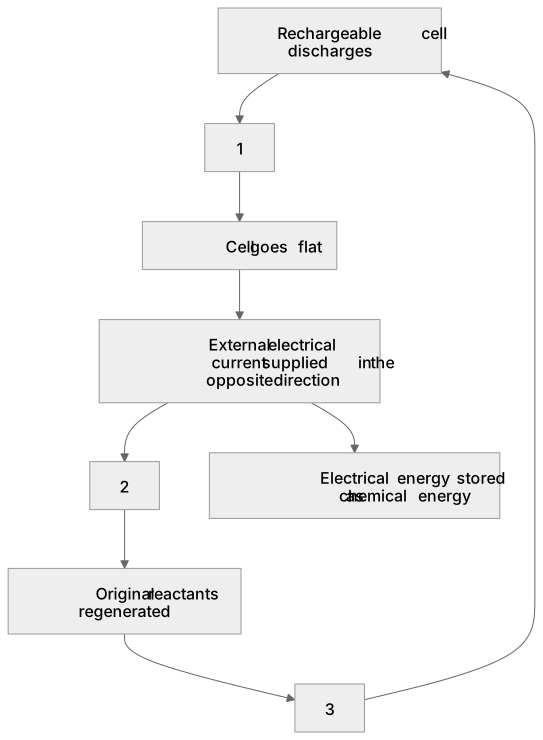
Some boxes have lost their names. Pick the right name for each number.
1Box 1
2Box 2
3Box 3
There is more to this lesson
The full lesson goes on to check your understanding and help you earn the marks. Create a free account to carry on, with your progress saved.
A week of Premium from your first lesson · Then the free plan continues · No card, no charge
Test your understanding of Cells and batteries: Rechargeable cells and batteries can be recharged because the chemical reactions are reversed when an external electrical current is supplied.
Active recall beats re-reading. Take an instant quiz now to test what you’ve learned and lock it into long-term memory.
A week of Premium from your first lesson · Then the free plan continues · No card, no charge