AQA · GCSE · Chemistry
Course version: 8462 · Version from Sept 2018
Students should be able to : predict and explain using collision theory…
Full specification wording
Collision theory and activation energy: Students should be able to : predict and explain using collision theory the effects of changing conditions of concentration, pressure and temperature on the rate of a reaction
This skill requires you to use collision theory to predict whether a reaction will speed up or slow down when concentration, pressure or temperature changes, and then to explain why using…
Checked against the AQA 8462 specification (opens in a new tab) on .
- Point 6 of 7
Study notes
From the checked teaching notes for this specification point.
The idea
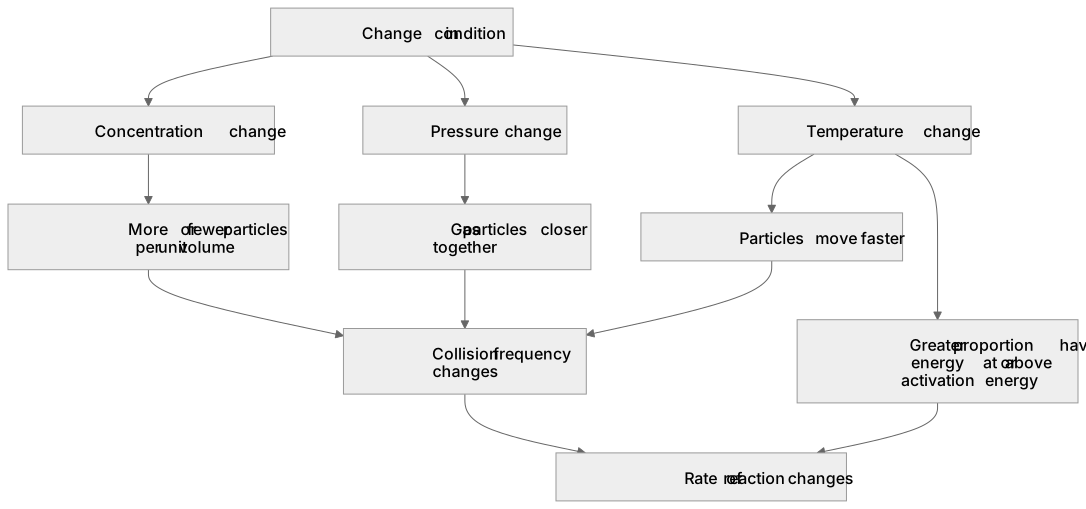
This skill requires you to use collision theory to predict whether a reaction will speed up or slow down when concentration, pressure or temperature changes, and then to explain why using particles and collisions. For concentration, more particles in a given volume means more frequent collisions. For pressure in gases, a smaller volume means gas particles collide more often. For temperature, particles move faster and a greater proportion have energy at or above the activation energy, so collisions are both more frequent and more energetic. A strong answer names the change, states the effect on collision frequency or energy, and links this to the rate.
For example: Increasing the pressure of hydrogen and nitrogen in the Haber process increases the rate because gas particles collide more frequently.
What earns the marks
- Predict the direction of rate change for a given change in concentration, pressure or temperature.
- Explain concentration changes in terms of more or fewer particles per unit volume and collision frequency.
- Explain pressure changes in terms of gas particles being closer together and colliding more frequently.
- Explain temperature changes in terms of both collision frequency and the proportion of particles with energy at or above the activation energy.
- Use the term successful collisions when linking collision theory to the rate of reaction.
Common mistakes and how to put them right
Giving a prediction without an explanation.
Put it right: State the effect on collisions and then link this to the rate.
Using the same explanation for temperature as for concentration.
Put it right: Include collision energy and activation energy for temperature.
Forgetting to state whether the rate increases or decreases.
Put it right: Make the direction of change explicit before explaining it.
Exam tips
- Structure your answer as change, effect on collisions, effect on rate.
- Use comparative terms such as more frequent or more energetic to show the direction of change.
- Check whether the question asks about concentration, pressure or temperature and tailor the explanation accordingly.
Try the lesson
The start of the Collision theory and activation energy: Students should be able to : predict and explain using collision theory the effects of changing conditions of concentration, pressure and temperature on the rate of a reaction lesson, made from checked teaching notes for this specification point.
Have a go first
A gas reaction is carried out at higher pressure. Using collision theory, what is the predicted effect on the rate of reaction?
Listen
This skill requires you to use collision theory to predict whether a reaction will speed up or slow down when concentration, pressure or temperature changes, and then to explain why using particles and collisions. For concentration, more particles in a given volume means more frequent collisions. For pressure in gases, a smaller volume means gas particles collide more often. For temperature, particles move faster and a greater proportion have energy at or above the activation energy, so collisions are both more frequent and more energetic. A strong answer names the change, states the effect on collision frequency or energy, and links this to the rate. For example, increasing the pressure of hydrogen and nitrogen in the Haber process increases the rate because gas particles collide more frequently. A strong answer earns marks for these points. Predict the direction of rate change for a given change in concentration, pressure or temperature. Explain concentration changes in terms of more or fewer particles per unit volume and collision frequency. Explain pressure changes in terms of gas particles being closer together and colliding more frequently. Explain temperature changes in terms of both collision frequency and the proportion of particles with energy at or above the activation energy. A common slip: Giving a prediction without an explanation. Instead, state the effect on collisions and then link this to the rate. Exam tip: Structure your answer as change, effect on collisions, effect on rate.
See it
Label the diagram
Some boxes have lost their names. Pick the right name for each number.
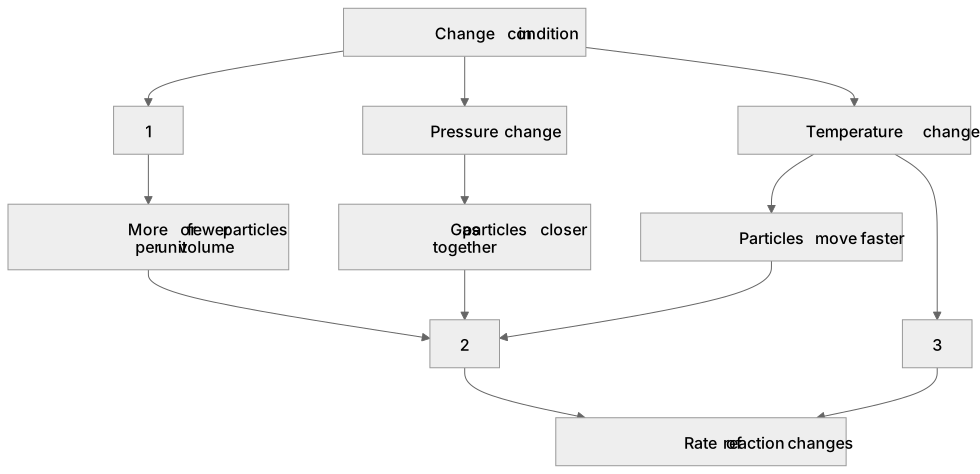
1Box 1
2Box 2
3Box 3
There is more to this lesson
The full lesson goes on to check your understanding and help you earn the marks. Create a free account to carry on, with your progress saved.
A week of Premium from your first lesson · Then the free plan continues · No card, no charge
Test your understanding of Collision theory and activation energy: Students should be able to : predict and explain using collision theory the effects of changing conditions of concentration, pressure and temperature on the rate of a reaction
Active recall beats re-reading. Take an instant quiz now to test what you’ve learned and lock it into long-term memory.
A week of Premium from your first lesson · Then the free plan continues · No card, no charge