AQA · GCSE · Chemistry
Course version: 8462 · Version from Sept 2018
Exothermic reactions include combustion, many oxidation reactions and…
Full specification wording
Energy transfer during exothermic and endothermic reactions: Exothermic reactions include combustion, many oxidation reactions and neutralisation.
Exothermic reactions transfer energy to the surroundings, so the surroundings warm up.
Checked against the AQA 8462 specification (opens in a new tab) on .
- Point 5 of 12
- 3 key terms
Study notes
From the checked teaching notes for this specification point.
The idea
Exothermic reactions transfer energy to the surroundings, so the surroundings warm up. Combustion is burning a fuel in oxygen, for example methane + oxygen → carbon dioxide + water, releasing energy as bonds form in the products. Many oxidation reactions release energy, such as reacting magnesium with oxygen or iron rusting slowly. Neutralisation is the reaction of an acid with a base or alkali to form a salt and water, for example hydrochloric acid + sodium hydroxide → sodium chloride + water, and the mixture warms. In each case, energy released when new bonds form exceeds energy taken in to break bonds, so overall energy is transferred out. Temperature rise of the surroundings is the observable evidence.
What earns the marks
- Exothermic reactions transfer energy from the reacting system to the surroundings, so the temperature of the surroundings rises.
- Combustion is an exothermic reaction in which a fuel reacts with oxygen, releasing energy; a named example such as methane burning is acceptable.
- Many oxidation reactions are exothermic, including magnesium reacting with oxygen and the slow oxidation of iron as rusting.
- Neutralisation is exothermic: an acid reacts with a base or alkali to form a salt and water, and the temperature of the mixture increases.
- Energy is released overall because the energy transferred when new bonds form in the products is greater than the energy needed to break bonds in the reactants.
- Practical evidence for exothermic change is a measured temperature rise of the surroundings, for example using a thermometer or temperature sensor.
Common mistakes and how to put them right
Saying that exothermic reactions destroy energy.
Put it right: Energy is transferred to the surroundings, not destroyed.
Claiming that all oxidation reactions are exothermic without qualification.
Put it right: Many oxidation reactions are exothermic, and combustion is a rapid oxidation example.
Describing neutralisation as taking in energy because an acid and alkali react.
Put it right: Neutralisation releases energy and warms the mixture.
Exam tips
- Name the reaction type and give a balanced equation or word equation to show the chemistry, then state that energy is transferred to the surroundings.
- Link the observation to the explanation: a temperature rise of the surroundings is evidence that the reaction is exothermic.
- When comparing bond energies, state clearly that energy released forming bonds is greater than energy taken in breaking bonds.
Try the lesson
The start of the Energy transfer during exothermic and endothermic reactions: Exothermic reactions include combustion, many oxidation reactions and neutralisation. lesson, made from checked teaching notes for this specification point.
Have a go first
Which of these reactions is exothermic?
Listen
Exothermic reactions transfer energy to the surroundings, so the surroundings warm up. Combustion is burning a fuel in oxygen, for example methane + oxygen → carbon dioxide + water, releasing energy as bonds form in the products. Many oxidation reactions release energy, such as reacting magnesium with oxygen or iron rusting slowly. Neutralisation is the reaction of an acid with a base or alkali to form a salt and water, for example hydrochloric acid + sodium hydroxide → sodium chloride + water, and the mixture warms. In each case, energy released when new bonds form exceeds energy taken in to break bonds, so overall energy is transferred out. Temperature rise of the surroundings is the observable evidence. A strong answer earns marks for these points. Exothermic reactions transfer energy from the reacting system to the surroundings, so the temperature of the surroundings rises. Combustion is an exothermic reaction in which a fuel reacts with oxygen, releasing energy; a named example such as methane burning is acceptable. Many oxidation reactions are exothermic, including magnesium reacting with oxygen and the slow oxidation of iron as rusting. Neutralisation is exothermic: an acid reacts with a base or alkali to form a salt and water, and the temperature of the mixture increases. A common slip: Saying that exothermic reactions destroy energy. Instead, energy is transferred to the surroundings, not destroyed. Exam tip: Name the reaction type and give a balanced equation or word equation to show the chemistry, then state that energy is transferred to the surroundings.
See it
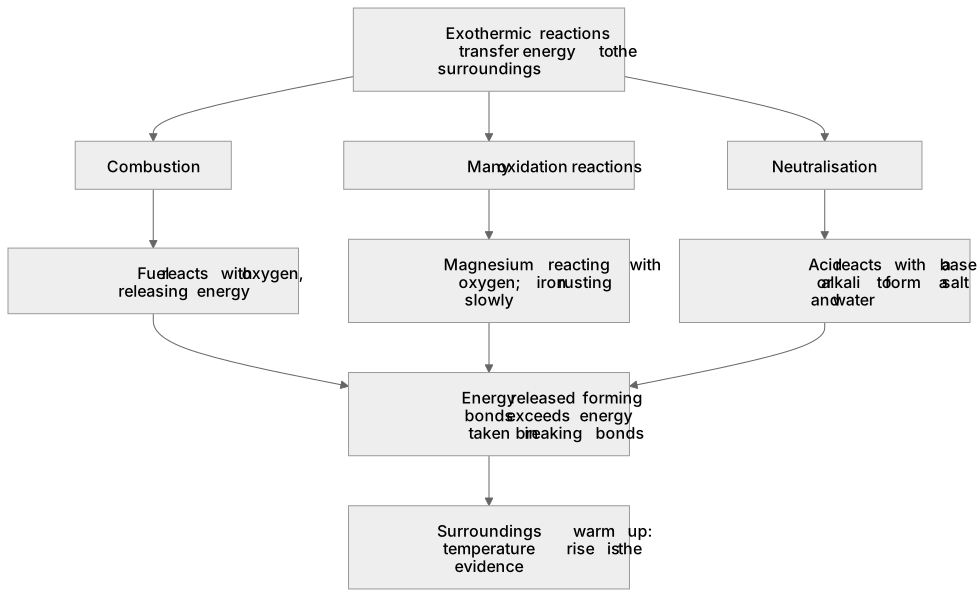
Key words
Say what each word means before you turn the card.
Exothermic reactions
Try answering aloud or in your head before turning the card.
Combustion
Try answering aloud or in your head before turning the card.
Neutralisation
Try answering aloud or in your head before turning the card.
See every definition
- Exothermic reactions
- Reactions that transfer energy to the surroundings, so the surroundings warm up.
- Combustion
- Burning a fuel in oxygen, releasing energy as bonds form in the products.
- Neutralisation
- The reaction of an acid with a base or alkali to form a salt and water, and the mixture warms.
Label the diagram
Some boxes have lost their names. Pick the right name for each number.
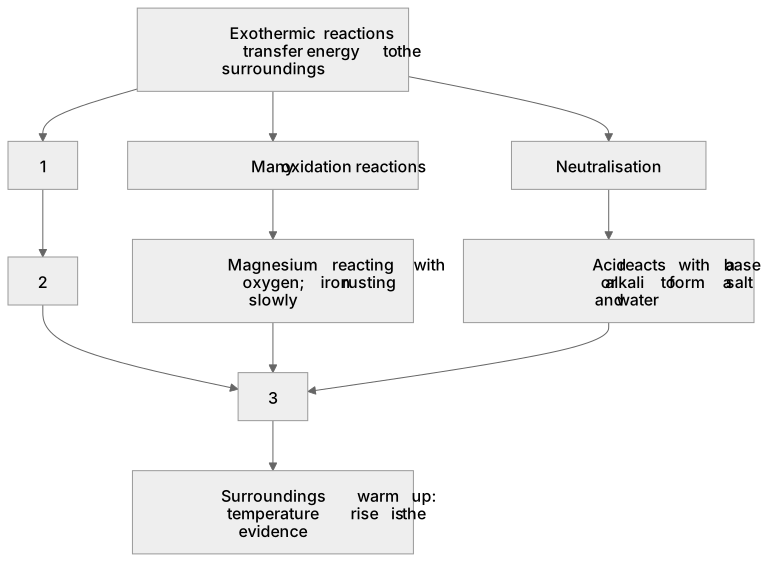
1Box 1
2Box 2
3Box 3
There is more to this lesson
The full lesson goes on to check your understanding and help you earn the marks. Create a free account to carry on, with your progress saved.
A week of Premium from your first lesson · Then the free plan continues · No card, no charge
Test your understanding of Energy transfer during exothermic and endothermic reactions: Exothermic reactions include combustion, many oxidation reactions and neutralisation.
Active recall beats re-reading. Take an instant quiz now to test what you’ve learned and lock it into long-term memory.
A week of Premium from your first lesson · Then the free plan continues · No card, no charge