AQA · GCSE · Chemistry
Course version: 8462 · Version from Sept 2018
Students should be able to: distinguish between exothermic and endothermic…
Full specification wording
Energy transfer during exothermic and endothermic reactions: Students should be able to: distinguish between exothermic and endothermic reactions on the basis of the temperature change of the surroundings evaluate uses and applications of exothermic and endothermic reactions given appropriate information.
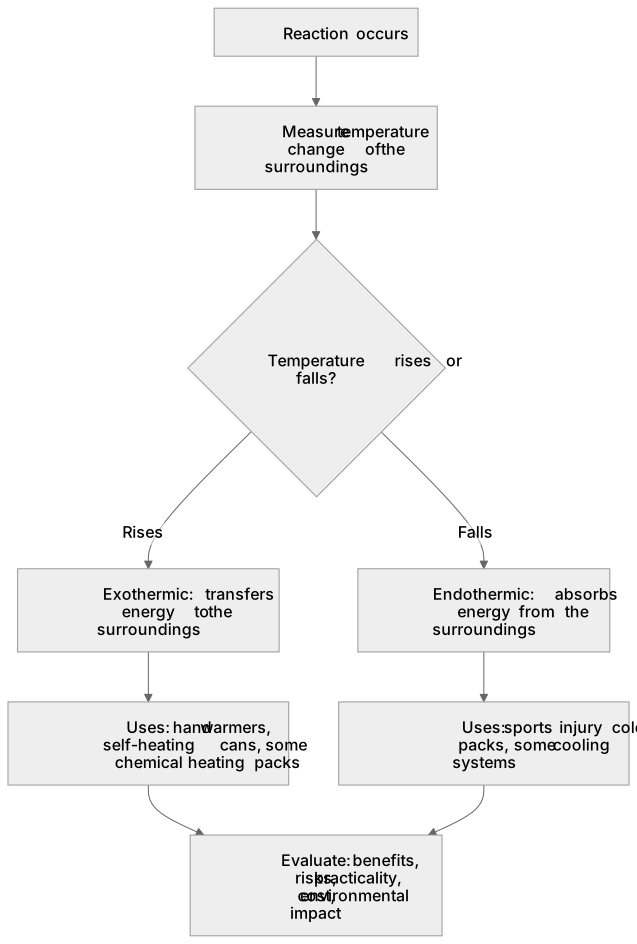
Exothermic reactions release energy to the surroundings, so the surroundings warm; endothermic reactions absorb energy from the surroundings, so the surroundings cool.
Checked against the AQA 8462 specification (opens in a new tab) on .
- Point 10 of 12
- 3 key terms
Study notes
From the checked teaching notes for this specification point.
The idea
Exothermic reactions release energy to the surroundings, so the surroundings warm; endothermic reactions absorb energy from the surroundings, so the surroundings cool. To distinguish them, measure the temperature change of the surroundings: a rise indicates exothermic, a fall indicates endothermic. For example, adding magnesium to hydrochloric acid raises the temperature, while dissolving ammonium nitrate in water lowers it. When evaluating uses, consider whether the energy transfer is useful, safe and controllable. Exothermic reactions suit hand warmers and self-heating cans; endothermic reactions suit cold packs. Evaluation should weigh benefits such as portability against risks such as burns, cost, reversibility and environmental impact.
What earns the marks
- Exothermic reactions transfer energy to the surroundings, causing a temperature rise.
- Endothermic reactions absorb energy from the surroundings, causing a temperature fall.
- Temperature change of the surroundings is the basis for distinguishing the two types.
- Uses of exothermic reactions include hand warmers, self-heating cans and some chemical heating packs.
- Uses of endothermic reactions include sports injury cold packs and some cooling systems.
- Evaluation should consider benefits, risks, practicality, cost and environmental impact using the information given.
Common mistakes and how to put them right
Reversing the temperature changes.
Put it right by stating exothermic raises temperature and endothermic lowers it.
Judging reaction type from the reaction mixture rather than the surroundings.
Put it right by focusing on the temperature change of the surroundings.
Listing a use without evaluating it.
Put it right by discussing advantages and disadvantages using the supplied information.
Exam tips
- Quote or describe the temperature change when distinguishing reaction types.
- For evaluation questions, give both a benefit and a drawback before reaching a judgement.
- Use the information provided in the question rather than relying only on general knowledge.
Try the lesson
The start of the Energy transfer during exothermic and endothermic reactions: Students should be able to: distinguish between exothermic and endothermic reactions on the basis of the temperature change of the surroundings evaluate uses and applications of exothermic and endothermic reactions given appropriate information. lesson, made from checked teaching notes for this specification point.
Have a go first
A reaction is carried out in a test tube. The temperature of the surroundings rises during the reaction. Is the reaction exothermic or endothermic, and why?
Listen
Exothermic reactions release energy to the surroundings, so the surroundings warm; endothermic reactions absorb energy from the surroundings, so the surroundings cool. To distinguish them, measure the temperature change of the surroundings: a rise indicates exothermic, a fall indicates endothermic. For example, adding magnesium to hydrochloric acid raises the temperature, while dissolving ammonium nitrate in water lowers it. When evaluating uses, consider whether the energy transfer is useful, safe and controllable. Exothermic reactions suit hand warmers and self-heating cans; endothermic reactions suit cold packs. Evaluation should weigh benefits such as portability against risks such as burns, cost, reversibility and environmental impact. A strong answer earns marks for these points. Exothermic reactions transfer energy to the surroundings, causing a temperature rise. Endothermic reactions absorb energy from the surroundings, causing a temperature fall. Temperature change of the surroundings is the basis for distinguishing the two types. Uses of exothermic reactions include hand warmers, self-heating cans and some chemical heating packs. A common slip: Reversing the temperature changes. Instead, stating exothermic raises temperature and endothermic lowers it. Exam tip: Quote or describe the temperature change when distinguishing reaction types.
See it
Key words
Say what each word means before you turn the card.
Exothermic and endothermic reactions
Try answering aloud or in your head before turning the card.
Temperature change of surroundings
Try answering aloud or in your head before turning the card.
Evaluating applications
Try answering aloud or in your head before turning the card.
See every definition
- Exothermic and endothermic reactions
- Exothermic reactions transfer energy to the surroundings, causing a temperature rise, while endothermic reactions absorb energy from the surroundings, causing a temperature fall.
- Temperature change of surroundings
- The basis for distinguishing the two types of reaction, where a rise indicates exothermic and a fall indicates endothermic.
- Evaluating applications
- Weighing benefits such as portability against risks such as burns, cost, reversibility and environmental impact using the information given.
Label the diagram
Some boxes have lost their names. Pick the right name for each number.
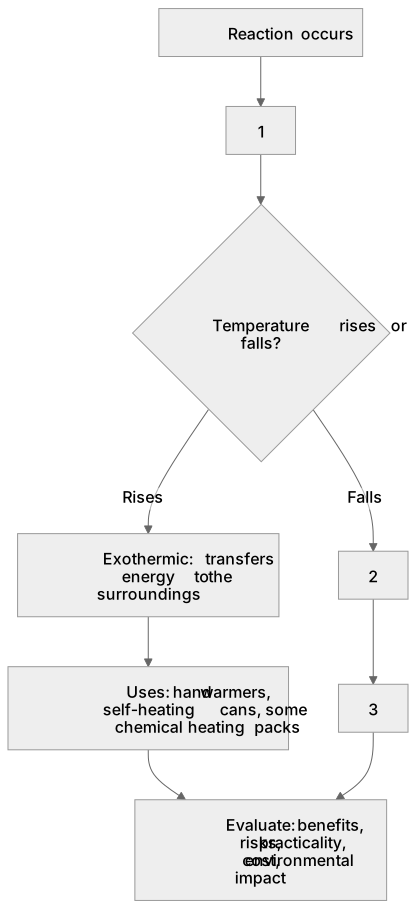
1Box 1
2Box 2
3Box 3
There is more to this lesson
The full lesson goes on to check your understanding and help you earn the marks. Create a free account to carry on, with your progress saved.
A week of Premium from your first lesson · Then the free plan continues · No card, no charge
Test your understanding of Energy transfer during exothermic and endothermic reactions: Students should be able to: distinguish between exothermic and endothermic reactions on the basis of the temperature change of the surroundings evaluate uses and applications of exothermic and endothermic reactions given appropriate information.
Active recall beats re-reading. Take an instant quiz now to test what you’ve learned and lock it into long-term memory.
A week of Premium from your first lesson · Then the free plan continues · No card, no charge