AQA · GCSE · Chemistry
Course version: 8462 · Version from Sept 2018
A solution with pH 7 is neutral. Aqueous solutions of acids have pH values…
Full specification wording
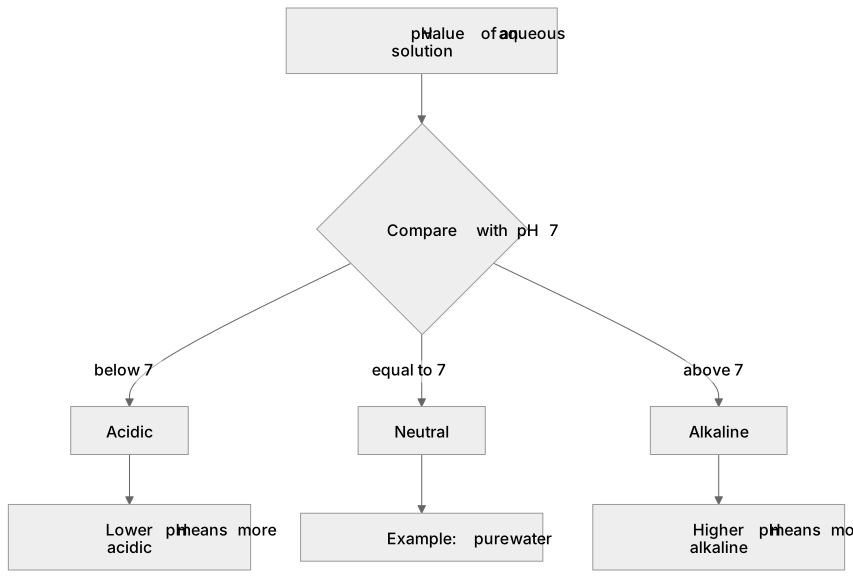
The pH scale and neutralisation: A solution with pH 7 is neutral. Aqueous solutions of acids have pH values of less than 7 and aqueous solutions of alkalis have pH values greater than 7.
The pH scale runs from 0 to 14 and tells you how acidic or alkaline an aqueous solution is.
Checked against the AQA 8462 specification (opens in a new tab) on .
- Point 4 of 6
- 4 key terms
Study notes
From the checked teaching notes for this specification point.
The idea
The pH scale runs from 0 to 14 and tells you how acidic or alkaline an aqueous solution is. A solution with pH 7 is neutral, for example pure water at room temperature. Aqueous solutions of acids have pH values below 7: the lower the number, the more acidic the solution, so pH 1 is more acidic than pH 5. Aqueous solutions of alkalis have pH values above 7: the higher the number, the more alkaline the solution, so pH 13 is more alkaline than pH 9. The scale is continuous, so a solution with pH 6.5 is weakly acidic. You can measure pH approximately using universal indicator, which changes colour across the range, or more precisely with a pH meter. Knowing the pH allows you to classify a solution as acidic, neutral or alkaline.
What earns the marks
- States that pH 7 is neutral, using pure water as a familiar example.
- States that aqueous acidic solutions have pH values below 7, and that lower values indicate greater acidity.
- States that aqueous alkaline solutions have pH values above 7, and that higher values indicate greater alkalinity.
- Uses the pH scale to classify a solution as acidic, neutral or alkaline from a given pH value.
- Recognises that the pH scale is continuous, so non-integer values such as pH 6.5 are possible and meaningful.
- Links the use of universal indicator to obtaining an approximate pH value, and a pH meter for a precise measurement.
Common mistakes and how to put them right
Thinking that pH 7 is acidic or alkaline rather than neutral.
Put it right by linking pH 7 to pure water and neutral solutions.
Believing that a higher pH always means a stronger acid.
Put it right by stating that acids have pH below 7 and that lower values mean greater acidity.
Assuming pH values must be whole numbers.
Put it right by explaining that the scale is continuous and can include decimals such as pH 6.5.
Exam tips
- When asked to classify a solution, quote the pH value and state whether it is below, equal to or above 7 before naming it acidic, neutral or alkaline.
- If a question gives a colour from universal indicator, match it to the correct region of the pH scale rather than guessing a single number.
- Use comparative language such as more acidic or more alkaline when comparing two pH values, and justify it with the numerical values.
Try the lesson
The start of the The pH scale and neutralisation: A solution with pH 7 is neutral. Aqueous solutions of acids have pH values of less than 7 and aqueous solutions of alkalis have pH values greater than 7. lesson, made from checked teaching notes for this specification point.
Have a go first
A student tests four solutions with universal indicator. Which solution is neutral?
Listen
The pH scale runs from 0 to 14 and tells you how acidic or alkaline an aqueous solution is. A solution with pH 7 is neutral, for example pure water at room temperature. Aqueous solutions of acids have pH values below 7: the lower the number, the more acidic the solution, so pH 1 is more acidic than pH 5. Aqueous solutions of alkalis have pH values above 7: the higher the number, the more alkaline the solution, so pH 13 is more alkaline than pH 9. The scale is continuous, so a solution with pH 6.5 is weakly acidic. You can measure pH approximately using universal indicator, which changes colour across the range, or more precisely with a pH meter. Knowing the pH allows you to classify a solution as acidic, neutral or alkaline. A strong answer earns marks for these points. States that pH 7 is neutral, using pure water as a familiar example. States that aqueous acidic solutions have pH values below 7, and that lower values indicate greater acidity. States that aqueous alkaline solutions have pH values above 7, and that higher values indicate greater alkalinity. Uses the pH scale to classify a solution as acidic, neutral or alkaline from a given pH value. A common slip: Thinking that pH 7 is acidic or alkaline rather than neutral. Instead, linking pH 7 to pure water and neutral solutions. Exam tip: When asked to classify a solution, quote the pH value and state whether it is below, equal to or above 7 before naming it acidic, neutral or alkaline.
See it
Key words
Say what each word means before you turn the card.
pH 7
Try answering aloud or in your head before turning the card.
Acidic solution
Try answering aloud or in your head before turning the card.
Alkaline solution
Try answering aloud or in your head before turning the card.
pH scale
Try answering aloud or in your head before turning the card.
See every definition
- pH 7
- A solution with pH 7 is neutral, for example pure water at room temperature.
- Acidic solution
- An aqueous solution of an acid has a pH value of less than 7, and the lower the number, the more acidic the solution.
- Alkaline solution
- An aqueous solution of an alkali has a pH value greater than 7, and the higher the number, the more alkaline the solution.
- pH scale
- A continuous scale running from 0 to 14 that tells you how acidic or alkaline an aqueous solution is.
There is more to this lesson
The full lesson goes on to check your understanding and help you earn the marks. Create a free account to carry on, with your progress saved.
A week of Premium from your first lesson · Then the free plan continues · No card, no charge
Test your understanding of The pH scale and neutralisation: A solution with pH 7 is neutral. Aqueous solutions of acids have pH values of less than 7 and aqueous solutions of alkalis have pH values greater than 7.
Active recall beats re-reading. Take an instant quiz now to test what you’ve learned and lock it into long-term memory.
A week of Premium from your first lesson · Then the free plan continues · No card, no charge