AQA · GCSE · Chemistry
Course version: 8462 · Version from Sept 2018
The pH scale, from 0 to 14, is a measure of the acidity or alkalinity of a…
Full specification wording
The pH scale and neutralisation: The pH scale, from 0 to 14, is a measure of the acidity or alkalinity of a solution, and can be measured using universal indicator or a pH probe.
The pH scale runs from 0 to 14 and tells you how acidic or alkaline a solution is.
Checked against the AQA 8462 specification (opens in a new tab) on .
- Point 3 of 6
- 3 key terms
Study notes
From the checked teaching notes for this specification point.
The idea
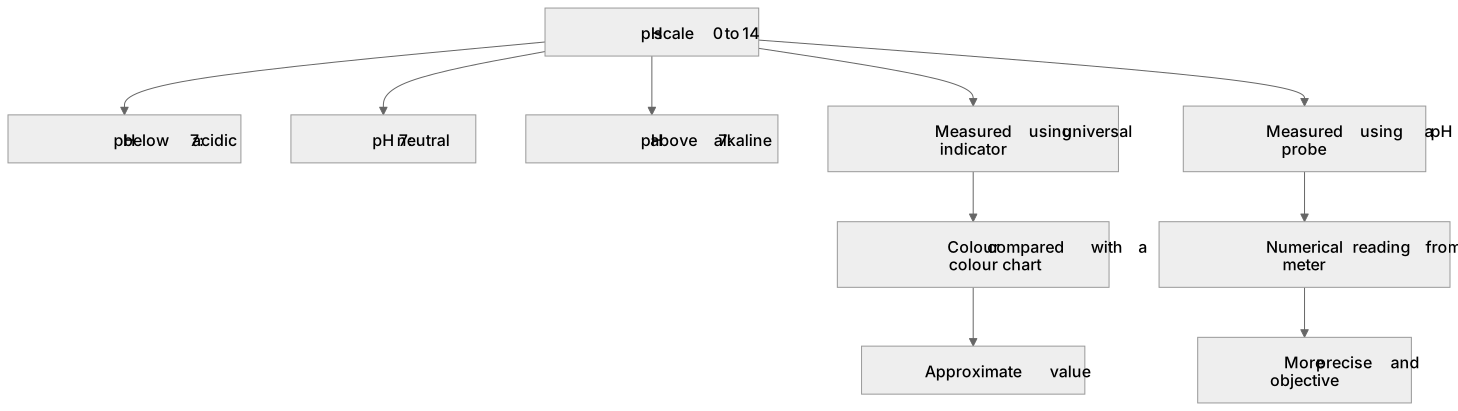
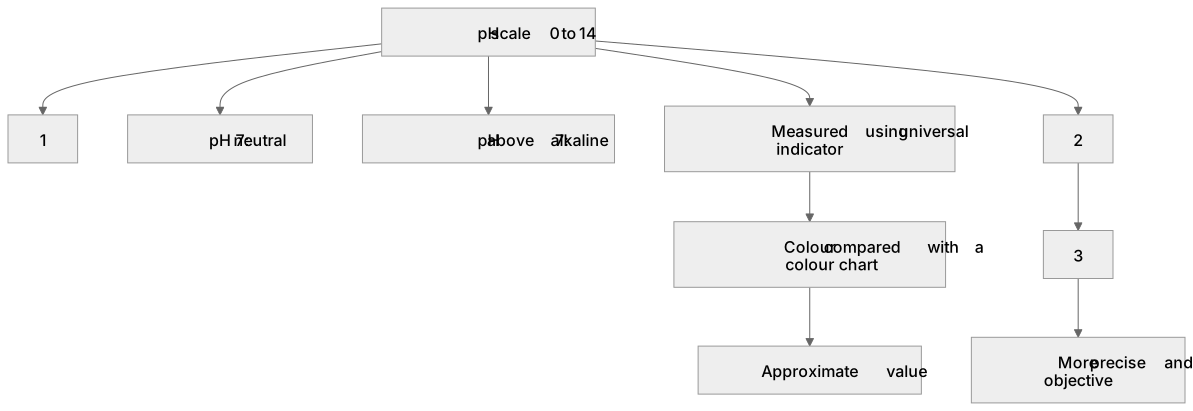
The pH scale runs from 0 to 14 and tells you how acidic or alkaline a solution is. A pH below 7 is acidic, pH 7 is neutral, and a pH above 7 is alkaline. The scale is logarithmic, so each change of one pH unit represents a tenfold change in the concentration of H⁺ ions; for example, pH 3 is ten times more acidic in terms of H⁺ concentration than pH 4. Universal indicator is a mixture of dyes that gives a colour for each pH, which you compare with a colour chart; it is quick but only gives an approximate value. A pH probe is an electronic sensor connected to a meter; it gives a numerical reading and is more precise and objective.
For example: Testing a solution with universal indicator might show orange, suggesting pH 4, while a pH probe could give a reading of 4.2.
What earns the marks
- State that the pH scale runs from 0 to 14 and is a measure of acidity or alkalinity.
- Identify that pH below 7 is acidic, pH 7 is neutral, and pH above 7 is alkaline.
- Describe how universal indicator is used, including matching the colour to a pH colour chart to estimate pH.
- Describe how a pH probe is used, including reading a numerical value from a meter for a more precise measurement.
- Compare the two methods, recognising that universal indicator is approximate while a pH probe is more precise and gives a numerical value.
Common mistakes and how to put them right
Thinking that pH 0 means no acid or that pH 14 means the strongest possible alkali in all contexts.
Put it right: pH is a logarithmic measure of H⁺ concentration, and the scale simply runs from 0 to 14 for the solutions studied.
Believing universal indicator gives an exact pH value.
Put it right: Universal indicator gives an approximate pH based on colour matching; a pH probe gives a more precise numerical reading.
Confusing the colour of universal indicator with the colour of a named indicator such as litmus.
Put it right: Universal indicator has a range of colours across the pH scale, while litmus is mainly red in acid and blue in alkali.
Exam tips
- When describing a measurement, name the method and state whether the result is approximate or precise.
- Use the pH scale correctly: state acidic, neutral or alkaline and give a pH range or value where asked.
- If comparing methods, give a clear advantage of each, such as speed for universal indicator and precision for a pH probe.
Try the lesson
The start of the The pH scale and neutralisation: The pH scale, from 0 to 14, is a measure of the acidity or alkalinity of a solution, and can be measured using universal indicator or a pH probe. lesson, made from checked teaching notes for this specification point.
Have a go first
What is the range of the pH scale?
Listen
The pH scale runs from 0 to 14 and tells you how acidic or alkaline a solution is. A pH below 7 is acidic, pH 7 is neutral, and a pH above 7 is alkaline. The scale is logarithmic, so each change of one pH unit represents a tenfold change in the concentration of H⁺ ions; for example, pH 3 is ten times more acidic in terms of H⁺ concentration than pH 4. Universal indicator is a mixture of dyes that gives a colour for each pH, which you compare with a colour chart; it is quick but only gives an approximate value. A pH probe is an electronic sensor connected to a meter; it gives a numerical reading and is more precise and objective. For example, testing a solution with universal indicator might show orange, suggesting pH 4, while a pH probe could give a reading of 4.2. A strong answer earns marks for these points. State that the pH scale runs from 0 to 14 and is a measure of acidity or alkalinity. Identify that pH below 7 is acidic, pH 7 is neutral, and pH above 7 is alkaline. Describe how universal indicator is used, including matching the colour to a pH colour chart to estimate pH. Describe how a pH probe is used, including reading a numerical value from a meter for a more precise measurement. A common slip: Thinking that pH 0 means no acid or that pH 14 means the strongest possible alkali in all contexts: students may treat the scale as linear. Instead, pH is a logarithmic measure of H⁺ concentration, and the scale simply runs from 0 to 14 for the solutions studied. Exam tip: When describing a measurement, name the method and state whether the result is approximate or precise.
See it
Key words
Say what each word means before you turn the card.
pH scale
Try answering aloud or in your head before turning the card.
Universal indicator
Try answering aloud or in your head before turning the card.
pH probe
Try answering aloud or in your head before turning the card.
See every definition
- pH scale
- A scale from 0 to 14 that is a measure of the acidity or alkalinity of a solution.
- Universal indicator
- A mixture of dyes that gives a colour for each pH, which you compare with a colour chart; it is quick but only gives an approximate value.
- pH probe
- An electronic sensor connected to a meter that gives a numerical reading and is more precise and objective.
Label the diagram
Some boxes have lost their names. Pick the right name for each number.
1Box 1
2Box 2
3Box 3
There is more to this lesson
The full lesson goes on to check your understanding and help you earn the marks. Create a free account to carry on, with your progress saved.
A week of Premium from your first lesson · Then the free plan continues · No card, no charge
Test your understanding of The pH scale and neutralisation: The pH scale, from 0 to 14, is a measure of the acidity or alkalinity of a solution, and can be measured using universal indicator or a pH probe.
Active recall beats re-reading. Take an instant quiz now to test what you’ve learned and lock it into long-term memory.
A week of Premium from your first lesson · Then the free plan continues · No card, no charge