AQA · GCSE · Chemistry
Course version: 8462 · Version from Sept 2018
New applications for nanoparticulate materials are an important area of…
Full specification wording
Uses of nanoparticles: New applications for nanoparticulate materials are an important area of research.
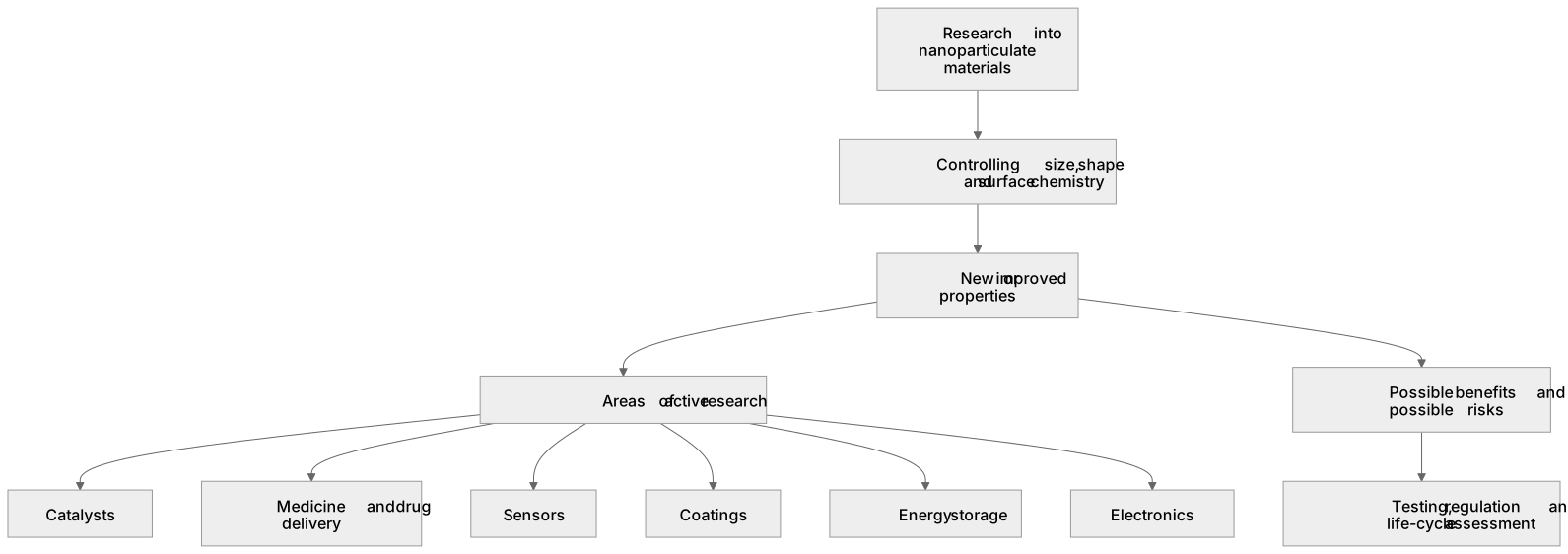
Nanoparticulate materials are an active field of research because controlling size, shape and surface chemistry at the nanoscale can produce new or improved properties.
Checked against the AQA 8462 specification (opens in a new tab) on .
- Point 2 of 4
- 4 key terms
Study notes
From the checked teaching notes for this specification point.
The idea
Nanoparticulate materials are an active field of research because controlling size, shape and surface chemistry at the nanoscale can produce new or improved properties. Researchers investigate new catalysts, drug delivery systems, sensors, coatings, energy storage materials and electronic devices. This research matters because it can lead to more efficient products, but it also requires investigation of possible risks to health and the environment, such as how nanoparticles behave in the body or in ecosystems. New applications are therefore developed alongside testing, regulation and life-cycle assessment. Understanding this helps students see science as a developing process rather than a fixed set of facts.
What earns the marks
- Research into nanoparticulate materials aims to produce new or improved properties by controlling particle size, shape and surface.
- Areas of active research include catalysts, medicine and drug delivery, sensors, coatings, energy storage and electronics.
- New applications can bring benefits such as greater efficiency, lower material use or new functions.
- Research also investigates possible risks, including effects on health and the environment, and informs regulation.
- The field is developing, so conclusions may change as new evidence is collected.
Common mistakes and how to put them right
Treating current applications as the final list.
Put it right: New applications are being researched and the field is developing.
Assuming all new nanoparticle applications are automatically beneficial.
Put it right: Benefits and risks must both be evaluated with evidence.
Confusing research with a guaranteed product.
Put it right: Research explores possibilities and requires testing before use.
Exam tips
- Use the phrase important area of research and support it with a specific example such as new catalysts or targeted drug delivery.
- When discussing risk, refer to the need for testing and regulation rather than making unsupported claims.
- Show awareness that scientific knowledge and applications change as new evidence emerges.
Try the lesson
The start of the Uses of nanoparticles: New applications for nanoparticulate materials are an important area of research. lesson, made from checked teaching notes for this specification point.
Have a go first
Why is research into new applications for nanoparticulate materials important?
Listen
Nanoparticulate materials are an active field of research because controlling size, shape and surface chemistry at the nanoscale can produce new or improved properties. Researchers investigate new catalysts, drug delivery systems, sensors, coatings, energy storage materials and electronic devices. This research matters because it can lead to more efficient products, but it also requires investigation of possible risks to health and the environment, such as how nanoparticles behave in the body or in ecosystems. New applications are therefore developed alongside testing, regulation and life-cycle assessment. Understanding this helps students see science as a developing process rather than a fixed set of facts. A strong answer earns marks for these points. Research into nanoparticulate materials aims to produce new or improved properties by controlling particle size, shape and surface. Areas of active research include catalysts, medicine and drug delivery, sensors, coatings, energy storage and electronics. New applications can bring benefits such as greater efficiency, lower material use or new functions. Research also investigates possible risks, including effects on health and the environment, and informs regulation. A common slip: Treating current applications as the final list. Instead, new applications are being researched and the field is developing. Exam tip: Use the phrase important area of research and support it with a specific example such as new catalysts or targeted drug delivery.
See it
Key words
Say what each word means before you turn the card.
Scientific research and development
Try answering aloud or in your head before turning the card.
Nanoparticle properties
Try answering aloud or in your head before turning the card.
Benefits and risks
Try answering aloud or in your head before turning the card.
Evidence and regulation
Try answering aloud or in your head before turning the card.
See every definition
- Scientific research and development
- New applications for nanoparticulate materials are an important area of research, developed alongside testing, regulation and life-cycle assessment.
- Nanoparticle properties
- Controlling particle size, shape and surface at the nanoscale can produce new or improved properties.
- Benefits and risks
- New applications can bring benefits such as greater efficiency, lower material use or new functions, but possible risks to health and the environment must also be investigated.
- Evidence and regulation
- Research informs regulation, and conclusions may change as new evidence is collected, so the field is developing rather than a fixed set of facts.
Label the diagram
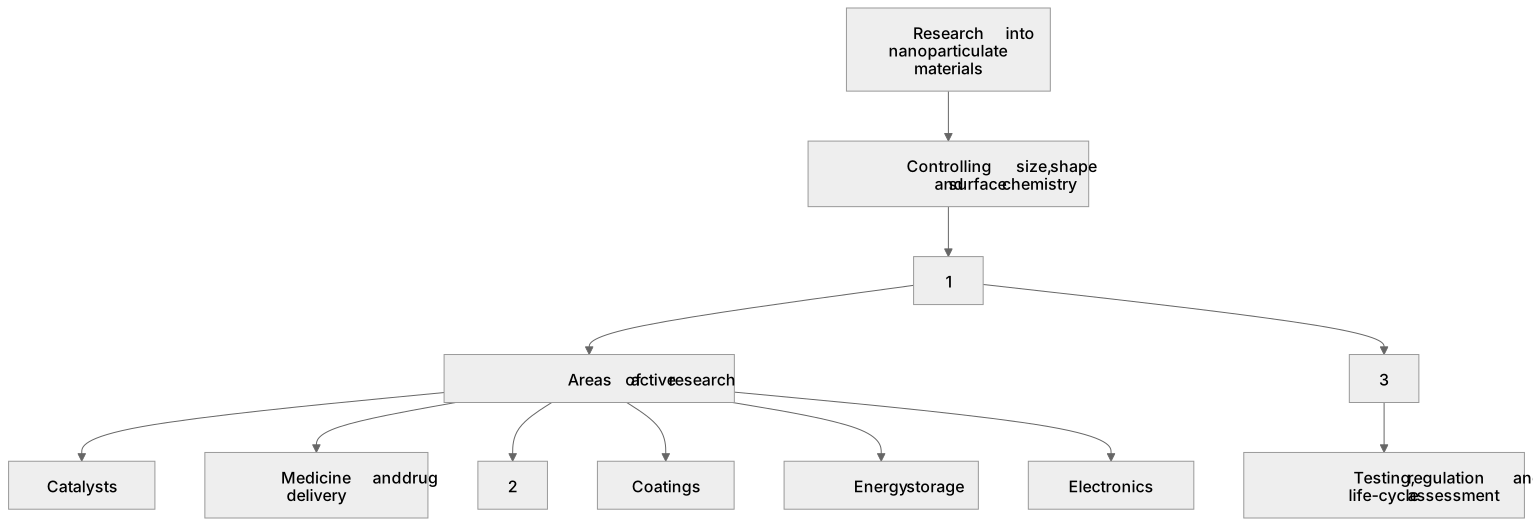
Some boxes have lost their names. Pick the right name for each number.
1Box 1
2Box 2
3Box 3
There is more to this lesson
The full lesson goes on to check your understanding and help you earn the marks. Create a free account to carry on, with your progress saved.
A week of Premium from your first lesson · Then the free plan continues · No card, no charge
Test your understanding of Uses of nanoparticles: New applications for nanoparticulate materials are an important area of research.
Active recall beats re-reading. Take an instant quiz now to test what you’ve learned and lock it into long-term memory.
A week of Premium from your first lesson · Then the free plan continues · No card, no charge