AQA · GCSE · Combined Science
Course version: 8464 · Version from Sept 2018
If the drug is found to be safe, further clinical trials are carried out…
Full specification wording
Discovery and development of drugs: If the drug is found to be safe, further clinical trials are carried out to find the optimum dose for the drug.
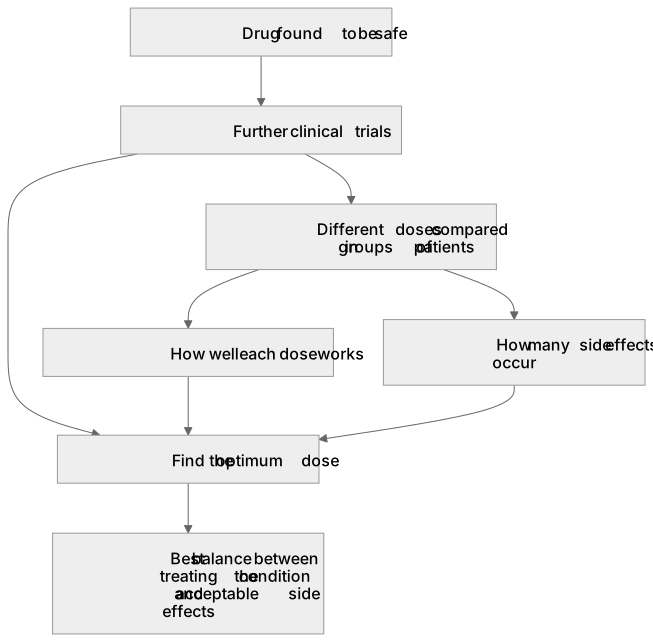
Once early clinical trials show that a drug is safe, further trials are carried out to find the optimum dose.
Checked against the AQA 8464 specification (opens in a new tab) on .
- Point 12 of 13
- 2 key terms
Study notes
From the checked teaching notes for this specification point.
The idea
Once early clinical trials show that a drug is safe, further trials are carried out to find the optimum dose. The optimum dose is the amount that gives the best balance between treating the condition and causing acceptable side effects. Researchers test different doses in groups of patients and compare how well each dose works and how many side effects occur. For example, a trial might compare 10 mg, 20 mg and 40 mg doses. The optimum dose is not simply the largest dose; a higher dose may cause more harm without extra benefit. Finding the optimum dose allows the drug to be prescribed at a level that is effective and as safe as possible.
What earns the marks
- Further clinical trials are carried out only after the drug has been shown to be safe in earlier trials.
- The purpose of these further trials is to find the optimum dose of the drug.
- The optimum dose gives the best balance between effectiveness and acceptable side effects.
- Different doses are compared in groups of patients to see which works best with fewest problems.
- The optimum dose is not always the highest dose, because larger doses can cause more side effects.
Common mistakes and how to put them right
Believing the optimum dose is the maximum dose.
Put it right by explaining that the optimum dose balances benefit against side effects.
Thinking safety testing and optimum-dose testing happen at the same time.
Put it right by stating that optimum-dose trials follow safety trials.
Assuming all patients need the same dose.
Put it right by noting that trials compare doses to find the best overall dose for the drug.
Exam tips
- Define the optimum dose in terms of both effectiveness and side effects, not just one of these.
- Use comparative language such as 'different doses are compared' when describing how the optimum dose is found.
- Make the sequence clear: safety first, then further trials for the optimum dose.
Try the lesson
The start of the Discovery and development of drugs: If the drug is found to be safe, further clinical trials are carried out to find the optimum dose for the drug. lesson, made from checked teaching notes for this specification point.
Have a go first
What is meant by the optimum dose of a drug?
Listen
Once early clinical trials show that a drug is safe, further trials are carried out to find the optimum dose. The optimum dose is the amount that gives the best balance between treating the condition and causing acceptable side effects. Researchers test different doses in groups of patients and compare how well each dose works and how many side effects occur. For example, a trial might compare 10 mg, 20 mg and 40 mg doses. The optimum dose is not simply the largest dose; a higher dose may cause more harm without extra benefit. Finding the optimum dose allows the drug to be prescribed at a level that is effective and as safe as possible. A strong answer earns marks for these points. Further clinical trials are carried out only after the drug has been shown to be safe in earlier trials. The purpose of these further trials is to find the optimum dose of the drug. The optimum dose gives the best balance between effectiveness and acceptable side effects. Different doses are compared in groups of patients to see which works best with fewest problems. A common slip: Believing the optimum dose is the maximum dose. Instead, explaining that the optimum dose balances benefit against side effects. Exam tip: Define the optimum dose in terms of both effectiveness and side effects, not just one of these.
See it
Key words
Say what each word means before you turn the card.
Clinical trials
Try answering aloud or in your head before turning the card.
Optimum dose
Try answering aloud or in your head before turning the card.
See every definition
- Clinical trials
- Trials carried out to find whether a drug is safe and then to find the optimum dose for the drug.
- Optimum dose
- The amount that gives the best balance between treating the condition and causing acceptable side effects.
Label the diagram
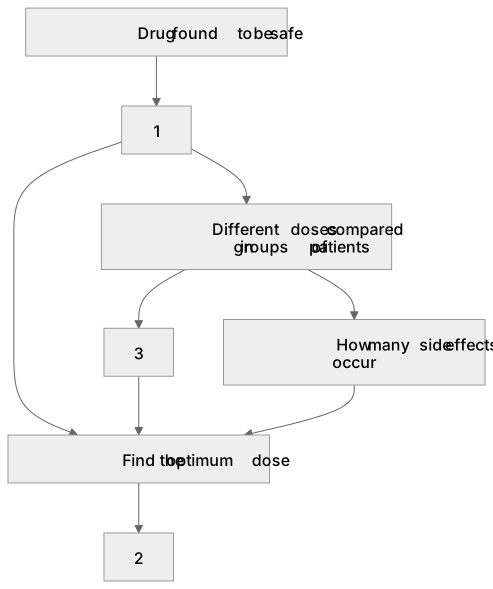
Some boxes have lost their names. Pick the right name for each number.
1Box 1
2Box 2
3Box 3
There is more to this lesson
The full lesson goes on to check your understanding and help you earn the marks. Create a free account to carry on, with your progress saved.
A week of Premium from your first lesson · Then the free plan continues · No card, no charge
Test your understanding of Discovery and development of drugs: If the drug is found to be safe, further clinical trials are carried out to find the optimum dose for the drug.
Active recall beats re-reading. Take an instant quiz now to test what you’ve learned and lock it into long-term memory.
A week of Premium from your first lesson · Then the free plan continues · No card, no charge