AQA · GCSE · Combined Science
Course version: 8464 · Version from Sept 2018
Very low doses of the drug are given at the start of the clinical trial.
Full specification wording
Discovery and development of drugs: Very low doses of the drug are given at the start of the clinical trial.
Clinical trials test a new drug on humans only after laboratory and animal testing.
Checked against the AQA 8464 specification (opens in a new tab) on .
- Point 11 of 13
Study notes
From the checked teaching notes for this specification point.
The idea
Clinical trials test a new drug on humans only after laboratory and animal testing. At the start, volunteers receive very low doses. This is a safety precaution: humans may react differently from animals, and a low dose limits any harm while still allowing researchers to observe the drug's effects. For example, a trial might begin with a dose of a few milligrams and then increase it gradually in later stages. Starting low also helps scientists gather early data on how the body absorbs and removes the drug. If unexpected side effects appear, the trial can be stopped before anyone receives a larger dose.
What earns the marks
- Very low doses are used at the start of a clinical trial to reduce the risk of harm to human volunteers.
- The first human doses are given only after earlier laboratory and animal testing has been completed.
- Starting with a low dose allows researchers to observe effects and side effects before increasing the dose.
- Dose escalation is gradual, so any unexpected reaction can be detected and the trial stopped.
- Low starting doses help establish how the human body handles the drug, including absorption and removal.
Common mistakes and how to put them right
Thinking clinical trials begin with the full intended dose.
Put it right by stating that very low doses are given first and increased gradually.
Confusing clinical trials with animal testing.
Put it right by noting that clinical trials involve human volunteers and follow earlier laboratory and animal tests.
Assuming a low dose proves the drug works.
Put it right by explaining that early low doses mainly check safety and effects, not effectiveness.
Exam tips
- Link the low starting dose directly to safety, using words such as 'reduces risk of harm' or 'limits side effects'.
- State clearly that the dose is increased gradually rather than jumping to the therapeutic dose.
- Use the phrase 'clinical trial' accurately to mean testing on humans, not animals or cells.
Try the lesson
The start of the Discovery and development of drugs: Very low doses of the drug are given at the start of the clinical trial. lesson, made from checked teaching notes for this specification point.
Have a go first
Why are very low doses of a new drug given at the start of a clinical trial?
Listen
Clinical trials test a new drug on humans only after laboratory and animal testing. At the start, volunteers receive very low doses. This is a safety precaution: humans may react differently from animals, and a low dose limits any harm while still allowing researchers to observe the drug's effects. For example, a trial might begin with a dose of a few milligrams and then increase it gradually in later stages. Starting low also helps scientists gather early data on how the body absorbs and removes the drug. If unexpected side effects appear, the trial can be stopped before anyone receives a larger dose. A strong answer earns marks for these points. Very low doses are used at the start of a clinical trial to reduce the risk of harm to human volunteers. The first human doses are given only after earlier laboratory and animal testing has been completed. Starting with a low dose allows researchers to observe effects and side effects before increasing the dose. Dose escalation is gradual, so any unexpected reaction can be detected and the trial stopped. A common slip: Thinking clinical trials begin with the full intended dose. Instead, stating that very low doses are given first and increased gradually. Exam tip: Link the low starting dose directly to safety, using words such as 'reduces risk of harm' or 'limits side effects'.
See it
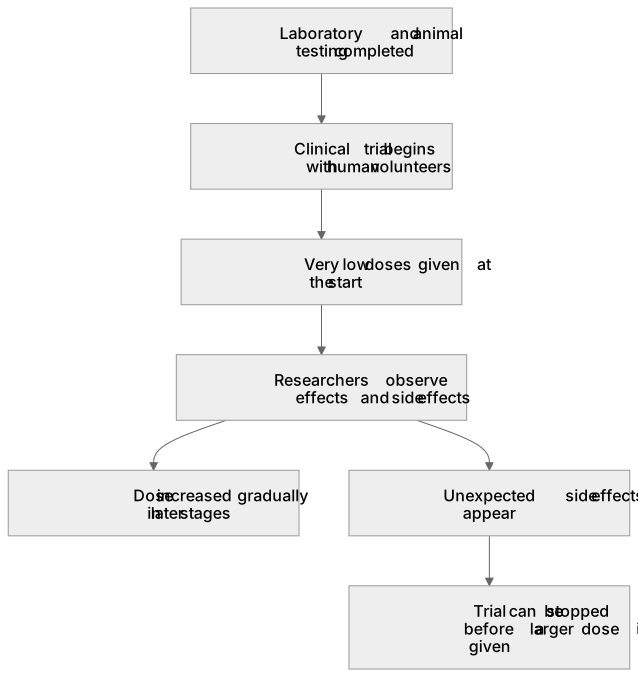
Label the diagram
Some boxes have lost their names. Pick the right name for each number.
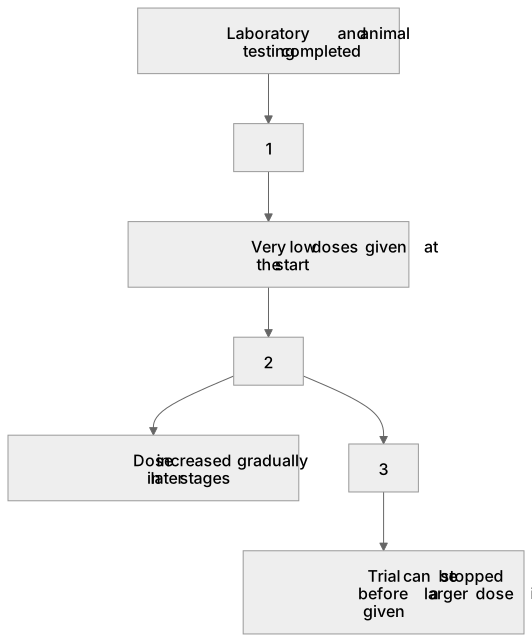
1Box 1
2Box 2
3Box 3
There is more to this lesson
The full lesson goes on to check your understanding and help you earn the marks. Create a free account to carry on, with your progress saved.
A week of Premium from your first lesson · Then the free plan continues · No card, no charge
Test your understanding of Discovery and development of drugs: Very low doses of the drug are given at the start of the clinical trial.
Active recall beats re-reading. Take an instant quiz now to test what you’ve learned and lock it into long-term memory.
A week of Premium from your first lesson · Then the free plan continues · No card, no charge