AQA · GCSE · Combined Science
Course version: 8464 · Version from Sept 2018
The heart drug digitalis originates from foxgloves.
Full specification wording
Discovery and development of drugs: The heart drug digitalis originates from foxgloves.
Digitalis is a medicine used to strengthen the force of heart contractions, and it was originally obtained from the foxglove plant, Digitalis purpurea.
Checked against the AQA 8464 specification (opens in a new tab) on .
- Point 3 of 13
- 4 key terms
Study notes
From the checked teaching notes for this specification point.
The idea
Digitalis is a medicine used to strengthen the force of heart contractions, and it was originally obtained from the foxglove plant, Digitalis purpurea. Traditional herbal knowledge showed that foxglove extracts affected the heart; later scientific work isolated active compounds called cardiac glycosides, such as digoxin, and established safe doses. This illustrates a common drug-development pathway: a natural source provides a starting compound, which is then purified, tested for efficacy and toxicity, and formulated into a medicine. Foxgloves remain the biological origin even though modern production may use extraction or chemical synthesis.
What earns the marks
- Digitalis is a drug that increases the strength of heart muscle contractions and is used to treat certain heart conditions such as heart failure.
- Its original natural source is the foxglove plant, Digitalis purpurea.
- The active compounds are cardiac glycosides, for example digoxin, which are extracted from foxglove tissue.
- The example shows how traditional plant knowledge can lead to modern pharmaceutical development.
Common mistakes and how to put them right
Saying digitalis is made by the heart.
Put it right: It acts on the heart but originates from foxgloves.
Confusing the source with the drug.
Put it right: Foxglove is the plant source, while digitalis or digoxin is the active medicine.
Claiming all foxglove material is safe medicine.
Put it right: Foxglove plants are toxic, and only controlled purified doses are used as a medicine.
Exam tips
- Name both the drug and its plant source in one clear sentence, for example 'digitalis, from foxgloves'.
- Link the drug to its effect on the heart rather than only naming the plant.
- Use the term 'active compound' when explaining that a chemical from the plant is responsible for the medical effect.
Try the lesson
The start of the Discovery and development of drugs: The heart drug digitalis originates from foxgloves. lesson, made from checked teaching notes for this specification point.
Have a go first
Which plant is the traditional source of the heart drug digitalis?
Listen
Digitalis is a medicine used to strengthen the force of heart contractions, and it was originally obtained from the foxglove plant, Digitalis purpurea. Traditional herbal knowledge showed that foxglove extracts affected the heart; later scientific work isolated active compounds called cardiac glycosides, such as digoxin, and established safe doses. This illustrates a common drug-development pathway: a natural source provides a starting compound, which is then purified, tested for efficacy and toxicity, and formulated into a medicine. Foxgloves remain the biological origin even though modern production may use extraction or chemical synthesis. A strong answer earns marks for these points. Digitalis is a drug that increases the strength of heart muscle contractions and is used to treat certain heart conditions such as heart failure. Its original natural source is the foxglove plant, Digitalis purpurea. The active compounds are cardiac glycosides, for example digoxin, which are extracted from foxglove tissue. Students should distinguish the plant source from the purified medicine: the drug is the active chemical, not the whole plant. A common slip: Saying digitalis is made by the heart. Instead, it acts on the heart but originates from foxgloves. Exam tip: Name both the drug and its plant source in one clear sentence, for example 'digitalis, from foxgloves'.
See it
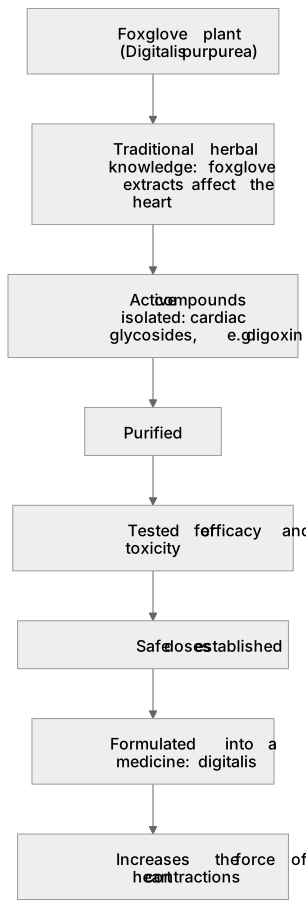
Put it in order
Put these steps in the order they happen.
- 1. Tested for efficacy and toxicity
- 2. Increases the force of heart contractions
- 3. Safe doses established
- 4. Foxglove plant (Digitalis purpurea)
- 5. Traditional herbal knowledge: foxglove extracts affect the heart
- 6. Formulated into a medicine: digitalis
- 7. Active compounds isolated: cardiac glycosides, e.g. digoxin
- 8. Purified
Key words
Say what each word means before you turn the card.
Digitalis
Try answering aloud or in your head before turning the card.
Cardiac glycosides
Try answering aloud or in your head before turning the card.
Active compound
Try answering aloud or in your head before turning the card.
Drug-development pathway
Try answering aloud or in your head before turning the card.
See every definition
- Digitalis
- A medicine used to strengthen the force of heart contractions, originally obtained from the foxglove plant.
- Cardiac glycosides
- Active compounds, such as digoxin, isolated from foxglove tissue.
- Active compound
- The chemical produced by the plant that is responsible for the medical effect, rather than the whole plant being the drug.
- Drug-development pathway
- A natural source provides a starting compound, which is then purified, tested for efficacy and toxicity, and formulated into a medicine.
Label the diagram
Some boxes have lost their names. Pick the right name for each number.
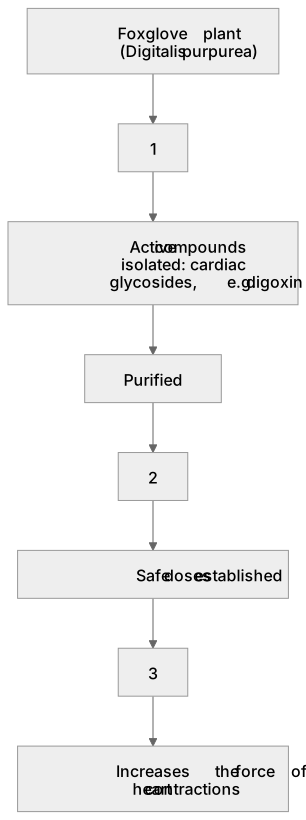
1Box 1
2Box 2
3Box 3
There is more to this lesson
The full lesson goes on to check your understanding and help you earn the marks. Create a free account to carry on, with your progress saved.
A week of Premium from your first lesson · Then the free plan continues · No card, no charge
Test your understanding of Discovery and development of drugs: The heart drug digitalis originates from foxgloves.
Active recall beats re-reading. Take an instant quiz now to test what you’ve learned and lock it into long-term memory.
A week of Premium from your first lesson · Then the free plan continues · No card, no charge