AQA · GCSE · Combined Science
Course version: 8464 · Version from Sept 2018
The painkiller aspirin originates from willow.
Full specification wording
Discovery and development of drugs: The painkiller aspirin originates from willow.
Aspirin is a painkiller and anti-inflammatory medicine whose discovery traces back to willow trees, particularly species such as Salix alba.
Checked against the AQA 8464 specification (opens in a new tab) on .
- Point 4 of 13
- 4 key terms
Study notes
From the checked teaching notes for this specification point.
The idea
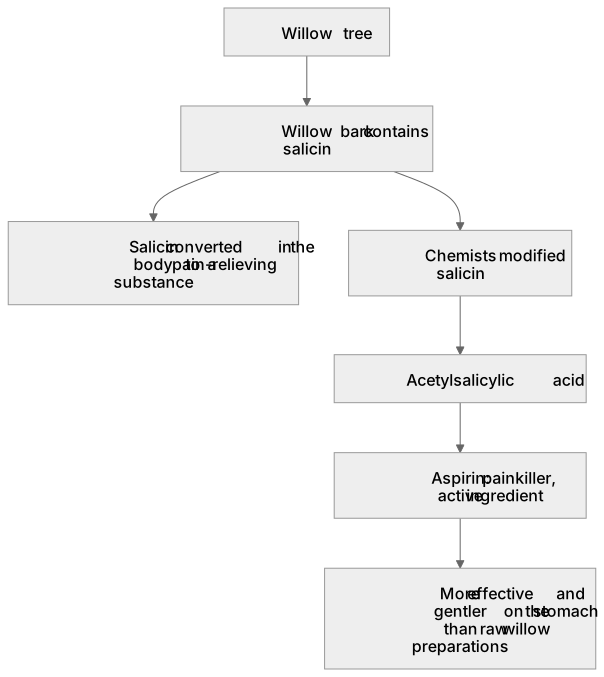
Aspirin is a painkiller and anti-inflammatory medicine whose discovery traces back to willow trees, particularly species such as Salix alba. Willow bark contains salicin, a compound that the body converts into a pain-relieving substance. Chemists modified salicin to make acetylsalicylic acid, the active ingredient in aspirin, which is more effective and gentler on the stomach than raw willow preparations. This example shows how a traditional remedy from a plant can be investigated, its active chemical identified, and a related medicine developed through chemical modification and testing.
What earns the marks
- Aspirin is a painkiller used to relieve pain and reduce inflammation and fever.
- Its origin is the willow tree, whose bark contains the compound salicin.
- Salicin is converted in the body to a pain-relieving substance, and chemists developed acetylsalicylic acid as the active ingredient of aspirin.
- The example shows that chemical modification can improve a natural lead compound, for example making it more effective or reducing side effects.
Common mistakes and how to put them right
Saying aspirin is extracted directly as salicin from willow.
Put it right: Willow contains salicin, and aspirin is acetylsalicylic acid developed from it.
Confusing the source with the final medicine.
Put it right: Willow is the plant source, while aspirin is the manufactured active compound.
Assuming all willow bark is a safe medicine.
Put it right: Raw plant material can be variable and harmful, so controlled purified doses are used.
Exam tips
- State the plant source and the drug together, for example 'aspirin, originally from willow'.
- Mention salicin as the compound in willow that led to aspirin.
- Explain one advantage of the developed drug, such as being more effective or better tolerated, rather than only naming the plant.
Try the lesson
The start of the Discovery and development of drugs: The painkiller aspirin originates from willow. lesson, made from checked teaching notes for this specification point.
Have a go first
Which plant is the original natural source of the painkiller aspirin?
Listen
Aspirin is a painkiller and anti-inflammatory medicine whose discovery traces back to willow trees, particularly species such as Salix alba. Willow bark contains salicin, a compound that the body converts into a pain-relieving substance. Chemists modified salicin to make acetylsalicylic acid, the active ingredient in aspirin, which is more effective and gentler on the stomach than raw willow preparations. This example shows how a traditional remedy from a plant can be investigated, its active chemical identified, and a related medicine developed through chemical modification and testing. A strong answer earns marks for these points. Aspirin is a painkiller used to relieve pain and reduce inflammation and fever. Its origin is the willow tree, whose bark contains the compound salicin. Salicin is converted in the body to a pain-relieving substance, and chemists developed acetylsalicylic acid as the active ingredient of aspirin. Students should distinguish willow bark as the natural source from aspirin as the purified or synthesised medicine. A common slip: Saying aspirin is extracted directly as salicin from willow. Instead, willow contains salicin, and aspirin is acetylsalicylic acid developed from it. Exam tip: State the plant source and the drug together, for example 'aspirin, originally from willow'.
See it
Key words
Say what each word means before you turn the card.
Aspirin
Try answering aloud or in your head before turning the card.
Salicin
Try answering aloud or in your head before turning the card.
Acetylsalicylic acid
Try answering aloud or in your head before turning the card.
Chemical modification
Try answering aloud or in your head before turning the card.
See every definition
- Aspirin
- A painkiller and anti-inflammatory medicine whose active ingredient is acetylsalicylic acid, developed from a compound found in willow.
- Salicin
- A compound contained in willow bark that the body converts into a pain-relieving substance.
- Acetylsalicylic acid
- The active ingredient in aspirin, made by chemists modifying salicin and more effective and gentler on the stomach than raw willow preparations.
- Chemical modification
- The process by which chemists change a natural lead compound to develop a related medicine, which can make it more effective or reduce side effects.
Label the diagram
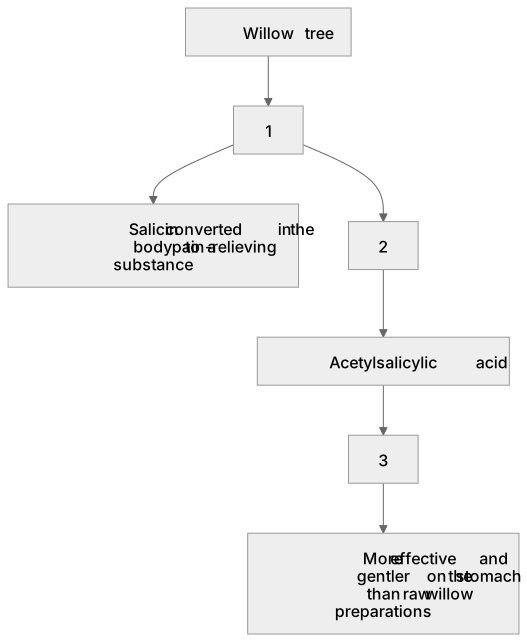
Some boxes have lost their names. Pick the right name for each number.
1Box 1
2Box 2
3Box 3
There is more to this lesson
The full lesson goes on to check your understanding and help you earn the marks. Create a free account to carry on, with your progress saved.
A week of Premium from your first lesson · Then the free plan continues · No card, no charge
Test your understanding of Discovery and development of drugs: The painkiller aspirin originates from willow.
Active recall beats re-reading. Take an instant quiz now to test what you’ve learned and lock it into long-term memory.
A week of Premium from your first lesson · Then the free plan continues · No card, no charge