AQA · GCSE · Combined Science
Course version: 8464 · Version from Sept 2018
Traditionally drugs were extracted from plants and microorganisms.
Full specification wording
Discovery and development of drugs: Traditionally drugs were extracted from plants and microorganisms.
Many medicines used today originated from natural sources.
Checked against the AQA 8464 specification (opens in a new tab) on .
- Point 2 of 13
- 4 key terms
Study notes
From the checked teaching notes for this specification point.
The idea
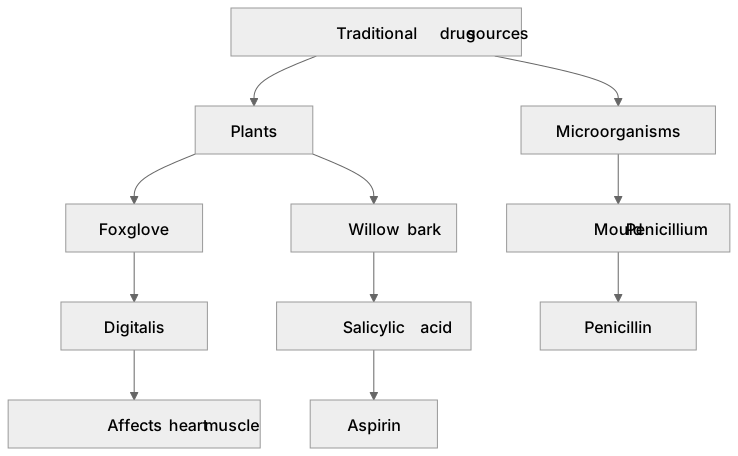
Many medicines used today originated from natural sources. For centuries, people extracted active substances from plants and microorganisms, often guided by traditional remedies. A classic example is digitalis, obtained from foxglove leaves, which affects heart muscle and is still used to treat some heart conditions. Aspirin was developed from salicylic acid found in willow bark. Penicillin is extracted from the mould Penicillium, a microorganism, and was discovered when Alexander Fleming noticed that mould killed bacteria on a plate. These examples show that plants and microorganisms are important sources of drugs, and modern scientists still screen natural products to find new medicines.
What earns the marks
- Drugs have traditionally been obtained from plants, such as digitalis from foxglove and aspirin from willow.
- Microorganisms are also traditional sources, for example penicillin from the mould Penicillium.
- Natural sources provide active compounds that can be extracted, purified and later modified to make medicines.
- Traditional knowledge and observation of natural effects often guided early drug discovery.
Common mistakes and how to put them right
Saying all drugs are made synthetically.
Put it right: Many were originally extracted from plants or microorganisms, so correct this by naming a plant or microorganism source.
Confusing the source with the scientist.
Put it right: Fleming discovered penicillin, but the drug comes from the mould Penicillium, so correct this by separating discoverer from source.
Believing traditional extraction is the same as modern synthesis.
Put it right: Extraction obtains a natural compound, while synthesis can make or modify it, so correct this by distinguishing the two.
Exam tips
- Name at least one plant and one microorganism source with the drug obtained, because specific examples earn credit.
- Link the source to the drug's effect, such as foxglove affecting the heart, to show understanding.
- Use the term active substance or compound when describing what is extracted.
Try the lesson
The start of the Discovery and development of drugs: Traditionally drugs were extracted from plants and microorganisms. lesson, made from checked teaching notes for this specification point.
Have a go first
Before modern chemical synthesis, how were new drugs traditionally discovered?
Listen
Many medicines used today originated from natural sources. For centuries, people extracted active substances from plants and microorganisms, often guided by traditional remedies. A classic example is digitalis, obtained from foxglove leaves, which affects heart muscle and is still used to treat some heart conditions. Aspirin was developed from salicylic acid found in willow bark. Penicillin is extracted from the mould Penicillium, a microorganism, and was discovered when Alexander Fleming noticed that mould killed bacteria on a plate. These examples show that plants and microorganisms are important sources of drugs, and modern scientists still screen natural products to find new medicines. A strong answer earns marks for these points. Drugs have traditionally been obtained from plants, such as digitalis from foxglove and aspirin from willow. Microorganisms are also traditional sources, for example penicillin from the mould Penicillium. Natural sources provide active compounds that can be extracted, purified and later modified to make medicines. Traditional knowledge and observation of natural effects often guided early drug discovery. Exam tip: Name at least one plant and one microorganism source with the drug obtained, because specific examples earn credit.
See it
Key words
Say what each word means before you turn the card.
Plant-derived drugs
Try answering aloud or in your head before turning the card.
Microorganism-derived drugs
Try answering aloud or in your head before turning the card.
Active substance
Try answering aloud or in your head before turning the card.
Historical development of drugs
Try answering aloud or in your head before turning the card.
See every definition
- Plant-derived drugs
- Drugs traditionally extracted from plants, such as digitalis from foxglove and aspirin from willow.
- Microorganism-derived drugs
- Drugs traditionally obtained from microorganisms, for example penicillin from the mould Penicillium.
- Active substance
- A compound from a natural source that can be extracted, purified and later modified to make medicines.
- Historical development of drugs
- Early drug discovery often guided by traditional knowledge and observation of natural effects.
Label the diagram
Some boxes have lost their names. Pick the right name for each number.
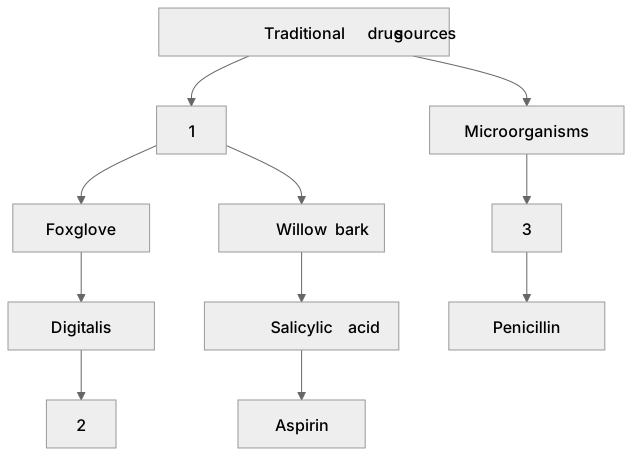
1Box 1
2Box 2
3Box 3
There is more to this lesson
The full lesson goes on to check your understanding and help you earn the marks. Create a free account to carry on, with your progress saved.
A week of Premium from your first lesson · Then the free plan continues · No card, no charge
Test your understanding of Discovery and development of drugs: Traditionally drugs were extracted from plants and microorganisms.
Active recall beats re-reading. Take an instant quiz now to test what you’ve learned and lock it into long-term memory.
A week of Premium from your first lesson · Then the free plan continues · No card, no charge