AQA · GCSE · Combined Science
Course version: 8464 · Version from Sept 2018
Students should be able to discuss the importance of understanding the…
Full specification wording
DNA and the genome: Students should be able to discuss the importance of understanding the human genome.
Discussing the human genome means weighing up benefits and limitations.
Checked against the AQA 8464 specification (opens in a new tab) on .
- Point 5 of 8
- 2 key terms
Study notes
From the checked teaching notes for this specification point.
The idea
Discussing the human genome means weighing up benefits and limitations. Benefits include identifying genes linked to inherited disorders such as cystic fibrosis, enabling genetic testing and counselling, understanding how cancers arise from mutations, and developing medicines matched to a patient's genotype. Limitations include the role of environment, the fact that many conditions involve several genes, and ethical concerns about privacy, insurance and editing genes. A good discussion gives both sides and reaches a supported judgement, using accurate terms such as genome, allele, mutation and genetic testing.
What earns the marks
- Gives at least one medical benefit of understanding the human genome, such as identifying genes linked to inherited disorders.
- Gives at least one further benefit, such as genetic testing, counselling, or matching medicines to a patient's genotype.
- Recognises a limitation or ethical concern, such as privacy of genetic data, insurance discrimination, or the influence of environment.
- Uses correct terminology, including genome, allele, mutation and genetic testing.
- Reaches a supported judgement rather than listing points without a conclusion.
Common mistakes and how to put them right
Listing only benefits and ignoring limitations.
Put it right: Include at least one limitation or ethical concern.
Confusing genetic testing with gene therapy.
Put it right: Testing identifies alleles, whereas gene therapy aims to treat a disorder.
Claiming a person's genome alone determines all their characteristics.
Put it right: Environment and lifestyle also contribute.
Exam tips
- Plan two benefits and one limitation before writing, then add a short concluding judgement.
- Use connectives such as 'however' and 'therefore' to show balanced discussion.
- Anchor each point to a named example, such as testing for the allele that causes cystic fibrosis.
Try the lesson
The start of the DNA and the genome: Students should be able to discuss the importance of understanding the human genome. lesson, made from checked teaching notes for this specification point.
Have a go first
Why is understanding the human genome useful in medicine?
Listen
Discussing the human genome means weighing up benefits and limitations. Benefits include identifying genes linked to inherited disorders such as cystic fibrosis, enabling genetic testing and counselling, understanding how cancers arise from mutations, and developing medicines matched to a patient's genotype. Limitations include the role of environment, the fact that many conditions involve several genes, and ethical concerns about privacy, insurance and editing genes. A good discussion gives both sides and reaches a supported judgement, using accurate terms such as genome, allele, mutation and genetic testing. A strong answer earns marks for these points. Gives at least one medical benefit of understanding the human genome, such as identifying genes linked to inherited disorders. Gives at least one further benefit, such as genetic testing, counselling, or matching medicines to a patient's genotype. Recognises a limitation or ethical concern, such as privacy of genetic data, insurance discrimination, or the influence of environment. Uses correct terminology, including genome, allele, mutation and genetic testing. A common slip: Listing only benefits and ignoring limitations. Instead, include at least one limitation or ethical concern. Exam tip: Plan two benefits and one limitation before writing, then add a short concluding judgement.
See it

Key words
Say what each word means before you turn the card.
Genetic testing
Try answering aloud or in your head before turning the card.
Ethical concerns
Try answering aloud or in your head before turning the card.
See every definition
- Genetic testing
- Identifies alleles, for example testing for the allele that causes cystic fibrosis, and is not the same as gene therapy.
- Ethical concerns
- Concerns about privacy, insurance and editing genes that limit the use of human genome information.
Label the diagram
Some boxes have lost their names. Pick the right name for each number.
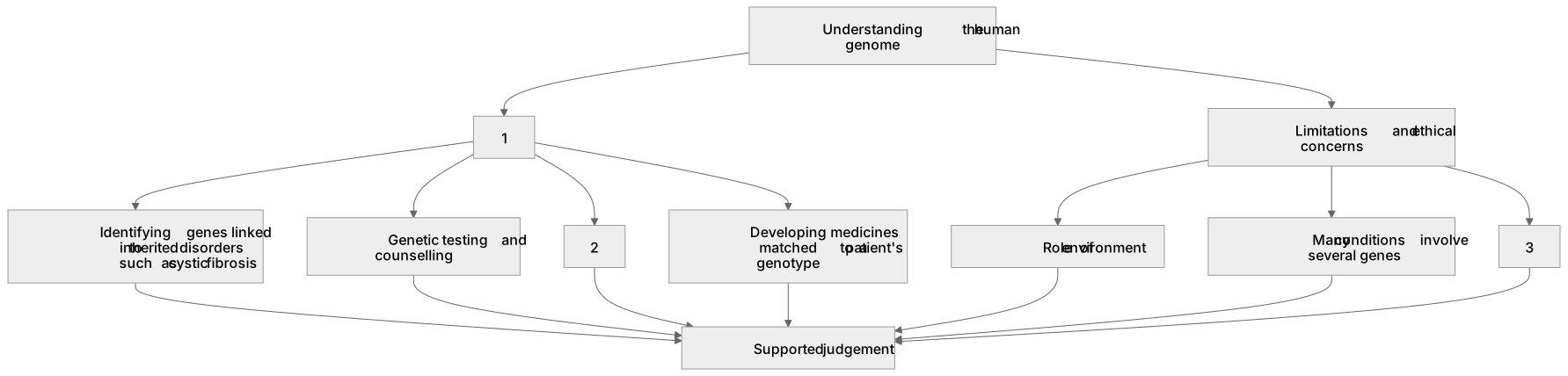
1Box 1
2Box 2
3Box 3
There is more to this lesson
The full lesson goes on to check your understanding and help you earn the marks. Create a free account to carry on, with your progress saved.
A week of Premium from your first lesson · Then the free plan continues · No card, no charge
Test your understanding of DNA and the genome: Students should be able to discuss the importance of understanding the human genome.
Active recall beats re-reading. Take an instant quiz now to test what you’ve learned and lock it into long-term memory.
A week of Premium from your first lesson · Then the free plan continues · No card, no charge