AQA · GCSE · Combined Science
Course version: 8464 · Version from Sept 2018
Crops that have had their genes modified in this way are called…
Full specification wording
Genetic engineering: Crops that have had their genes modified in this way are called genetically modified (GM) crops. GM crops include ones that are resistant to insect attack or to herbicides. GM crops generally show increased yields.
Crops produced by genetic engineering are called genetically modified (GM) crops.
Checked against the AQA 8464 specification (opens in a new tab) on .
- Point 6 of 12
Study notes
From the checked teaching notes for this specification point.
The idea
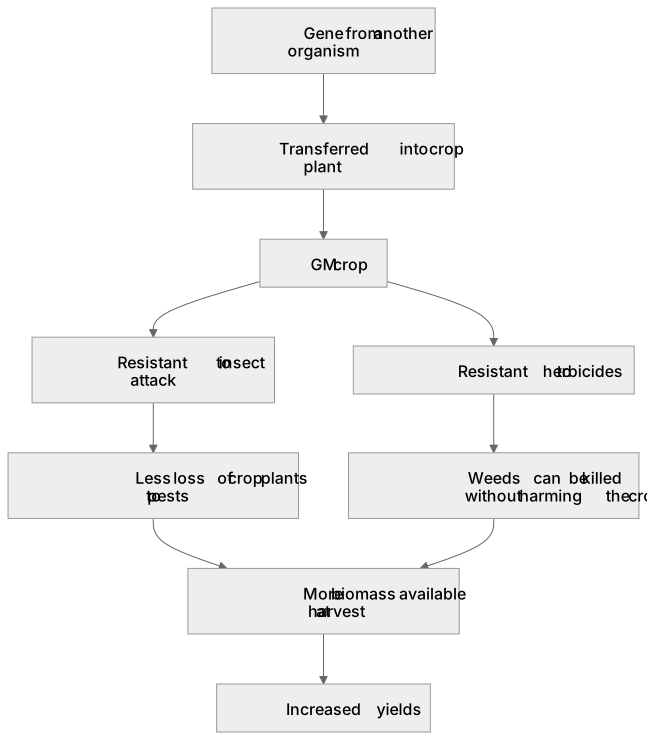
Crops produced by genetic engineering are called genetically modified (GM) crops. A gene from another organism is cut out and transferred into the crop plant, so the plant gains a new characteristic. For example, a gene from the bacterium Bacillus thuringiensis gives maize resistance to insect attack, and other genes give crops resistance to herbicides so weeds can be killed without harming the crop. Resistant crops lose less tissue to pests or weeds, so more of the plant's energy goes into growth and grain. This generally increases yield, meaning a larger mass of crop harvested from the same area. Farmers may also use fewer chemical sprays, which can reduce costs and environmental impact.
What earns the marks
- GM crops are crops that have had a gene from another organism transferred into them.
- A transferred gene can make a crop resistant to insect attack, for example the Bt gene in maize.
- A transferred gene can make a crop resistant to herbicides, so weeds can be killed without damaging the crop.
- Resistance reduces loss of crop plants to pests or weeds, so more biomass is available at harvest.
- GM crops generally show increased yields compared with non-GM varieties grown under the same conditions.
- Using GM crops can reduce the need for chemical insecticides or herbicides.
Common mistakes and how to put them right
Saying GM crops are always bigger or better in every way.
Put it right by stating that they generally show increased yields, not that every GM crop always yields more.
Confusing herbicide resistance with insect resistance.
Put it right: Herbicide resistance allows weedkillers to be used safely on the crop, while insect resistance protects the crop from being eaten by insects.
Thinking GM crops contain no genes from other species.
Put it right by explaining that a gene from a different organism has been transferred into the crop.
Exam tips
- Give a named example, such as Bt maize resistant to insect attack, to support your answer.
- Explain the link between resistance and yield: less damage means more growth and a larger harvested mass.
- Compare GM and non-GM crops grown under the same conditions when discussing yield.
Try the lesson
The start of the Genetic engineering: Crops that have had their genes modified in this way are called genetically modified (GM) crops. GM crops include ones that are resistant to insect attack or to herbicides. GM crops generally show increased yields. lesson, made from checked teaching notes for this specification point.
Have a go first
What name is given to crops that have had their genes modified by genetic engineering?
Listen
Crops produced by genetic engineering are called genetically modified (GM) crops. A gene from another organism is cut out and transferred into the crop plant, so the plant gains a new characteristic. For example, a gene from the bacterium Bacillus thuringiensis gives maize resistance to insect attack, and other genes give crops resistance to herbicides so weeds can be killed without harming the crop. Resistant crops lose less tissue to pests or weeds, so more of the plant's energy goes into growth and grain. This generally increases yield, meaning a larger mass of crop harvested from the same area. Farmers may also use fewer chemical sprays, which can reduce costs and environmental impact. A strong answer earns marks for these points. GM crops are crops that have had a gene from another organism transferred into them. A transferred gene can make a crop resistant to insect attack, for example the Bt gene in maize. A transferred gene can make a crop resistant to herbicides, so weeds can be killed without damaging the crop. Resistance reduces loss of crop plants to pests or weeds, so more biomass is available at harvest. A common slip: Saying GM crops are always bigger or better in every way. Instead, stating that they generally show increased yields, not that every GM crop always yields more. Exam tip: Give a named example, such as Bt maize resistant to insect attack, to support your answer.
See it
Label the diagram
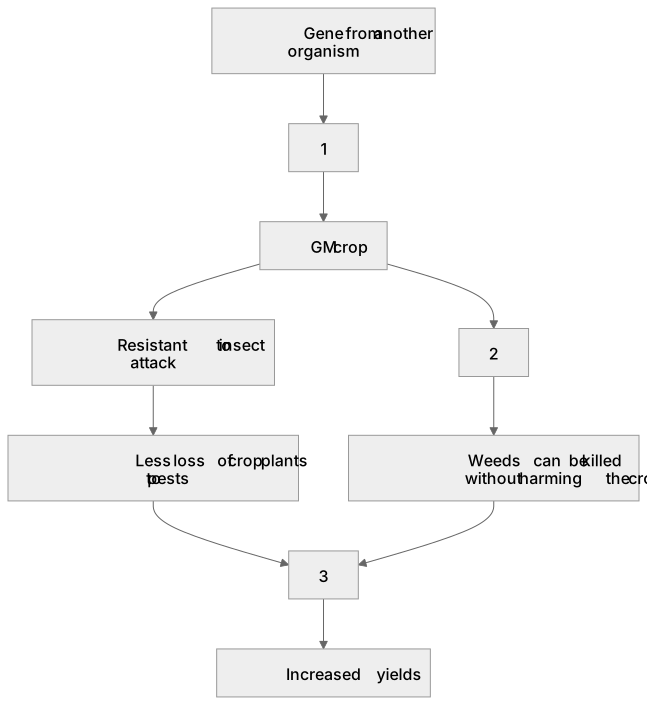
Some boxes have lost their names. Pick the right name for each number.
1Box 1
2Box 2
3Box 3
There is more to this lesson
The full lesson goes on to check your understanding and help you earn the marks. Create a free account to carry on, with your progress saved.
A week of Premium from your first lesson · Then the free plan continues · No card, no charge
Test your understanding of Genetic engineering: Crops that have had their genes modified in this way are called genetically modified (GM) crops. GM crops include ones that are resistant to insect attack or to herbicides. GM crops generally show increased yields.
Active recall beats re-reading. Take an instant quiz now to test what you’ve learned and lock it into long-term memory.
A week of Premium from your first lesson · Then the free plan continues · No card, no charge