AQA · GCSE · Combined Science
Course version: 8464 · Version from Sept 2018
Students should be able to explain the potential benefits and risks of…
Full specification wording
Genetic engineering: Students should be able to explain the potential benefits and risks of genetic engineering in agriculture and in medicine and that some people have objections.
Genetic engineering can improve crops and medicines, but it raises ethical, environmental and health concerns.
Checked against the AQA 8464 specification (opens in a new tab) on .
- Point 4 of 12
Study notes
From the checked teaching notes for this specification point.
The idea
Genetic engineering can improve crops and medicines, but it raises ethical, environmental and health concerns. In agriculture, benefits include crops that resist pests, diseases or drought, higher yields and reduced pesticide use. Risks include genes spreading to wild plants, effects on non-target organisms and reduced biodiversity. In medicine, benefits include producing human insulin, vaccines and treatments for genetic disorders. Risks include unexpected side effects, high cost limiting access and ethical concerns about altering human genes. Some people object on religious or moral grounds, argue that humans should not alter organisms, or worry that long-term effects are unknown. A balanced answer gives benefits and risks for both areas and explains why objections exist.
What earns the marks
- Agricultural benefit: genetically engineered crops can be resistant to pests, diseases or environmental stress, increasing yield and reducing pesticide use.
- Agricultural risk: transferred genes may spread to wild plants or affect non-target organisms, reducing biodiversity.
- Medical benefit: genetic engineering can produce human proteins such as insulin, vaccines and treatments for inherited disorders.
- Medical risk: treatments may have unexpected side effects, be expensive or raise concerns about altering human genes.
- Objections: some people oppose genetic engineering on religious or moral grounds, or because long-term effects are unknown.
- A balanced evaluation weighs benefits against risks and recognises that different people reach different conclusions.
Common mistakes and how to put them right
Listing only benefits or only risks.
Put it right: Address both sides for agriculture and medicine to show balanced evaluation.
Treating all genetic engineering as identical.
Put it right: Distinguish crop modification from medical gene therapy and from producing medicines in bacteria.
Assuming objections are only about safety.
Put it right: Objections can also be religious, moral or about animal welfare and fairness of access.
Exam tips
- Use the words benefit and risk explicitly and give at least one of each for agriculture and one of each for medicine.
- Support each point with a specific example, such as pest-resistant crops or bacterially produced human insulin.
- State that some people object and give a reason, rather than simply saying some people disagree.
Try the lesson
The start of the Genetic engineering: Students should be able to explain the potential benefits and risks of genetic engineering in agriculture and in medicine and that some people have objections. lesson, made from checked teaching notes for this specification point.
Have a go first
Which of these is a potential benefit of genetic engineering in medicine?
Listen
Genetic engineering can improve crops and medicines, but it raises ethical, environmental and health concerns. In agriculture, benefits include crops that resist pests, diseases or drought, higher yields and reduced pesticide use. Risks include genes spreading to wild plants, effects on non-target organisms and reduced biodiversity. In medicine, benefits include producing human insulin, vaccines and treatments for genetic disorders. Risks include unexpected side effects, high cost limiting access and ethical concerns about altering human genes. Some people object on religious or moral grounds, argue that humans should not alter organisms, or worry that long-term effects are unknown. A balanced answer gives benefits and risks for both areas and explains why objections exist. A strong answer earns marks for these points. Agricultural benefit: genetically engineered crops can be resistant to pests, diseases or environmental stress, increasing yield and reducing pesticide use. Agricultural risk: transferred genes may spread to wild plants or affect non-target organisms, reducing biodiversity. Medical benefit: genetic engineering can produce human proteins such as insulin, vaccines and treatments for inherited disorders. Medical risk: treatments may have unexpected side effects, be expensive or raise concerns about altering human genes. A common slip: Listing only benefits or only risks. Instead, address both sides for agriculture and medicine to show balanced evaluation. Exam tip: Use the words benefit and risk explicitly and give at least one of each for agriculture and one of each for medicine.
See it
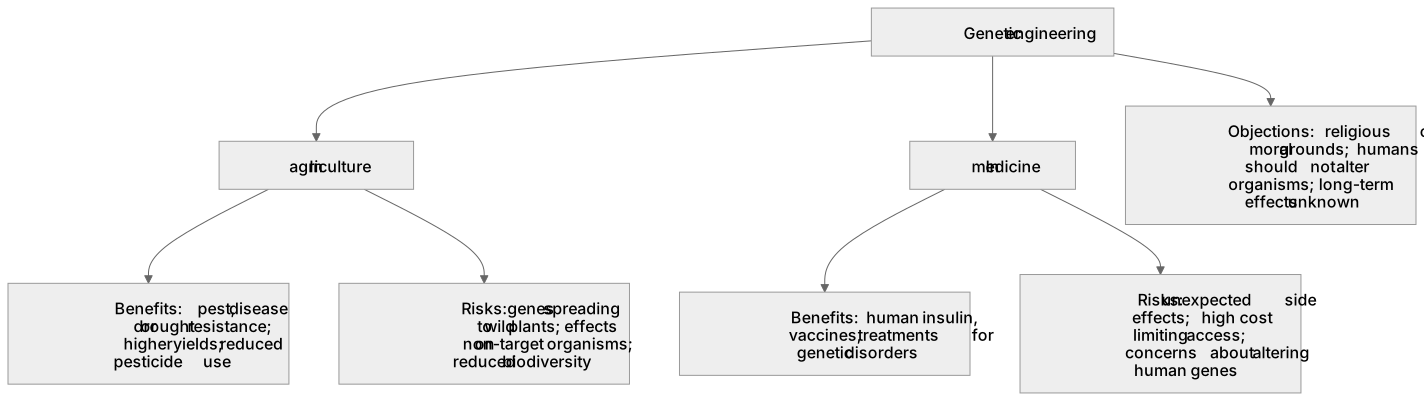
Label the diagram
Some boxes have lost their names. Pick the right name for each number.
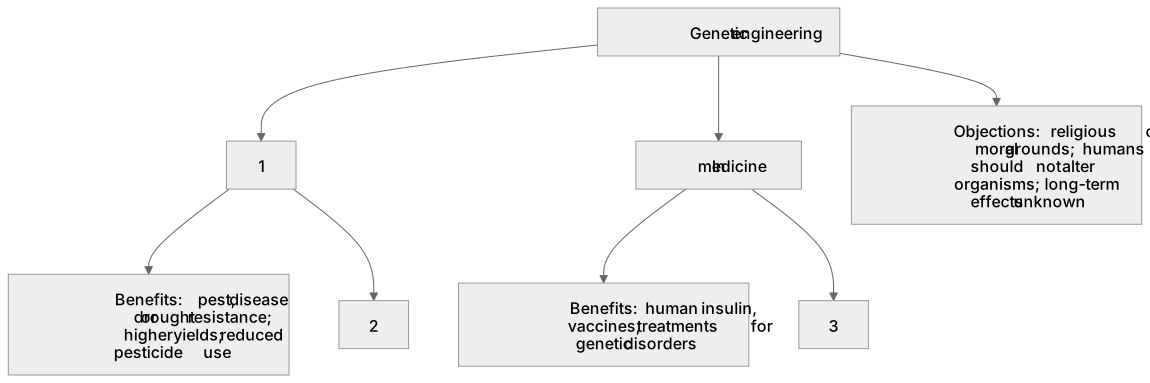
1Box 1
2Box 2
3Box 3
There is more to this lesson
The full lesson goes on to check your understanding and help you earn the marks. Create a free account to carry on, with your progress saved.
A week of Premium from your first lesson · Then the free plan continues · No card, no charge
Test your understanding of Genetic engineering: Students should be able to explain the potential benefits and risks of genetic engineering in agriculture and in medicine and that some people have objections.
Active recall beats re-reading. Take an instant quiz now to test what you’ve learned and lock it into long-term memory.
A week of Premium from your first lesson · Then the free plan continues · No card, no charge