AQA · GCSE · Combined Science
Course version: 8464 · Version from Sept 2018
The destruction of peat bogs, and other areas of peat to produce garden…
Full specification wording
Land use: The destruction of peat bogs, and other areas of peat to produce garden compost, reduces the area of this habitat and thus the variety of different plant, animal and microorganism species that live there (biodiversity).
Peat bogs are waterlogged, acidic wetlands built up over thousands of years from partly decayed plant material.
Checked against the AQA 8464 specification (opens in a new tab) on .
- Point 2 of 3
- 2 key terms
Study notes
From the checked teaching notes for this specification point.
The idea
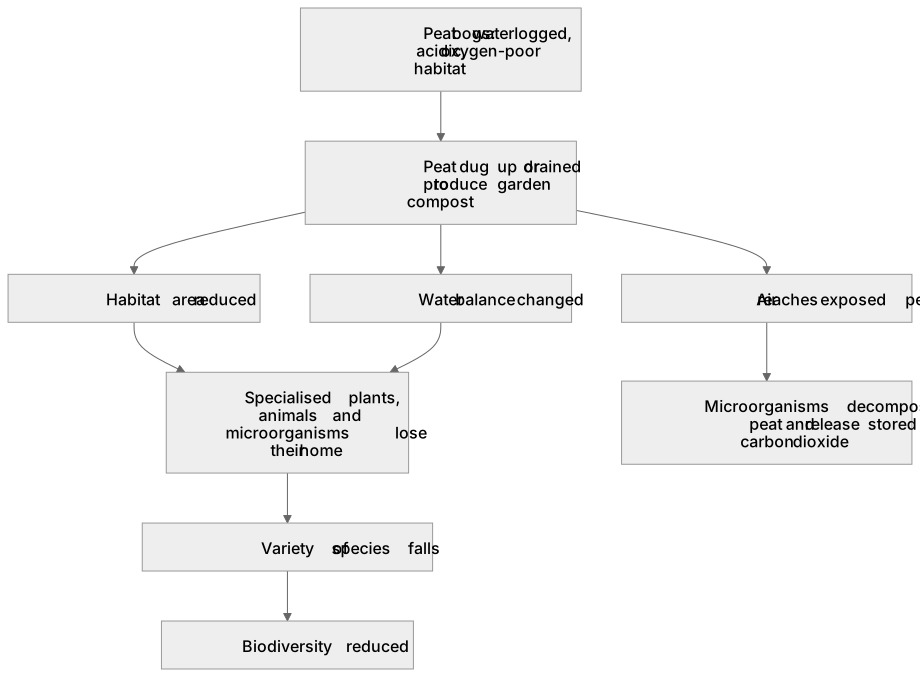
Peat bogs are waterlogged, acidic wetlands built up over thousands of years from partly decayed plant material. Because decay is slow in waterlogged, oxygen-poor conditions, peat accumulates and stores carbon. These bogs support specialised plants such as sphagnum mosses, plus insects, birds, amphibians and many microorganisms. When peat is dug up or drained to make garden compost, the habitat area shrinks and its water balance changes. Species adapted to bog conditions lose their home, so the variety of plant, animal and microorganism species there falls, which is a loss of biodiversity. Draining also lets air reach the peat, so microorganisms decompose it and release stored carbon dioxide, adding to environmental harm.
For example: Extracting peat from a bog for compost can remove the moss layer, dry the remaining peat and leave a habitat where only a few generalist species survive.
What earns the marks
- Peat bogs are habitats formed from partly decayed plant material in waterlogged, acidic, oxygen-poor conditions.
- Destroying or draining peat bogs removes the habitat for specialised plants, animals and microorganisms.
- Using peat to produce garden compost is a direct cause of peat bog destruction and area loss.
- Reduced habitat area lowers the variety of species living there, which is a reduction in biodiversity.
- Peat extraction also releases stored carbon as carbon dioxide when exposed peat is decomposed, so the harm extends beyond habitat loss.
Common mistakes and how to put them right
Saying peat is a type of soil that quickly regrows.
Put it right: Peat accumulates very slowly over thousands of years, so extraction is effectively permanent on human timescales.
Thinking only plants are affected.
Put it right: Animals and microorganisms that depend on bog conditions also lose their habitat, so the whole community declines.
Confusing biodiversity with the number of individual organisms.
Put it right: Biodiversity is the variety of different species and the range of habitats and genetic variation present.
Exam tips
- Link peat extraction to garden compost explicitly, because that is the use named in the statement.
- Explain the sequence: habitat destroyed, area reduced, species variety reduced, biodiversity falls.
- Mention that peat bogs store carbon, and that damage can release carbon dioxide, to show deeper understanding.
Try the lesson
The start of the Land use: The destruction of peat bogs, and other areas of peat to produce garden compost, reduces the area of this habitat and thus the variety of different plant, animal and microorganism species that live there (biodiversity). lesson, made from checked teaching notes for this specification point.
Have a go first
Peat bogs are being destroyed so that peat can be sold as garden compost. What effect does this destruction have on the biodiversity of the peat bog habitat?
Listen
Peat bogs are waterlogged, acidic wetlands built up over thousands of years from partly decayed plant material. Because decay is slow in waterlogged, oxygen-poor conditions, peat accumulates and stores carbon. These bogs support specialised plants such as sphagnum mosses, plus insects, birds, amphibians and many microorganisms. When peat is dug up or drained to make garden compost, the habitat area shrinks and its water balance changes. Species adapted to bog conditions lose their home, so the variety of plant, animal and microorganism species there falls, which is a loss of biodiversity. Draining also lets air reach the peat, so microorganisms decompose it and release stored carbon dioxide, adding to environmental harm. For example, extracting peat from a bog for compost can remove the moss layer, dry the remaining peat and leave a habitat where only a few generalist species survive. A strong answer earns marks for these points. Peat bogs are habitats formed from partly decayed plant material in waterlogged, acidic, oxygen-poor conditions. Destroying or draining peat bogs removes the habitat for specialised plants, animals and microorganisms. Using peat to produce garden compost is a direct cause of peat bog destruction and area loss. Reduced habitat area lowers the variety of species living there, which is a reduction in biodiversity. A common slip: Saying peat is a type of soil that quickly regrows. Instead, peat accumulates very slowly over thousands of years, so extraction is effectively permanent on human timescales. Exam tip: Link peat extraction to garden compost explicitly, because that is the use named in the statement.
See it
Key words
Say what each word means before you turn the card.
Biodiversity loss
Try answering aloud or in your head before turning the card.
Peat as a slow-forming, carbon-rich resource
Try answering aloud or in your head before turning the card.
See every definition
- Biodiversity loss
- A reduction in the variety of different plant, animal and microorganism species that live in a habitat.
- Peat as a slow-forming, carbon-rich resource
- Peat accumulates very slowly over thousands of years from partly decayed plant material in waterlogged, oxygen-poor conditions and stores carbon.
Label the diagram
Some boxes have lost their names. Pick the right name for each number.
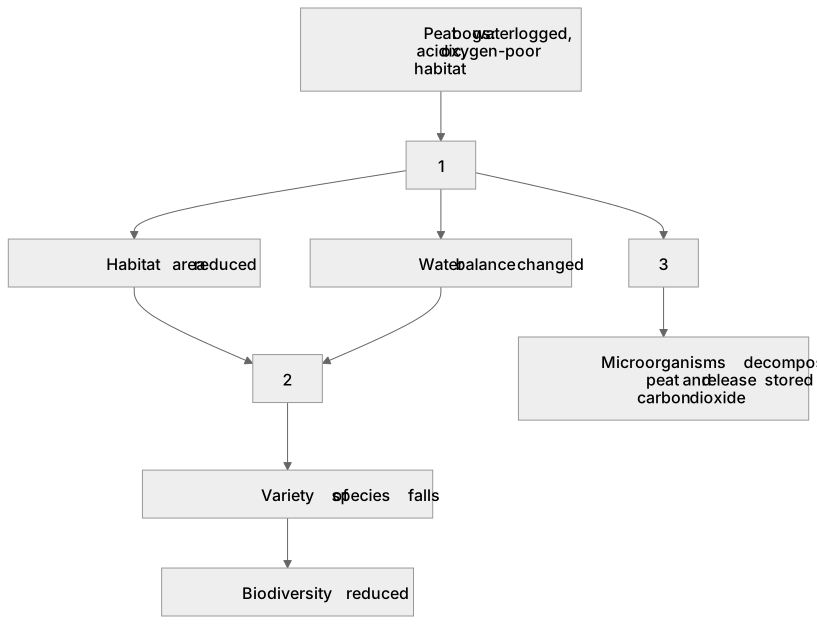
1Box 1
2Box 2
3Box 3
There is more to this lesson
The full lesson goes on to check your understanding and help you earn the marks. Create a free account to carry on, with your progress saved.
A week of Premium from your first lesson · Then the free plan continues · No card, no charge
Test your understanding of Land use: The destruction of peat bogs, and other areas of peat to produce garden compost, reduces the area of this habitat and thus the variety of different plant, animal and microorganism species that live there (biodiversity).
Active recall beats re-reading. Take an instant quiz now to test what you’ve learned and lock it into long-term memory.
A week of Premium from your first lesson · Then the free plan continues · No card, no charge