AQA · GCSE · Combined Science
Course version: 8464 · Version from Sept 2018
The formation of lipid molecules from a molecule of glycerol and three…
Full specification wording
Metabolism: the formation of lipid molecules from a molecule of glycerol and three molecules of fatty acids
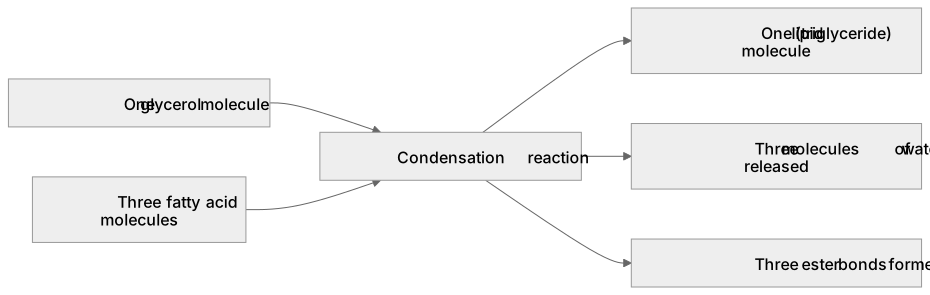
A lipid molecule is formed when one glycerol molecule joins with three fatty acid molecules in a condensation reaction.
Checked against the AQA 8464 specification (opens in a new tab) on .
- Point 6 of 10
- 3 key terms
Study notes
From the checked teaching notes for this specification point.
The idea
A lipid molecule is formed when one glycerol molecule joins with three fatty acid molecules in a condensation reaction. Glycerol has three hydroxyl groups, and each fatty acid has a carboxyl group, so three ester bonds form and three molecules of water are released. The product is a triglyceride. Fatty acids may be saturated, with only single carbon-carbon bonds, or unsaturated, with at least one carbon-carbon double bond. Lipids are stored in plants and animals as an energy store, provide insulation and protection, and are used to make cell membranes. A useful method is to count the reactants and products: one glycerol plus three fatty acids gives one triglyceride plus three water molecules.
What earns the marks
- One glycerol molecule reacts with three fatty acid molecules to form one lipid (triglyceride) molecule.
- The reaction is condensation: three molecules of water are released, one for each fatty acid joined.
- Three ester bonds form between the glycerol and the fatty acids.
- Fatty acids may be saturated (only single carbon-carbon bonds) or unsaturated (at least one carbon-carbon double bond).
- Lipids are an energy store in plants and animals and also provide insulation and protection.
- Lipids are used to make cell membranes, where they form a bilayer.
- The reaction is the reverse of hydrolysis, which uses water to break a triglyceride into glycerol and fatty acids.
Common mistakes and how to put them right
Writing that one fatty acid joins glycerol.
Put it right: , three fatty acids join one glycerol, releasing three water molecules.
Saying water is used up in the reaction.
Put it right: , condensation releases water; hydrolysis uses water.
Confusing glycerol with glucose.
Put it right: , glycerol is an alcohol with three hydroxyl groups, while glucose is a sugar.
Exam tips
- Count the reactants and products: one glycerol plus three fatty acids gives one triglyceride plus three water molecules.
- Name the bond formed between glycerol and a fatty acid as an ester bond.
- Link the structure of lipids to their roles, such as energy storage, insulation and cell membranes.
Try the lesson
The start of the Metabolism: the formation of lipid molecules from a molecule of glycerol and three molecules of fatty acids lesson, made from checked teaching notes for this specification point.
Have a go first
Which two types of molecule join together to form a lipid?
Listen
A lipid molecule is formed when one glycerol molecule joins with three fatty acid molecules in a condensation reaction. Glycerol has three hydroxyl groups, and each fatty acid has a carboxyl group, so three ester bonds form and three molecules of water are released. The product is a triglyceride. Fatty acids may be saturated, with only single carbon-carbon bonds, or unsaturated, with at least one carbon-carbon double bond. Lipids are stored in plants and animals as an energy store, provide insulation and protection, and are used to make cell membranes. A useful method is to count the reactants and products: one glycerol plus three fatty acids gives one triglyceride plus three water molecules. A strong answer earns marks for these points. One glycerol molecule reacts with three fatty acid molecules to form one lipid (triglyceride) molecule. The reaction is condensation: three molecules of water are released, one for each fatty acid joined. Three ester bonds form between the glycerol and the fatty acids. Fatty acids may be saturated (only single carbon-carbon bonds) or unsaturated (at least one carbon-carbon double bond). A common slip: Writing that one fatty acid joins glycerol. Instead, , three fatty acids join one glycerol, releasing three water molecules. Exam tip: Count the reactants and products: one glycerol plus three fatty acids gives one triglyceride plus three water molecules.
See it
Key words
Say what each word means before you turn the card.
Triglyceride
Try answering aloud or in your head before turning the card.
Saturated fatty acid
Try answering aloud or in your head before turning the card.
Unsaturated fatty acid
Try answering aloud or in your head before turning the card.
See every definition
- Triglyceride
- The lipid molecule formed when one glycerol molecule reacts with three fatty acid molecules.
- Saturated fatty acid
- A fatty acid with only single carbon-carbon bonds.
- Unsaturated fatty acid
- A fatty acid with at least one carbon-carbon double bond.
Label the diagram
Some boxes have lost their names. Pick the right name for each number.
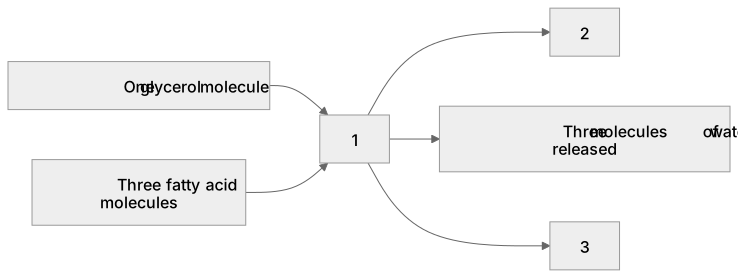
1Box 1
2Box 2
3Box 3
There is more to this lesson
The full lesson goes on to check your understanding and help you earn the marks. Create a free account to carry on, with your progress saved.
A week of Premium from your first lesson · Then the free plan continues · No card, no charge
Test your understanding of Metabolism: the formation of lipid molecules from a molecule of glycerol and three molecules of fatty acids
Active recall beats re-reading. Take an instant quiz now to test what you’ve learned and lock it into long-term memory.
A week of Premium from your first lesson · Then the free plan continues · No card, no charge