AQA · GCSE · Combined Science
Course version: 8464 · Version from Sept 2018
(HT only) When radio waves are absorbed they may create an alternating…
Full specification wording
Properties of electromagnetic waves 2: (HT only) When radio waves are absorbed they may create an alternating current with the same frequency as the radio wave itself, so radio waves can themselves induce oscillations in an electrical circuit.
This Higher Tier concept links radio waves to electric circuits.
Checked against the AQA 8464 specification (opens in a new tab) on .
- Point 2 of 7
Study notes
From the checked teaching notes for this specification point.
The idea
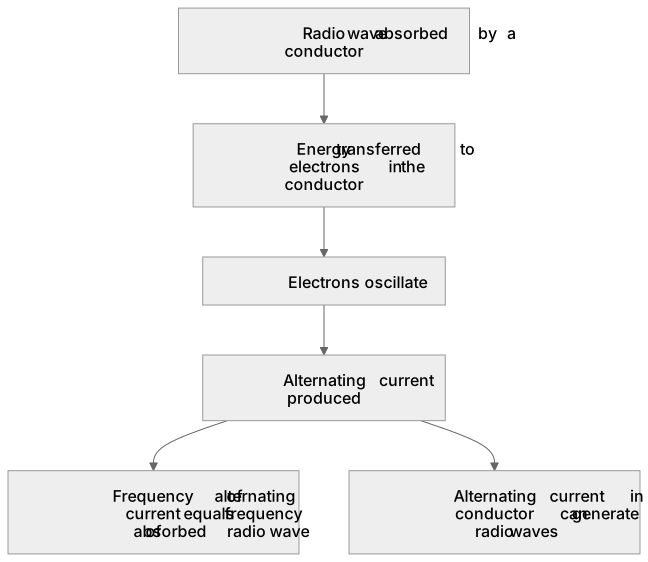
This Higher Tier concept links radio waves to electric circuits. When a radio wave is absorbed by a conductor, it pushes electrons back and forth. That motion is an alternating current whose frequency matches the wave. For example, a 100 MHz radio wave absorbed by an aerial drives electrons at 100 million cycles per second, so the induced current alternates at 100 MHz. The same process works in reverse: an alternating current in a conductor radiates radio waves. This is how aerials both receive and transmit. Absorption therefore converts wave energy into electrical energy, and the frequency is preserved.
What earns the marks
- States that absorption of a radio wave by a conductor transfers energy to electrons in that conductor.
- Explains that the absorbed wave causes electrons to oscillate, producing an alternating current.
- Identifies that the frequency of the induced alternating current equals the frequency of the absorbed radio wave.
- Recognises that the process is reversible: an alternating current in a conductor can generate radio waves.
Common mistakes and how to put them right
Thinking the induced current has a different frequency from the radio wave.
Put it right: The current alternates at exactly the same frequency as the absorbed wave.
Confusing absorption with reflection.
Put it right: Absorption transfers wave energy into electrical energy in the conductor, whereas reflection redirects the wave.
Assuming the speed of the wave changes the frequency.
Put it right: The frequency of the induced current is determined solely by the frequency of the incoming radio wave.
Exam tips
- State clearly that the frequency of the alternating current is the same as the frequency of the radio wave.
- Use the term 'oscillations' when describing electron motion in the conductor.
Try the lesson
The start of the Properties of electromagnetic waves 2: (HT only) When radio waves are absorbed they may create an alternating current with the same frequency as the radio wave itself, so radio waves can themselves induce oscillations in an electrical circuit. lesson, made from checked teaching notes for this specification point.
Have a go first
A radio wave is absorbed by an aerial. What is produced in the aerial?
Listen
This Higher Tier concept links radio waves to electric circuits. When a radio wave is absorbed by a conductor, it pushes electrons back and forth. That motion is an alternating current whose frequency matches the wave. For example, a 100 MHz radio wave absorbed by an aerial drives electrons at 100 million cycles per second, so the induced current alternates at 100 MHz. The same process works in reverse: an alternating current in a conductor radiates radio waves. This is how aerials both receive and transmit. Absorption therefore converts wave energy into electrical energy, and the frequency is preserved. A strong answer earns marks for these points. States that absorption of a radio wave by a conductor transfers energy to electrons in that conductor. Explains that the absorbed wave causes electrons to oscillate, producing an alternating current. Identifies that the frequency of the induced alternating current equals the frequency of the absorbed radio wave. Recognises that the process is reversible: an alternating current in a conductor can generate radio waves. A common slip: thinking the induced current has a different frequency from the radio wave. Instead, the current alternates at exactly the same frequency as the absorbed wave. Exam tip: State clearly that the frequency of the alternating current is the same as the frequency of the radio wave.
See it
Label the diagram
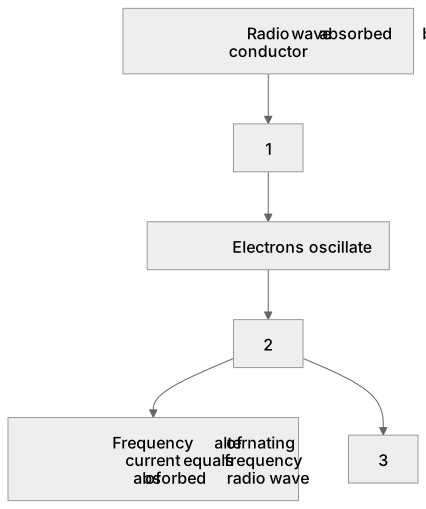
Some boxes have lost their names. Pick the right name for each number.
1Box 1
2Box 2
3Box 3
There is more to this lesson
The full lesson goes on to check your understanding and help you earn the marks. Create a free account to carry on, with your progress saved.
A week of Premium from your first lesson · Then the free plan continues · No card, no charge
Test your understanding of Properties of electromagnetic waves 2: (HT only) When radio waves are absorbed they may create an alternating current with the same frequency as the radio wave itself, so radio waves can themselves induce oscillations in an electrical circuit.
Active recall beats re-reading. Take an instant quiz now to test what you’ve learned and lock it into long-term memory.
A week of Premium from your first lesson · Then the free plan continues · No card, no charge