AQA · GCSE · Combined Science
Course version: 8464 · Version from Sept 2018
Ultraviolet waves, X-rays and gamma rays can have hazardous effects on…
Full specification wording
Properties of electromagnetic waves 2: Ultraviolet waves, X-rays and gamma rays can have hazardous effects on human body tissue. The effects depend on the type of radiation and the size of the dose. Radiation dose (in sieverts) is a measure of the risk of harm resulting from an exposure of the body to the radiation.
Ultraviolet waves, X-rays and gamma rays sit at the high-frequency end of the electromagnetic spectrum and can have hazardous effects on human body tissue.
Checked against the AQA 8464 specification (opens in a new tab) on .
- Point 4 of 7
- 4 key terms
Study notes
From the checked teaching notes for this specification point.
The idea
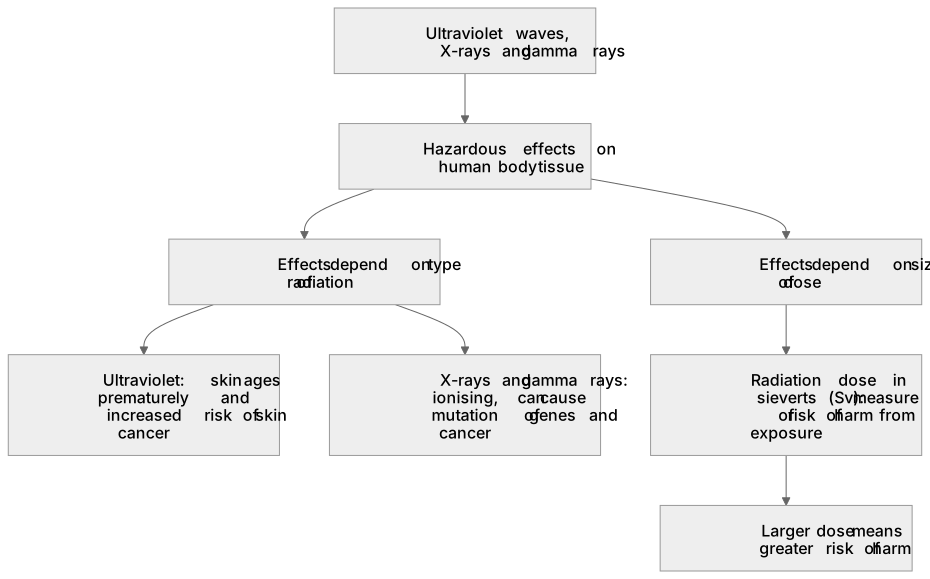
Ultraviolet waves, X-rays and gamma rays sit at the high-frequency end of the electromagnetic spectrum and can have hazardous effects on human body tissue. The harm caused depends on the type of radiation and on the size of the dose received. Ultraviolet waves can cause skin to age prematurely and increase the risk of skin cancer. X-rays and gamma rays are ionising radiation that can cause the mutation of genes and cancer. Radiation dose, measured in sieverts (Sv), is a measure of the risk of harm resulting from an exposure of the body to the radiation. A larger dose means a greater risk of harm.
For example: A dental X-ray gives a very small dose, whereas a large dose of gamma radiation can cause acute illness.
What earns the marks
- Ultraviolet waves, X-rays and gamma rays can have hazardous effects on human body tissue.
- The effects depend on the type of radiation and the size of the dose.
- Ultraviolet waves can cause skin to age prematurely and increase the risk of skin cancer.
- X-rays and gamma rays are ionising radiation that can cause the mutation of genes and cancer.
- Radiation dose is measured in sieverts (Sv) and is a measure of the risk of harm from exposure of the body to radiation.
Common mistakes and how to put them right
Treating all three radiations as having the exact same effect.
Put it right by stating that UV affects the skin (aging, cancer), whereas X-rays and gamma rays are ionising and can cause gene mutation.
Confusing dose with the amount of energy alone.
Put it right by explaining that dose in sieverts measures the risk of harm from exposure.
Assuming ultraviolet is highly ionising like X-rays.
Put it right by distinguishing UV's effects on skin from the ionising nature of X-rays and gamma rays which cause gene mutations.
Exam tips
- Link each radiation to its specific effect on body tissue, such as ultraviolet causing premature skin aging and skin cancer.
Try the lesson
The start of the Properties of electromagnetic waves 2: Ultraviolet waves, X-rays and gamma rays can have hazardous effects on human body tissue. The effects depend on the type of radiation and the size of the dose. Radiation dose (in sieverts) is a measure of the risk of harm resulting from an exposure of the body to the radiation. lesson, made from checked teaching notes for this specification point.
Have a go first
Which unit is used to measure the radiation dose received by a person?
Listen
Ultraviolet waves, X-rays and gamma rays sit at the high-frequency end of the electromagnetic spectrum and can have hazardous effects on human body tissue. The harm caused depends on the type of radiation and on the size of the dose received. Ultraviolet waves can cause skin to age prematurely and increase the risk of skin cancer. X-rays and gamma rays are ionising radiation that can cause the mutation of genes and cancer. Radiation dose, measured in sieverts (Sv), is a measure of the risk of harm resulting from an exposure of the body to the radiation. A larger dose means a greater risk of harm. For example, a dental X-ray gives a very small dose, whereas a large dose of gamma radiation can cause acute illness. A strong answer earns marks for these points. Ultraviolet waves, X-rays and gamma rays can have hazardous effects on human body tissue. The effects depend on the type of radiation and the size of the dose. Ultraviolet waves can cause skin to age prematurely and increase the risk of skin cancer. X-rays and gamma rays are ionising radiation that can cause the mutation of genes and cancer. A common slip: Treating all three radiations as having the exact same effect. Instead, stating that UV affects the skin (aging, cancer), whereas X-rays and gamma rays are ionising and can cause gene mutation. Exam tip: Link each radiation to its specific effect on body tissue, such as ultraviolet causing premature skin aging and skin cancer.
See it
Key words
Say what each word means before you turn the card.
Hazard and risk
Try answering aloud or in your head before turning the card.
Dose and risk of harm
Try answering aloud or in your head before turning the card.
Ionising radiation
Try answering aloud or in your head before turning the card.
Tissue damage
Try answering aloud or in your head before turning the card.
See every definition
- Hazard and risk
- Ultraviolet waves, X-rays and gamma rays can have hazardous effects on human body tissue, and the risk of harm depends on the type of radiation and the size of the dose.
- Dose and risk of harm
- Radiation dose, in sieverts, is a measure of the risk of harm resulting from an exposure of the body to the radiation, and a larger dose means a greater risk of harm.
- Ionising radiation
- X-rays and gamma rays are ionising radiation that can cause the mutation of genes and cancer.
- Tissue damage
- Ultraviolet waves, X-rays and gamma rays can have hazardous effects on human body tissue, with ultraviolet waves causing skin to age prematurely and increasing the risk of skin cancer.
Label the diagram
Some boxes have lost their names. Pick the right name for each number.
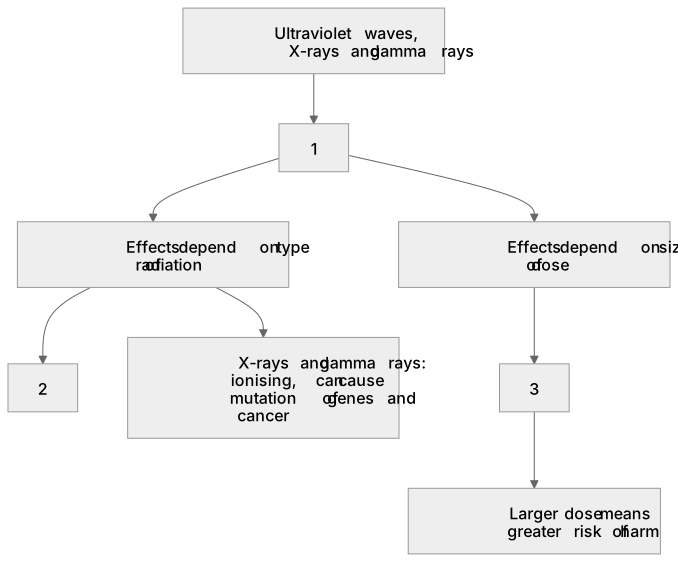
1Box 1
2Box 2
3Box 3
There is more to this lesson
The full lesson goes on to check your understanding and help you earn the marks. Create a free account to carry on, with your progress saved.
A week of Premium from your first lesson · Then the free plan continues · No card, no charge
Test your understanding of Properties of electromagnetic waves 2: Ultraviolet waves, X-rays and gamma rays can have hazardous effects on human body tissue. The effects depend on the type of radiation and the size of the dose. Radiation dose (in sieverts) is a measure of the risk of harm resulting from an exposure of the body to the radiation.
Active recall beats re-reading. Take an instant quiz now to test what you’ve learned and lock it into long-term memory.
A week of Premium from your first lesson · Then the free plan continues · No card, no charge