Study Notes

Overview
Welcome to your guide for mastering Application of Economic Theory (AO2) in Edexcel GCSE Economics. This skill is not just about knowing economic concepts; it’s about using them as a lens to analyse real-world situations. Examiners are looking for candidates who can build logical chains of reasoning, integrate quantitative data, and connect theory to the specific context of the provided source material. With AO2 accounting for 35% of your final grade, developing this skill is essential for exam success. This guide will equip you with the frameworks, techniques, and practice needed to confidently tackle any application question.
The Core Skill: From Theory to Reality
The central challenge of AO2 is to avoid generic, 'textbook' answers. You must demonstrate that you can adapt your knowledge to the specific scenario presented in the exam. This means moving from a general understanding of a concept, like inflation, to analysing its specific causes and consequences within a given country and timeframe, using the data provided.
Key Principles of Application:
- Context is King: Always frame your answer within the specific industry, country, or market mentioned in the source material. If the case study is on the UK coffee shop market, your analysis should be about coffee shops in the UK, not just generic 'firms'.
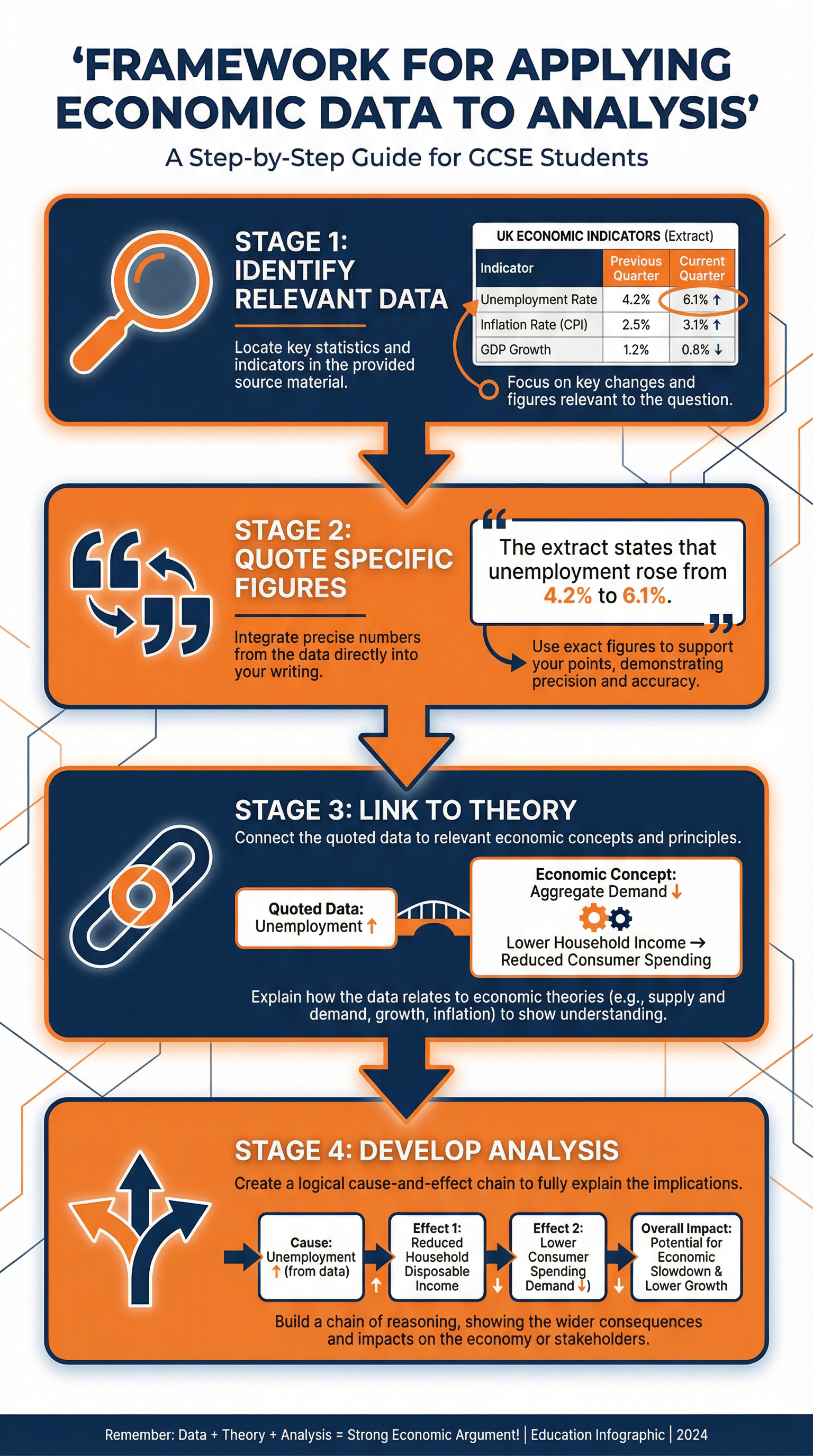
- Data is Your Evidence: Use figures, statistics, and trends from the provided data to support every point you make. Quoting specific data points (e.g., "unemployment fell from 5% to 4.2%") is a clear way to show application.
- Build Logical Chains: Examiners award marks for logical chains of reasoning. Use connective phrases like "this leads to...", "as a consequence...", and "therefore..." to show how one economic event causes another.
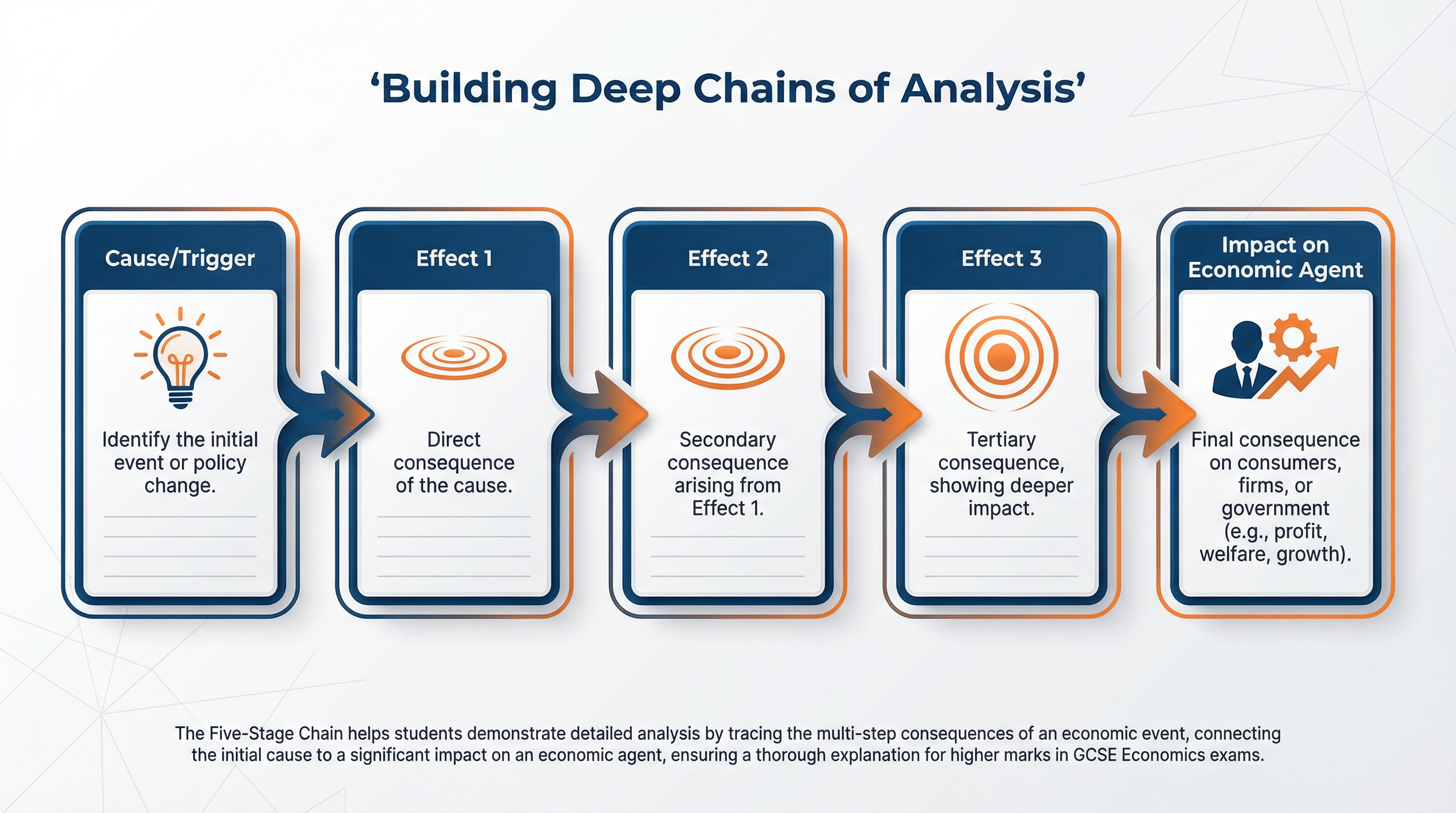
The Five-Stage Chain of Analysis
A powerful tool for building deep, analytical arguments is the Five-Stage Chain. This framework helps you structure your thoughts and ensures you develop your points fully, moving from a simple cause to a detailed impact on a specific economic agent.
Integrating Quantitative Skills
Data is the bedrock of economic analysis. You must be able to interpret tables, charts, and indices and use them to justify your arguments. This is not just about calculation; it's about using quantitative evidence to make your analysis more precise and powerful.
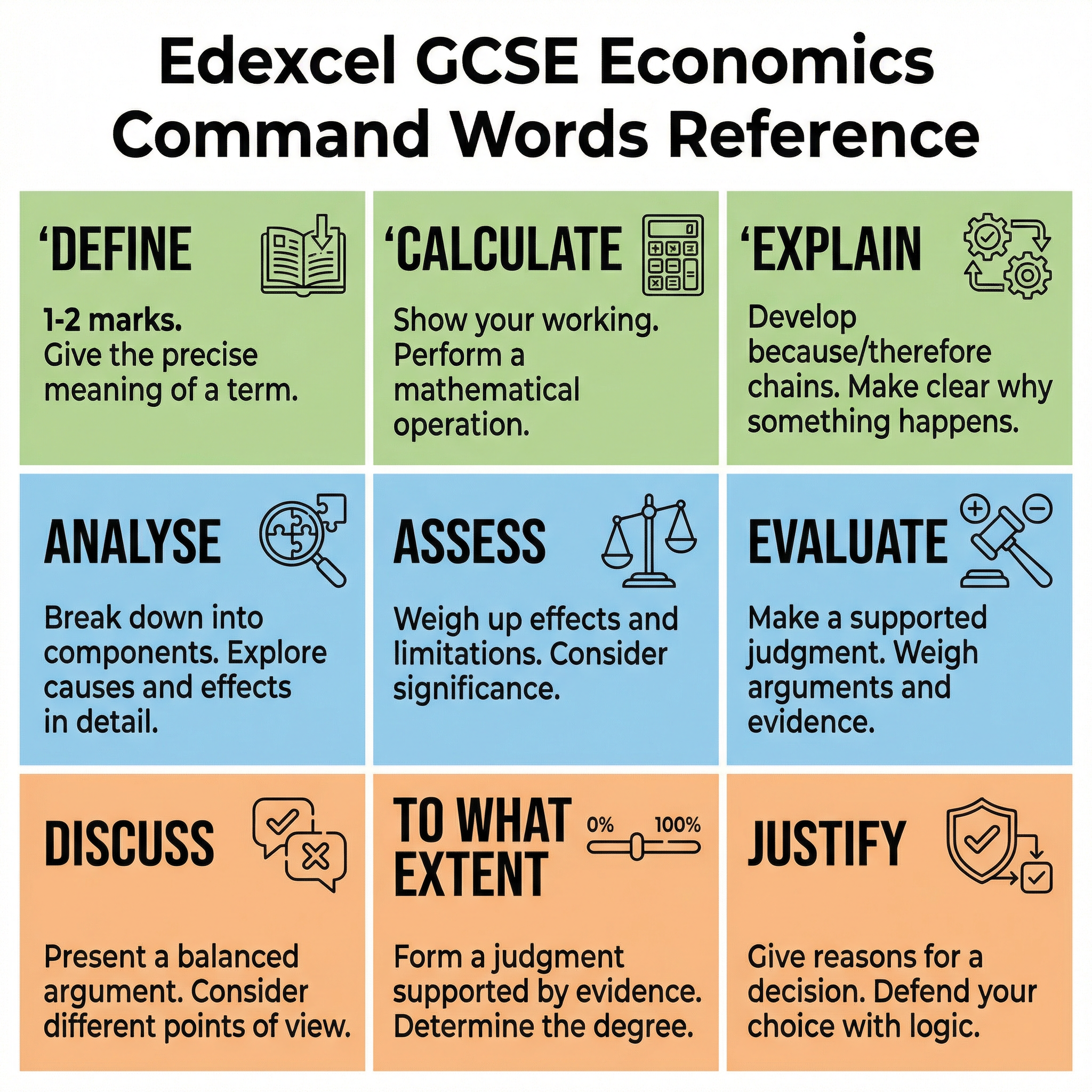
Understanding Command Words
Command words are the instructions in the exam question. Understanding them is crucial to giving the examiner what they are looking for. Each command word requires a different type of response.