Study Notes
Overview
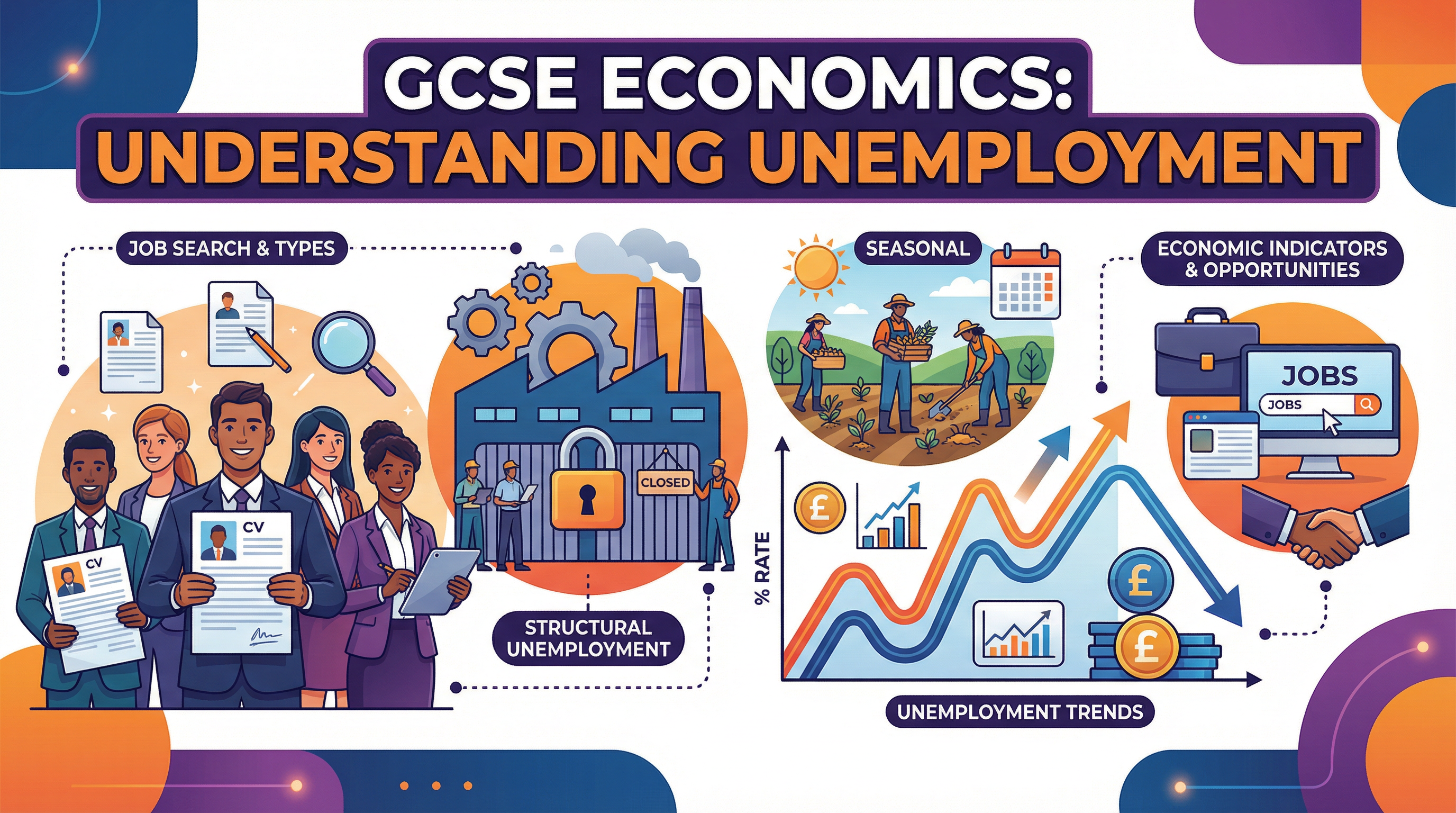
Unemployment is a core macroeconomic issue and a recurring topic in the Edexcel GCSE Economics (1EC0) specification. It represents a significant loss of potential output for an economy and has profound social and economic consequences. Examiners expect candidates to demonstrate precise knowledge of how unemployment is defined and measured, analyse its various causes, and evaluate its asymmetric impacts on consumers, producers, and the government. This guide will equip you with the detailed knowledge and analytical skills required to deconstruct exam questions, apply economic theory, and formulate well-structured arguments that earn maximum credit. A strong grasp of this topic is essential, as it forms synoptic links with other key areas such as aggregate demand, economic growth, and fiscal policy.
Measuring Unemployment
Understanding the two primary methods of measuring unemployment in the UK is a fundamental requirement. Examiners frequently ask for comparisons, so knowing the strengths and weaknesses of each is vital.
The Claimant Count
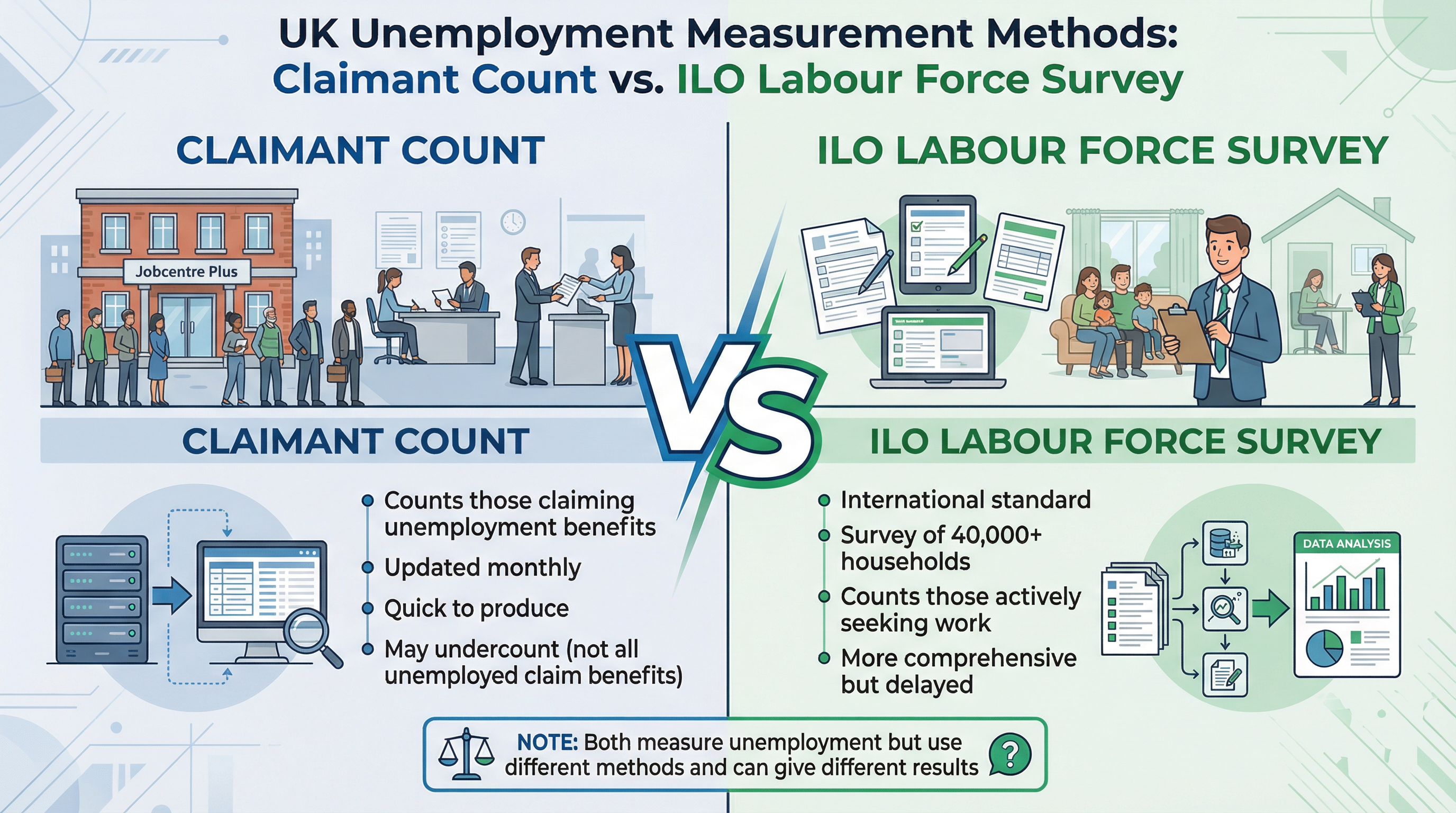
What it is: A measure of unemployment that counts the number of people claiming unemployment-related benefits, primarily Jobseeker's Allowance (JSA).
Why it matters: It provides a very timely snapshot of the unemployment situation, as the data is collected and published monthly. This makes it a useful indicator for policymakers tracking short-term economic changes. However, its accuracy is limited. It excludes individuals who are unemployed but not eligible for or not claiming benefits (e.g., those with a working partner or those who have used up their entitlement). Therefore, it often understates the true level of unemployment.
The ILO Labour Force Survey (LFS)
What it is: The official and internationally recognised measure of unemployment. It is a large-scale quarterly survey of over 40,000 UK households.
Why it matters: The LFS uses a standardised definition of unemployment: an individual must be without a job, have been actively seeking work in the past four weeks, and be available to start work within the next two weeks. This provides a more comprehensive and accurate picture of unemployment than the Claimant Count. It is the preferred measure for international comparisons. Its main drawback is the time lag; because it is a survey, the results are less timely than the Claimant Count data.
The Four Types of Unemployment
Candidates must be able to distinguish between the four main causes of unemployment. Marks are awarded for identifying the correct type and providing a clear, logical chain of reasoning to explain its cause.
1. Cyclical Unemployment
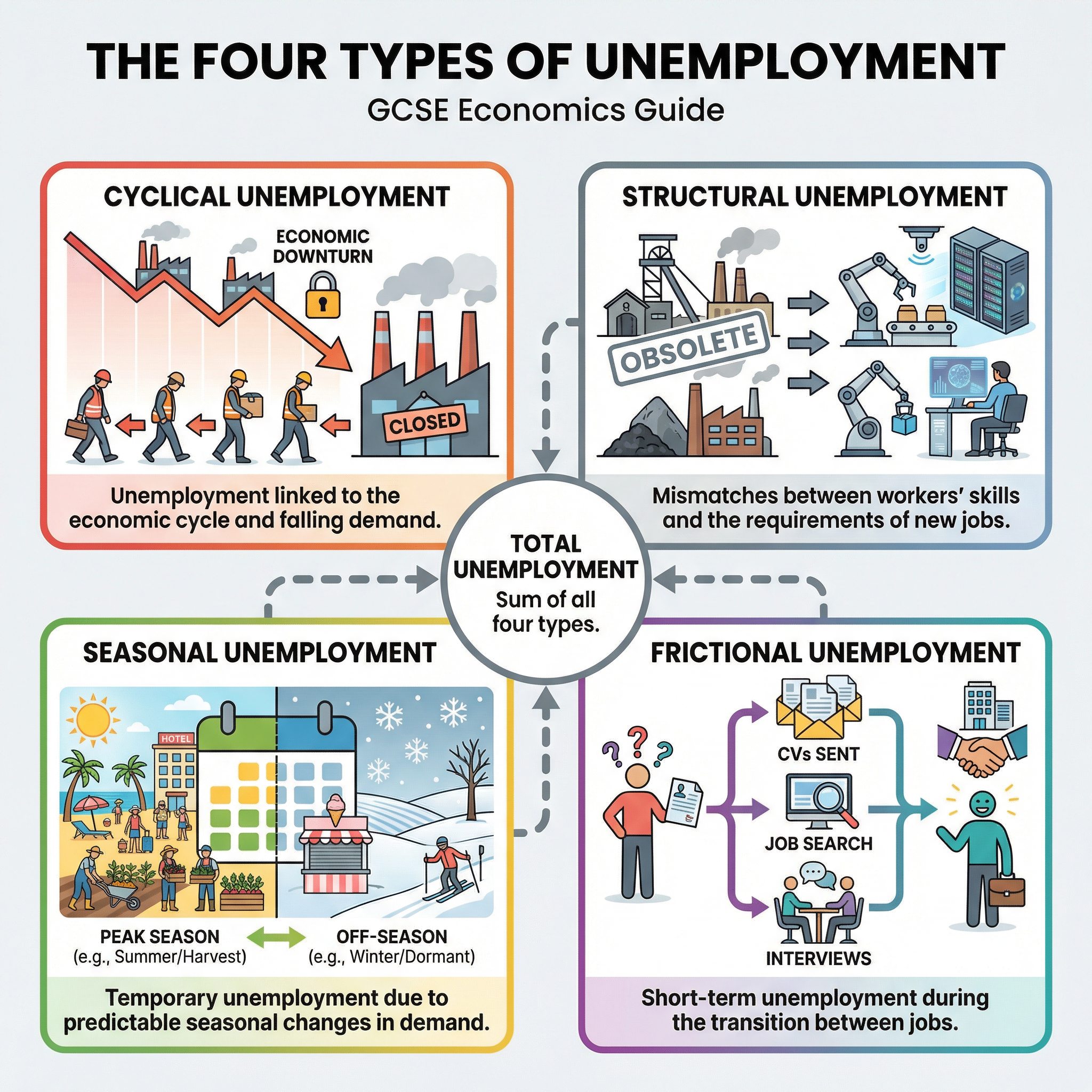
What it is: Unemployment caused by a downturn in the economic cycle, i.e., a recession. It is a result of a fall in aggregate demand (AD).
Why it matters: This is often considered the most serious type of unemployment as it can affect a large number of people across many sectors of the economy. The demand for labour is a derived demand – it depends on the demand for the goods and services that labour produces. When AD falls, firms see a drop in sales and profits, leading them to cut back on production and lay off workers. For example, during the 2008 financial crisis, a sharp fall in consumer spending and investment led to a significant rise in cyclical unemployment across the UK.
2. Structural Unemployment
What it is: Unemployment that arises from a long-term decline in a particular industry, leading to a mismatch between the skills of the unemployed and the skills required for available jobs.
Why it matters: This type of unemployment is often long-lasting and geographically concentrated. It requires significant investment in retraining and education to solve. A classic UK example is the decline of the coal mining and shipbuilding industries in the North of England and Scotland during the 1980s. While new jobs were being created in the service and tech sectors in the South, the former miners and shipbuilders lacked the transferable skills to fill them.
3. Frictional Unemployment
What it is: Short-term, transitional unemployment that occurs when people are in the process of moving between jobs.
Why it matters: Frictional unemployment is a natural and unavoidable feature of any dynamic economy. It includes graduates looking for their first job, people who have resigned to find a better position, or those re-entering the workforce. It is generally not seen as a major economic problem, and can even be a sign of a healthy labour market where workers are confident enough to seek better opportunities.
4. Seasonal Unemployment
What it is: Unemployment that occurs at certain times of the year due to predictable changes in demand.
Why it matters: This is common in industries like tourism, agriculture, and catering. For example, a ski instructor may be unemployed during the summer, and a strawberry picker may be out of work in the winter. Like frictional unemployment, it is generally short-term and predictable.
Impacts of Unemployment
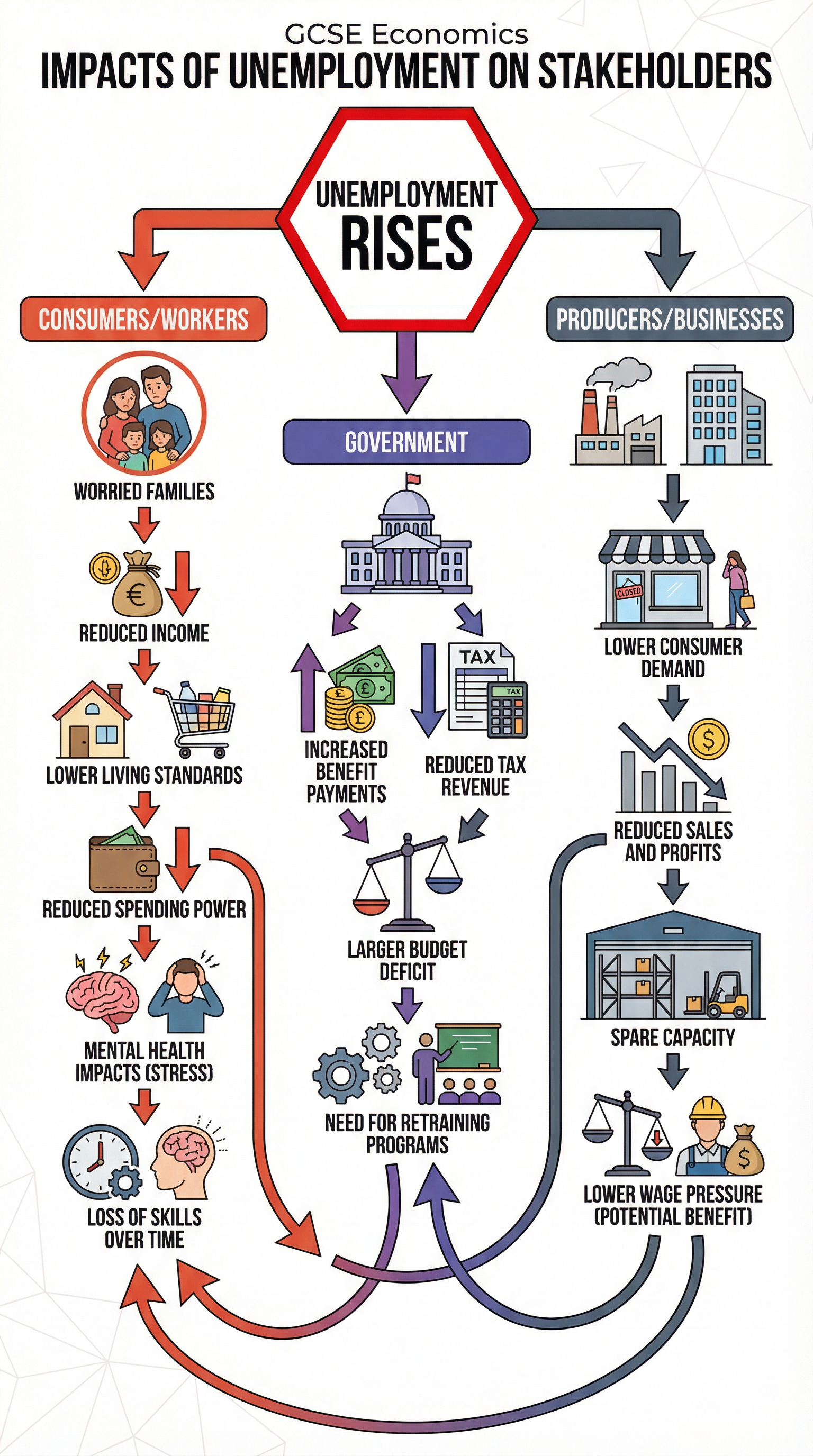
Examiners will expect you to evaluate the consequences of unemployment for different economic agents. Use the flowchart below to structure your analysis.
On Consumers / Individuals
- Reduced Income & Living Standards: The most direct impact is a loss of earnings, leading to a fall in disposable income and a lower standard of living.
- Loss of Skills: The longer an individual is unemployed, the more their skills may atrophy, making it harder to find work in the future (hysteresis).
- Mental & Physical Health: Unemployment is strongly linked to stress, anxiety, and other health problems.
On Producers / Firms
- Fall in Demand: Higher unemployment means less consumer spending, leading to lower sales and profits for firms.
- Spare Capacity: Firms may be left with under-utilised factories and equipment.
- Lower Wage Pressure: A large pool of unemployed workers may mean firms can offer lower wages, reducing their costs. However, this is often outweighed by the negative impact of falling demand.
On the Government
- Fiscal Implications: The government faces a double hit to its budget. Tax revenues fall (less income tax, less VAT from spending), while government spending rises (increased payments for JSA and other benefits).
- Increased Budget Deficit: This combination of lower tax revenue and higher spending is likely to increase the government's budget deficit, potentially leading to higher national debt.
- Social Costs: The government may also have to spend more on addressing the social problems associated with unemployment, such as crime and health issues.