AQA · A-Level · English Language
Course version: 7702 · Version from Sept 2017
Graphology: the visual aspects of textual design and appearance
Full specification wording
Language diversity and change - Methods of language analysis: graphology: the visual aspects of textual design and appearance
Graphology is the study of how a text looks on the page, covering every visual choice that shapes appearance and design.
Checked against the AQA 7702 specification (opens in a new tab) on .
- Point 2 of 6
- 3 key terms
Study notes
From the checked teaching notes for this specification point.
The idea
Graphology is the study of how a text looks on the page, covering every visual choice that shapes appearance and design. It includes typography (font, size, weight, colour), layout (columns, white space, alignment), images, logos, punctuation used visually, handwriting, and the physical or digital medium. When analysing diversity or change, you treat these features as meaningful choices, not decoration: a 1950s advertisement's dense serif columns and hand-drawn illustration signal a different era and audience from a modern social-media post with sans-serif text, emoji and a single centred image. Method: select the text, describe the visual feature precisely, then link it to purpose, audience, mode or period. Assessment rewards accurate description plus interpretation, not feature-spotting alone.
What earns the marks
- Accurately names and describes visual features using appropriate terminology, for example typeface, font size, weight, colour, alignment, columns, white space, borders, images, logos and icons.
- Explains how layout guides the reader's eye and organises information, for example a headline, subheadings and bullet points creating a reading path.
- Links graphological choices to mode and medium, distinguishing handwritten, printed and screen-based texts and their affordances.
- Interprets how visual design constructs audience, purpose and identity, for example a charity leaflet's colour palette and imagery positioning the reader as a potential donor.
- Compares texts from different periods or social contexts to show how design conventions have changed, for example the shift from dense print columns to scannable web layouts.
- Integrates graphology with other language levels rather than treating it as a separate list, for example showing how a bold imperative headline works with direct address.
Common mistakes and how to put them right
Listing features without interpretation, such as writing 'there is a picture and bold text'.
Put it right: State the feature, then explain its effect on meaning, audience or purpose.
Confusing graphology with orthography or punctuation as grammar.
Put it right: Keep graphology to visual design and appearance; discuss spelling and punctuation rules under orthography or grammar.
Assuming all images are graphological in the same way regardless of function.
Put it right: Analyse how an image is placed, sized, framed and combined with text, not merely that it exists.
Exam tips
- Use precise terminology such as serif, sans-serif, kerning, alignment, white space and multimodal, and apply each term accurately.
- Always pair description with interpretation: feature, evidence, effect. This keeps analysis analytical rather than descriptive.
- When comparing texts, organise by graphological theme, for example typography, layout and image, so comparisons stay focused and developed.
Try the lesson
The start of the Language diversity and change - Methods of language analysis: graphology: the visual aspects of textual design and appearance lesson, made from checked teaching notes for this specification point.
Have a go first
Which term describes the visual aspects of textual design and appearance?
Listen
Graphology is the study of how a text looks on the page, covering every visual choice that shapes appearance and design. It includes typography (font, size, weight, colour), layout (columns, white space, alignment), images, logos, punctuation used visually, handwriting, and the physical or digital medium. When analysing diversity or change, you treat these features as meaningful choices, not decoration: a 1950s advertisement's dense serif columns and hand-drawn illustration signal a different era and audience from a modern social-media post with sans-serif text, emoji and a single centred image. Method: select the text, describe the visual feature precisely, then link it to purpose, audience, mode or period. Assessment rewards accurate description plus interpretation, not feature-spotting alone. A strong answer earns marks for these points. Accurately names and describes visual features using appropriate terminology, for example typeface, font size, weight, colour, alignment, columns, white space, borders, images, logos and icons. Explains how layout guides the reader's eye and organises information, for example a headline, subheadings and bullet points creating a reading path. Links graphological choices to mode and medium, distinguishing handwritten, printed and screen-based texts and their affordances. Interprets how visual design constructs audience, purpose and identity, for example a charity leaflet's colour palette and imagery positioning the reader as a potential donor. A common slip: Listing features without interpretation, such as writing 'there is a picture and bold text'. Instead, state the feature, then explain its effect on meaning, audience or purpose. Exam tip: Use precise terminology such as serif, sans-serif, kerning, alignment, white space and multimodal, and apply each term accurately.
See it
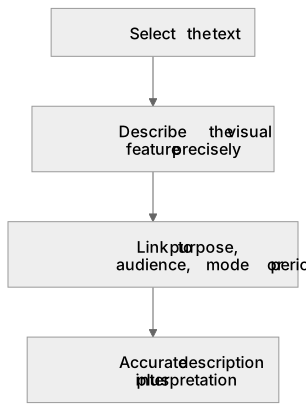
Put it in order
Put these steps in the order they happen.
- 1. Link to purpose, audience, mode or period
- 2. Accurate description plus interpretation
- 3. Describe the visual feature precisely
- 4. Select the text
Key words
Say what each word means before you turn the card.
Graphology
Try answering aloud or in your head before turning the card.
Typography
Try answering aloud or in your head before turning the card.
Layout
Try answering aloud or in your head before turning the card.
See every definition
- Graphology
- The visual aspects of textual design and appearance, covering every visual choice that shapes how a text looks on the page.
- Typography
- A visual choice of design including font, size, weight and colour.
- Layout
- A visual choice of design including columns, white space and alignment.
Label the diagram
Some boxes have lost their names. Pick the right name for each number.
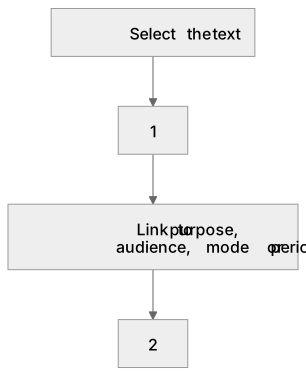
1Box 1
2Box 2
There is more to this lesson
The full lesson goes on to check your understanding and help you earn the marks. Create a free account to carry on, with your progress saved.
A week of Premium from your first lesson · Then the free plan continues · No card, no charge
Test your understanding of Language diversity and change - Methods of language analysis: graphology: the visual aspects of textual design and appearance
Active recall beats re-reading. Take an instant quiz now to test what you’ve learned and lock it into long-term memory.
A week of Premium from your first lesson · Then the free plan continues · No card, no charge