Pearson Edexcel · A-Level · English Literature
Course version: 9ET0 · Version from Sept 2015
Poetry – Section B: Specified Poetry Pre- or Post-1900 – Pre-1900 –…
Full specification wording
Component 3: Poetry – Section B: Specified Poetry Pre- or Post-1900 – Pre-1900 – Metaphysical Poetry – John Donne Selected Poems (Penguin Classics, 2006): Woman’s Constancy
In ‘Woman’s Constancy’, Donne presents a dramatic monologue anticipating a lover’s imminent betrayal after a single night of passion.
Checked against the Pearson Edexcel 9ET0 specification (opens in a new tab) on .
- Point 3 of 22
- 4 key terms
Study notes
From the checked teaching notes for this specification point.
The idea
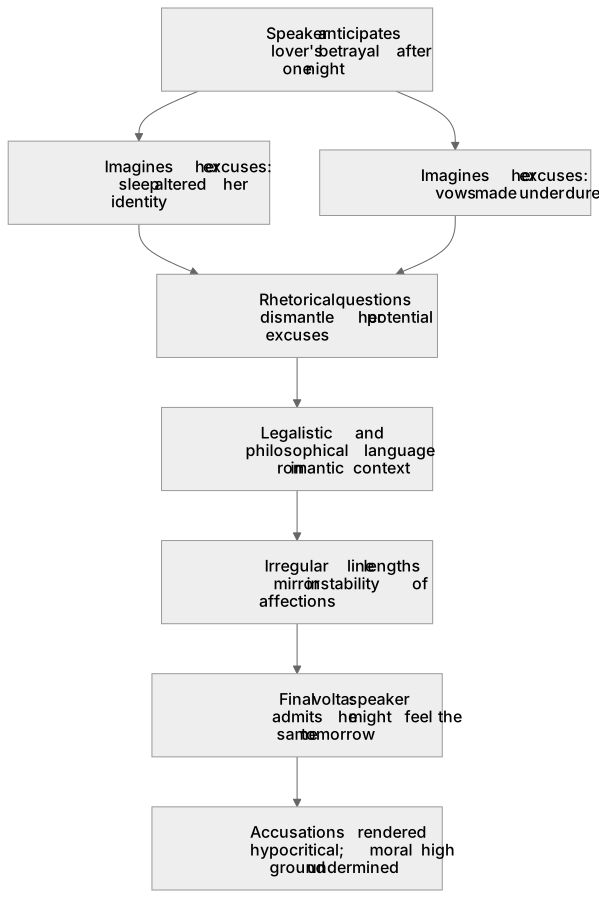
In ‘Woman’s Constancy’, Donne presents a dramatic monologue anticipating a lover’s imminent betrayal after a single night of passion. The speaker imagines the sophisticated excuses the woman might use to justify leaving, such as claiming sleep has altered her identity or that their vows were made under duress. Donne structures the poem as a single stanza of varying line lengths, reflecting the unpredictable nature of the woman's supposed logic. The poem concludes with a surprising twist: the speaker admits he might feel exactly the same way tomorrow, rendering his accusations hypocritical.
What earns the marks
- Analyse the speaker's use of rhetorical questions to preempt and dismantle the woman's potential excuses for leaving.
- Evaluate the integration of legalistic and philosophical language (such as contracts and shifting identities) in a romantic context.
- Explore how the irregular line lengths and rhyme scheme mirror the instability and unpredictability of the lovers' affections.
- Discuss the final volta where the speaker reveals his own fickleness, undermining his initial moral high ground.
Common mistakes and how to put them right
Believing the woman has already spoken her excuses.
Put it right: Recognise that the entire poem is the speaker's hypothetical anticipation of what she might say.
Overlooking the final couplet's twist.
Put it right: Address the ending where the speaker admits his own potential for inconstancy, which changes the poem's entire meaning.
Misinterpreting the legal terminology as literal.
Put it right: Analyse the legal jargon as a metaphysical conceit used to satirise the solemnity of lovers' vows.
Exam tips
- Contrast the fleeting, cynical view of love in this poem with the eternal, spiritual love depicted in 'A Valediction: Forbidding Mourning'.
- Pay close attention to the shifting pronouns and rhetorical questions to track the speaker's argumentative strategy.
- Highlight the performative nature of the dramatic monologue, noting how the speaker constructs both sides of the argument.
Try the lesson
The start of the Component 3: Poetry – Section B: Specified Poetry Pre- or Post-1900 – Pre-1900 – Metaphysical Poetry – John Donne Selected Poems (Penguin Classics, 2006): Woman’s Constancy lesson, made from checked teaching notes for this specification point.
Have a go first
In John Donne's 'Woman's Constancy', what is the speaker's primary anticipation regarding his lover's behaviour by the following day?
Listen
In ‘Woman’s Constancy’, Donne presents a dramatic monologue anticipating a lover’s imminent betrayal after a single night of passion. The speaker imagines the sophisticated excuses the woman might use to justify leaving, such as claiming sleep has altered her identity or that their vows were made under duress. Donne structures the poem as a single stanza of varying line lengths, reflecting the unpredictable nature of the woman's supposed logic. The poem concludes with a surprising twist: the speaker admits he might feel exactly the same way tomorrow, rendering his accusations hypocritical. A strong answer earns marks for these points. Analyse the speaker's use of rhetorical questions to preempt and dismantle the woman's potential excuses for leaving. Evaluate the integration of legalistic and philosophical language (such as contracts and shifting identities) in a romantic context. Explore how the irregular line lengths and rhyme scheme mirror the instability and unpredictability of the lovers' affections. Discuss the final volta where the speaker reveals his own fickleness, undermining his initial moral high ground. A common slip: Believing the woman has already spoken her excuses. Instead, Recognise that the entire poem is the speaker's hypothetical anticipation of what she might say. Exam tip: Contrast the fleeting, cynical view of love in this poem with the eternal, spiritual love depicted in 'A Valediction: Forbidding Mourning'.
See it
Key words
Say what each word means before you turn the card.
Fickleness and Inconstancy
Try answering aloud or in your head before turning the card.
Hypocrisy in Love
Try answering aloud or in your head before turning the card.
Legalism and Vows
Try answering aloud or in your head before turning the card.
The Transience of Passion
Try answering aloud or in your head before turning the card.
See every definition
- Fickleness and Inconstancy
- The instability and unpredictability of the lovers' affections, which the irregular line lengths and rhyme scheme mirror and which the speaker admits in himself at the final volta.
- Hypocrisy in Love
- The speaker's accusations are rendered hypocritical when he admits he might feel exactly the same way tomorrow, undermining his initial moral high ground.
- Legalism and Vows
- Legalistic and philosophical language, such as contracts and shifting identities, integrated into a romantic context and analysed as a metaphysical conceit used to satirise the solemnity of lovers' vows.
- The Transience of Passion
- A dramatic monologue anticipating a lover's imminent betrayal after a single night of passion, in which the speaker pre-empts and dismantles the woman's potential excuses for leaving.
Label the diagram
Some boxes have lost their names. Pick the right name for each number.
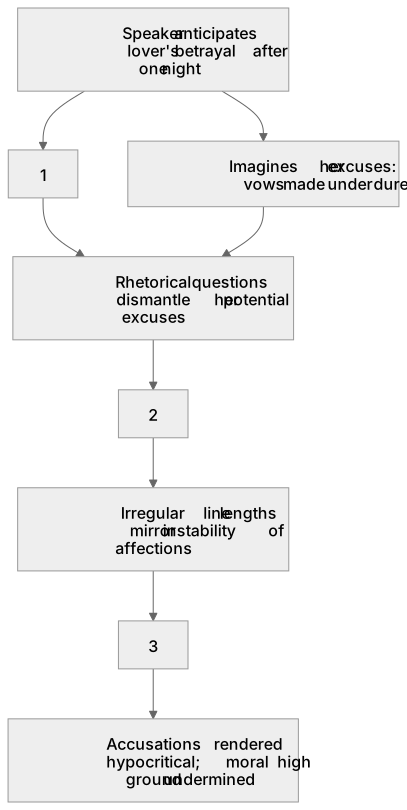
1Box 1
2Box 2
3Box 3
There is more to this lesson
The full lesson goes on to check your understanding and help you earn the marks. Create a free account to carry on, with your progress saved.
A week of Premium from your first lesson · Then the free plan continues · No card, no charge
Test your understanding of Component 3: Poetry – Section B: Specified Poetry Pre- or Post-1900 – Pre-1900 – Metaphysical Poetry – John Donne Selected Poems (Penguin Classics, 2006): Woman’s Constancy
Active recall beats re-reading. Take an instant quiz now to test what you’ve learned and lock it into long-term memory.
A week of Premium from your first lesson · Then the free plan continues · No card, no charge