Pearson Edexcel · A-Level · English Literature
Course version: 9ET0 · Version from Sept 2015
Poetry – Section B: Specified Poetry Pre- or Post-1900 – Pre-1900 – The…
Full specification wording
Component 3: Poetry – Section B: Specified Poetry Pre- or Post-1900 – Pre-1900 – The Romantic Period – English Romantic Verse, editor David Wright (Penguin Classics, 1973): Lines Composed a Few Miles above Tintern Abbey
This blank verse poem explores the profound restorative power of memory and nature.
Checked against the Pearson Edexcel 9ET0 specification (opens in a new tab) on .
- Point 4 of 16
- 3 key terms
Study notes
From the checked teaching notes for this specification point.
The idea
This blank verse poem explores the profound restorative power of memory and nature. Returning to the Wye valley after five years, the speaker reflects on how his relationship with the landscape has matured from youthful passion to a deeper, philosophical understanding of the "still, sad music of humanity." The text traces three stages of development: childhood freedom, adolescent emotional intensity, and adult spiritual reflection. The final address to his sister, Dorothy, projects his current philosophical revelations into the future, ensuring the enduring legacy of nature's healing influence on the human mind.
What earns the marks
- Analyse the use of blank verse and enjambment to create a spontaneous, meditative tone.
- Evaluate the speaker's changing relationship with nature across the three distinct stages of life.
- Discuss the concept of memory as a restorative force that provides comfort in urban environments.
- Examine the role of the silent listener (Dorothy) in validating and preserving the speaker's philosophical insights.
Common mistakes and how to put them right
Treating the poem as a literal description of Tintern Abbey.
Put it right: Focus on the landscape of the Wye valley and the internal landscape of the speaker's mind, as the abbey itself is never directly described.
Confusing the speaker's past and present attitudes towards nature.
Put it right: Clearly distinguish between the coarser pleasures of his youth and the mature, spiritual presence he feels in the present.
Overlooking the significance of the final stanza.
Put it right: Analyse the address to Dorothy as crucial for understanding the poem's themes of legacy, shared experience, and future consolation.
Exam tips
- Track the repetition of words related to time and memory to build an argument about the poem's temporal structure.
- Contrast the descriptions of the tranquil natural world with the din of towns and cities to highlight the restorative power of nature.
- Link the poem's philosophical musings to the broader Romantic concept of the sublime.
Try the lesson
The start of the Component 3: Poetry – Section B: Specified Poetry Pre- or Post-1900 – Pre-1900 – The Romantic Period – English Romantic Verse, editor David Wright (Penguin Classics, 1973): Lines Composed a Few Miles above Tintern Abbey lesson, made from checked teaching notes for this specification point.
Have a go first
Who is the speaker directly addressing in the final section of "Lines Composed a Few Miles above Tintern Abbey"?
Listen
This blank verse poem explores the profound restorative power of memory and nature. Returning to the Wye valley after five years, the speaker reflects on how his relationship with the landscape has matured from youthful passion to a deeper, philosophical understanding of the "still, sad music of humanity. The text traces three stages of development: childhood freedom, adolescent emotional intensity, and adult spiritual reflection. The final address to his sister, Dorothy, projects his current philosophical revelations into the future, ensuring the enduring legacy of nature's healing influence on the human mind. A strong answer earns marks for these points. Analyse the use of blank verse and enjambment to create a spontaneous, meditative tone. Evaluate the speaker's changing relationship with nature across the three distinct stages of life. Discuss the concept of memory as a restorative force that provides comfort in urban environments. Examine the role of the silent listener (Dorothy) in validating and preserving the speaker's philosophical insights. A common slip: Treating the poem as a literal description of Tintern Abbey. Instead, Focus on the landscape of the Wye valley and the internal landscape of the speaker's mind, as the abbey itself is never directly described. Exam tip: Track the repetition of words related to time and memory to build an argument about the poem's temporal structure.
See it
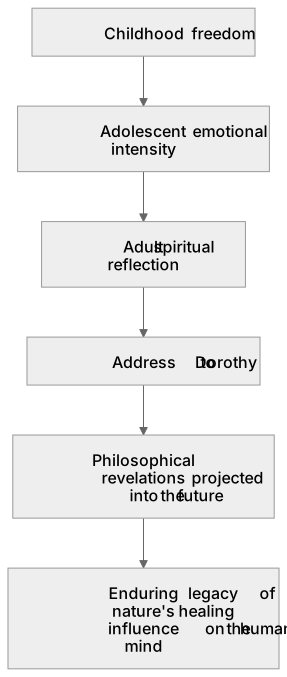
Put it in order
Put these steps in the order they happen.
- 1. Adult spiritual reflection
- 2. Adolescent emotional intensity
- 3. Childhood freedom
- 4. Enduring legacy of nature's healing influence on the human mind
- 5. Philosophical revelations projected into the future
- 6. Address to Dorothy
Key words
Say what each word means before you turn the card.
Memory and time
Try answering aloud or in your head before turning the card.
Growth and maturation
Try answering aloud or in your head before turning the card.
The sublime
Try answering aloud or in your head before turning the card.
See every definition
- Memory and time
- The restorative power of memory and the repetition of words related to time and memory, which build an argument about the poem's temporal structure.
- Growth and maturation
- The speaker's changing relationship with nature across three distinct stages of life, from youthful passion to a deeper, philosophical understanding.
- The sublime
- The broader Romantic concept to which the poem's philosophical musings can be linked.
Label the diagram
Some boxes have lost their names. Pick the right name for each number.
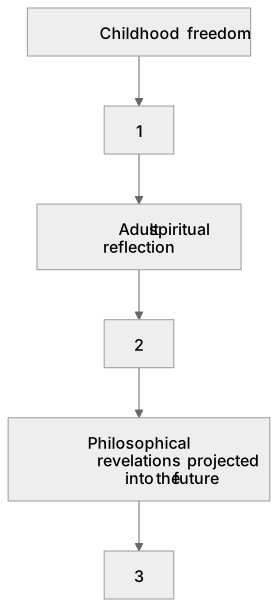
1Box 1
2Box 2
3Box 3
There is more to this lesson
The full lesson goes on to check your understanding and help you earn the marks. Create a free account to carry on, with your progress saved.
A week of Premium from your first lesson · Then the free plan continues · No card, no charge
Test your understanding of Component 3: Poetry – Section B: Specified Poetry Pre- or Post-1900 – Pre-1900 – The Romantic Period – English Romantic Verse, editor David Wright (Penguin Classics, 1973): Lines Composed a Few Miles above Tintern Abbey
Active recall beats re-reading. Take an instant quiz now to test what you’ve learned and lock it into long-term memory.
A week of Premium from your first lesson · Then the free plan continues · No card, no charge