Pearson Edexcel · A-Level · English Literature
Course version: 9ET0 · Version from Sept 2015
Poetry – Section B: Specified Poetry Pre- or Post-1900 – Pre-1900 – The…
Full specification wording
Component 3: Poetry – Section B: Specified Poetry Pre- or Post-1900 – Pre-1900 – The Romantic Period – English Romantic Verse, editor David Wright (Penguin Classics, 1973): Ode to the West Wind
Shelley's "Ode to the West Wind" explores the power of nature as both a destroyer and preserver.
Checked against the Pearson Edexcel 9ET0 specification (opens in a new tab) on .
- Point 11 of 16
- 4 key terms
Study notes
From the checked teaching notes for this specification point.
The idea
Shelley's "Ode to the West Wind" explores the power of nature as both a destroyer and preserver. Written in terza rima, the poem addresses the wind directly, asking it to scatter the poet's words across the world to inspire political and moral awakening. The five cantos move from the wind's effect on earth, air, and ocean, to the poet's personal plea for the wind's strength, culminating in the famous rhetorical question about spring.
What earns the marks
- Analyse the use of terza rima and how its interlocking rhyme scheme propels the poem forward, mirroring the wind's relentless movement.
- Evaluate the dual nature of the wind as 'Destroyer and preserver', linking this to Romantic ideas of revolution and rebirth.
- Explore the use of apostrophe and personification in elevating the wind to a divine, omnipotent force.
- Discuss the shift in tone in Canto IV where the speaker expresses personal vulnerability and a desire to merge with the wind's power.
Common mistakes and how to put them right
Treating the poem solely as a nature poem.
Put it right: Ensure you connect the natural imagery to Shelley's political and philosophical desire for societal change.
Misidentifying the form as a standard ode.
Put it right: Specify that it uses terza rima sonnets, blending Italian epic tradition with the lyric ode.
Ignoring the progression of the cantos.
Put it right: Trace the structural movement from earth, to air, to water, before turning to the speaker's internal state.
Exam tips
- Compare the destructive yet creative power of the wind with other Romantic representations of the sublime in your anthology.
- Quote specific dynamic verbs such as 'scatter', 'drive', and 'quicken' to demonstrate how Shelley creates a sense of overwhelming momentum.
- Link the final line regarding Winter and Spring to the broader Romantic theme of hope and inevitable renewal.
Try the lesson
The start of the Component 3: Poetry – Section B: Specified Poetry Pre- or Post-1900 – Pre-1900 – The Romantic Period – English Romantic Verse, editor David Wright (Penguin Classics, 1973): Ode to the West Wind lesson, made from checked teaching notes for this specification point.
Have a go first
Which poetic form does Percy Bysshe Shelley adapt for the five sections of 'Ode to the West Wind'?
Listen
Shelley's "Ode to the West Wind" explores the power of nature as both a destroyer and preserver. Written in terza rima, the poem addresses the wind directly, asking it to scatter the poet's words across the world to inspire political and moral awakening. The five cantos move from the wind's effect on earth, air, and ocean, to the poet's personal plea for the wind's strength, culminating in the famous rhetorical question about spring. A strong answer earns marks for these points. Analyse the use of terza rima and how its interlocking rhyme scheme propels the poem forward, mirroring the wind's relentless movement. Evaluate the dual nature of the wind as 'Destroyer and preserver', linking this to Romantic ideas of revolution and rebirth. Explore the use of apostrophe and personification in elevating the wind to a divine, omnipotent force. Discuss the shift in tone in Canto IV where the speaker expresses personal vulnerability and a desire to merge with the wind's power. A common slip: Treating the poem solely as a nature poem. Instead, ensure you connect the natural imagery to Shelley's political and philosophical desire for societal change. Exam tip: Compare the destructive yet creative power of the wind with other Romantic representations of the sublime in your anthology.
See it
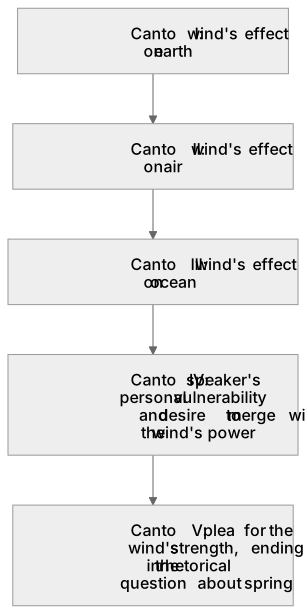
Put it in order
Put these steps in the order they happen.
- 1. Canto II: wind's effect on air
- 2. Canto III: wind's effect on ocean
- 3. Canto I: wind's effect on earth
- 4. Canto V: plea for the wind's strength, ending in the rhetorical question about spring
- 5. Canto IV: speaker's personal vulnerability and desire to merge with the wind's power
Key words
Say what each word means before you turn the card.
The Sublime
Try answering aloud or in your head before turning the card.
Revolution and Rebirth
Try answering aloud or in your head before turning the card.
The Role of the Poet
Try answering aloud or in your head before turning the card.
Nature's Power
Try answering aloud or in your head before turning the card.
See every definition
- The Sublime
- The destructive yet creative power of the wind, comparable with other Romantic representations of the sublime in the anthology.
- Revolution and Rebirth
- Romantic ideas linked to the wind's dual nature as 'Destroyer and preserver', alongside the broader theme of hope and inevitable renewal.
- The Role of the Poet
- The speaker's request that the wind scatter his words across the world to inspire political and moral awakening.
- Nature's Power
- The wind's effect on earth, air and ocean, and its elevation through apostrophe and personification to a divine, omnipotent force.
Label the diagram
Some boxes have lost their names. Pick the right name for each number.
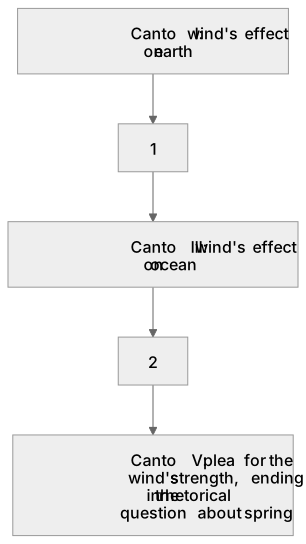
1Box 1
2Box 2
There is more to this lesson
The full lesson goes on to check your understanding and help you earn the marks. Create a free account to carry on, with your progress saved.
A week of Premium from your first lesson · Then the free plan continues · No card, no charge
Test your understanding of Component 3: Poetry – Section B: Specified Poetry Pre- or Post-1900 – Pre-1900 – The Romantic Period – English Romantic Verse, editor David Wright (Penguin Classics, 1973): Ode to the West Wind
Active recall beats re-reading. Take an instant quiz now to test what you’ve learned and lock it into long-term memory.
A week of Premium from your first lesson · Then the free plan continues · No card, no charge