Pearson Edexcel · A-Level · English Literature
Course version: 9ET0 · Version from Sept 2015
Poetry – Section B: Specified Poetry Pre- or Post-1900 – Pre-1900 – The…
Full specification wording
Component 3: Poetry – Section B: Specified Poetry Pre- or Post-1900 – Pre-1900 – The Romantic Period – English Romantic Verse, editor David Wright (Penguin Classics, 1973): Stanzas Written in Dejection, near Naples
Composed in 1818, this introspective lyric contrasts the breathtaking beauty of the Italian coastline with the speaker's profound internal despair.
Checked against the Pearson Edexcel 9ET0 specification (opens in a new tab) on .
- Point 10 of 16
Study notes
From the checked teaching notes for this specification point.
The idea
Composed in 1818, this introspective lyric contrasts the breathtaking beauty of the Italian coastline with the speaker's profound internal despair. Shelley employs a modified Spenserian stanza to create a meditative, melancholic rhythm that underscores his sense of alienation. Analysis should focus on the shift from observing the external environment to the speaker's internal death wish, culminating in a desire to fade away unnoticed.
What earns the marks
- Analyse the juxtaposition between the idyllic, sensory descriptions of the Bay of Naples and the speaker's profound internal melancholy.
- Evaluate the use of the modified Spenserian stanza and its effect on the poem's pacing and meditative tone.
- Explore the theme of alienation, specifically the speaker's sense of being disconnected from both humanity and the natural world.
- Assess how the poem reflects Romantic preoccupations with individual consciousness, emotional suffering, and the sublime.
Common mistakes and how to put them right
Assuming the beautiful natural setting brings comfort to the speaker.
Put it right: Emphasise that the beauty of the setting actually exacerbates the speaker's pain by highlighting his inability to share in its joy.
Misidentifying the form as standard blank verse or simple quatrains.
Put it right: Correctly identify the nine-line stanzas as a variation of the Spenserian stanza, noting the final alexandrine line that elongates the rhythm.
Treating the poem merely as a diary entry without analysing its crafted poetic techniques.
Put it right: Focus on Shelley's deliberate use of sensory imagery, repetition, and rhythmic variation to construct the persona's despair.
Exam tips
- Use this poem to discuss the limits of the Romantic sublime, noting how nature's beauty fails to provide spiritual healing for this specific speaker.
- Track the progression of the speaker's emotional state across the stanzas, from passive observation to a longing for a peaceful death.
- Compare the theme of isolation here with other Romantic poems to demonstrate a nuanced understanding of the period's diverse attitudes towards solitude.
Try the lesson
The start of the Component 3: Poetry – Section B: Specified Poetry Pre- or Post-1900 – Pre-1900 – The Romantic Period – English Romantic Verse, editor David Wright (Penguin Classics, 1973): Stanzas Written in Dejection, near Naples lesson, made from checked teaching notes for this specification point.
Have a go first
In Percy Bysshe Shelley's 'Stanzas Written in Dejection, near Naples', what primary contrast is established between the first and second stanzas?
Listen
Composed in 1818, this introspective lyric contrasts the breathtaking beauty of the Italian coastline with the speaker's profound internal despair. Shelley employs a modified Spenserian stanza to create a meditative, melancholic rhythm that underscores his sense of alienation. Analysis should focus on the shift from observing the external environment to the speaker's internal death wish, culminating in a desire to fade away unnoticed. A strong answer earns marks for these points. Analyse the juxtaposition between the idyllic, sensory descriptions of the Bay of Naples and the speaker's profound internal melancholy. Evaluate the use of the modified Spenserian stanza and its effect on the poem's pacing and meditative tone. Explore the theme of alienation, specifically the speaker's sense of being disconnected from both humanity and the natural world. Assess how the poem reflects Romantic preoccupations with individual consciousness, emotional suffering, and the sublime. A common slip: Assuming the beautiful natural setting brings comfort to the speaker. Instead, Emphasise that the beauty of the setting actually exacerbates the speaker's pain by highlighting his inability to share in its joy. Exam tip: Use this poem to discuss the limits of the Romantic sublime, noting how nature's beauty fails to provide spiritual healing for this specific speaker.
See it
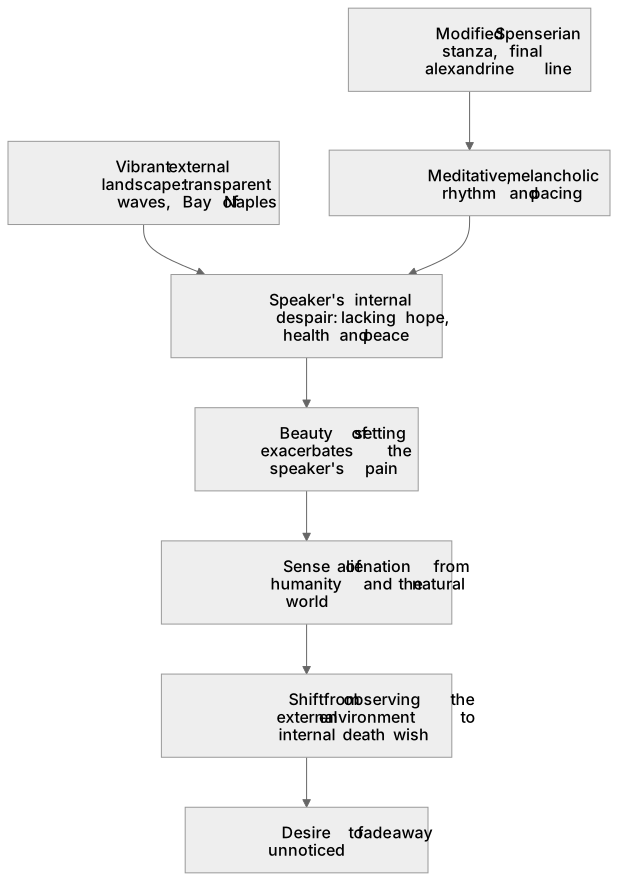
Label the diagram
Some boxes have lost their names. Pick the right name for each number.
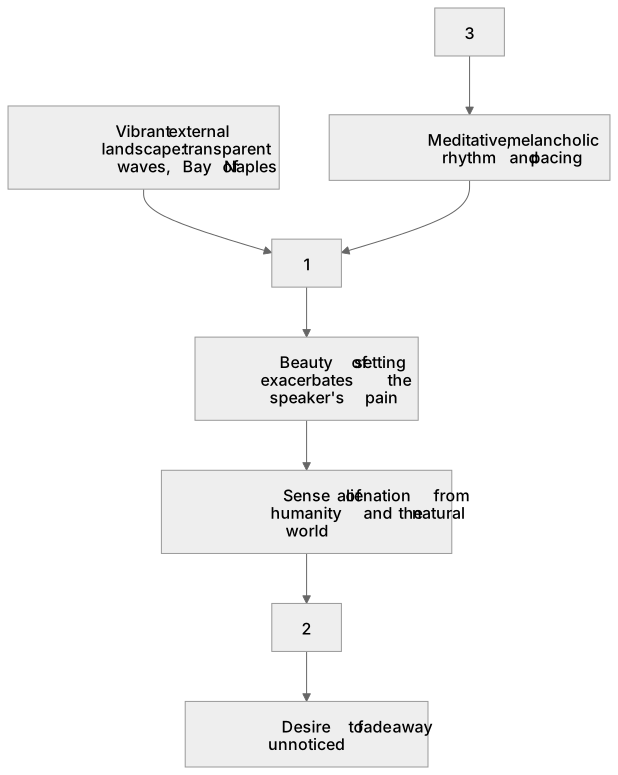
1Box 1
2Box 2
3Box 3
There is more to this lesson
The full lesson goes on to check your understanding and help you earn the marks. Create a free account to carry on, with your progress saved.
A week of Premium from your first lesson · Then the free plan continues · No card, no charge
Test your understanding of Component 3: Poetry – Section B: Specified Poetry Pre- or Post-1900 – Pre-1900 – The Romantic Period – English Romantic Verse, editor David Wright (Penguin Classics, 1973): Stanzas Written in Dejection, near Naples
Active recall beats re-reading. Take an instant quiz now to test what you’ve learned and lock it into long-term memory.
A week of Premium from your first lesson · Then the free plan continues · No card, no charge