Pearson Edexcel · A-Level · English Literature
Course version: 9ET0 · Version from Sept 2015
Poetry: show knowledge and understanding of the contexts in which texts…
Full specification wording
Component 3: Poetry: show knowledge and understanding of the contexts in which texts have been produced and received and understanding of how these contexts influence meaning
Context becomes useful when it explains a textual choice or a change in interpretation.
Checked against the Pearson Edexcel 9ET0 specification (opens in a new tab) on .
- Point 2 of 3
- 4 key terms
Study notes
From the checked teaching notes for this specification point.
The idea
Context becomes useful when it explains a textual choice or a change in interpretation. Production context can include a poem's literary tradition, language, publication setting and relevant social or political conditions; reception context asks how readers in different periods may respond from different cultural assumptions. Frame contextual claims proportionately and support them with evidence rather than turning a disputed biography into certainty. Link each contextual point to a precise word, image, form or structure and explain how it influences meaning.
What earns the marks
- Integrates relevant contextual information seamlessly into the analysis of the poem's meaning.
- Demonstrates understanding of the specific historical, social, or biographical conditions under which the poem was produced.
- Explores how different audiences or literary movements have received and interpreted the poem over time.
- Evaluates the direct relationship between contextual factors and the poet's linguistic or structural choices.
Common mistakes and how to put them right
Providing a lengthy historical biography that does not link to the poem.
Put it right: Only include contextual details that directly illuminate the meaning of specific lines or themes in the text.
Ignoring the context of reception and focusing solely on the poet's life.
Put it right: Discuss how modern readers or different historical audiences might interpret the poem differently from its original audience.
Treating context as a definitive answer to a poem's meaning.
Put it right: Use context to suggest possible interpretations, acknowledging that meaning is fluid and influenced by multiple factors.
Exam tips
- Embed contextual references within your close analysis of quotations rather than writing a separate paragraph on history.
- Use phrases like 'This reflects the contemporary anxiety about...' to explicitly link context to meaning.
- Consider literary context, such as the conventions of the Romantic or Modernist movements, alongside historical events.
Try the lesson
The start of the Component 3: Poetry: show knowledge and understanding of the contexts in which texts have been produced and received and understanding of how these contexts influence meaning lesson, made from checked teaching notes for this specification point.
Have a go first
Which of the following best describes how the historical context of production can influence the meaning of a poem?
Listen
Context becomes useful when it explains a textual choice or a change in interpretation. Production context can include a poem's literary tradition, language, publication setting and relevant social or political conditions; reception context asks how readers in different periods may respond from different cultural assumptions. Frame contextual claims proportionately and support them with evidence rather than turning a disputed biography into certainty. Link each contextual point to a precise word, image, form or structure and explain how it influences meaning. A strong answer earns marks for these points. Integrates relevant contextual information seamlessly into the analysis of the poem's meaning. Demonstrates understanding of the specific historical, social, or biographical conditions under which the poem was produced. Explores how different audiences or literary movements have received and interpreted the poem over time. Evaluates the direct relationship between contextual factors and the poet's linguistic or structural choices. A common slip: Providing a lengthy historical biography that does not link to the poem. Instead, Only include contextual details that directly illuminate the meaning of specific lines or themes in the text. Exam tip: Embed contextual references within your close analysis of quotations rather than writing a separate paragraph on history.
See it
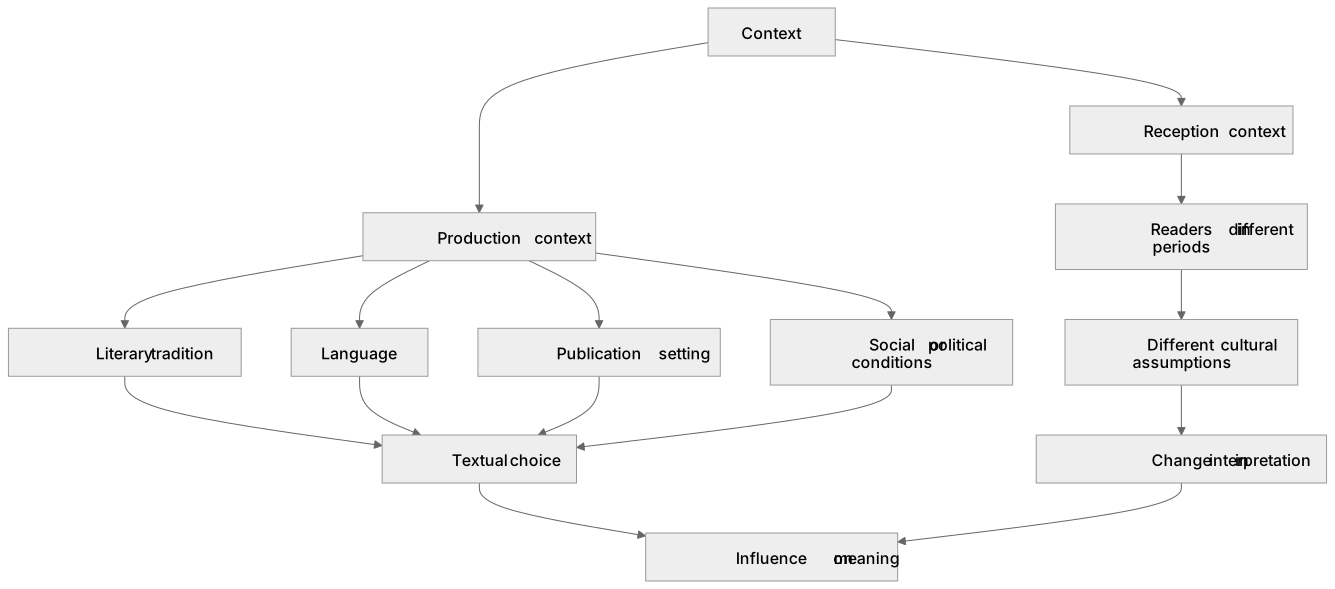
Key words
Say what each word means before you turn the card.
Historical context
Try answering aloud or in your head before turning the card.
Biographical influence
Try answering aloud or in your head before turning the card.
Literary movements
Try answering aloud or in your head before turning the card.
Audience reception
Try answering aloud or in your head before turning the card.
See every definition
- Historical context
- The specific historical, social or political conditions under which a poem was produced, which can explain a textual choice or a change in interpretation.
- Biographical influence
- Details of the poet's life that may illuminate meaning, framed proportionately and supported with evidence rather than turned into certainty.
- Literary movements
- A poem's literary tradition, such as the conventions of the Romantic or Modernist movements, which can be considered alongside historical events.
- Audience reception
- How readers in different periods may respond from different cultural assumptions, including how modern readers might interpret a poem differently from its original audience.
Label the diagram
Some boxes have lost their names. Pick the right name for each number.
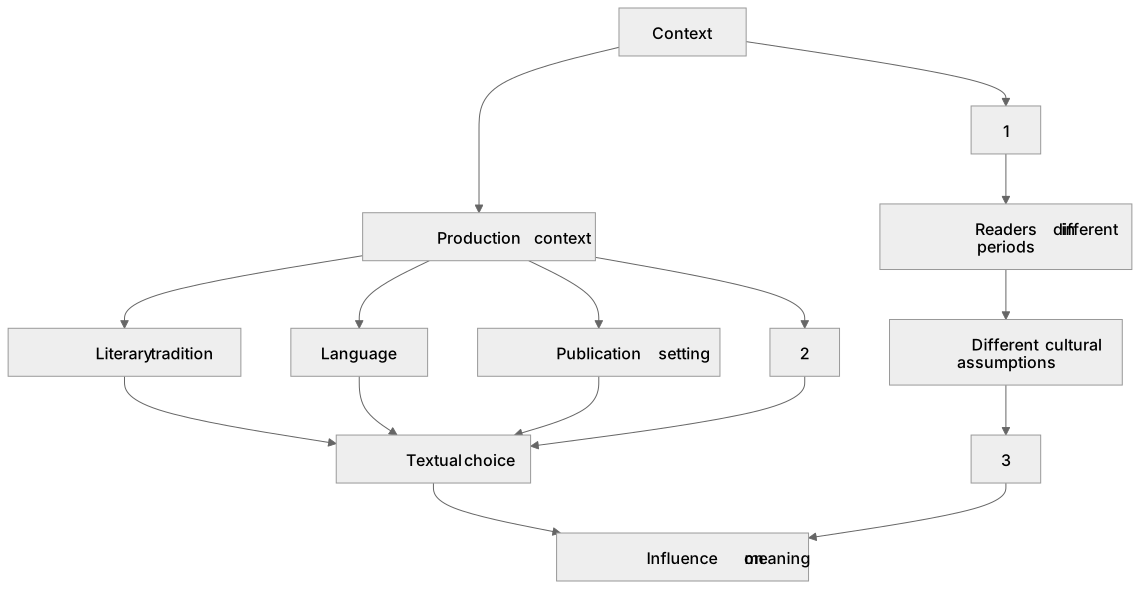
1Box 1
2Box 2
3Box 3
There is more to this lesson
The full lesson goes on to check your understanding and help you earn the marks. Create a free account to carry on, with your progress saved.
A week of Premium from your first lesson · Then the free plan continues · No card, no charge
Test your understanding of Component 3: Poetry: show knowledge and understanding of the contexts in which texts have been produced and received and understanding of how these contexts influence meaning
Active recall beats re-reading. Take an instant quiz now to test what you’ve learned and lock it into long-term memory.
A week of Premium from your first lesson · Then the free plan continues · No card, no charge