AQA · GCSE · French
Course version: 8658 · Version from Sept 2016
Number, quantity, dates and time: including use of depuis with present tense
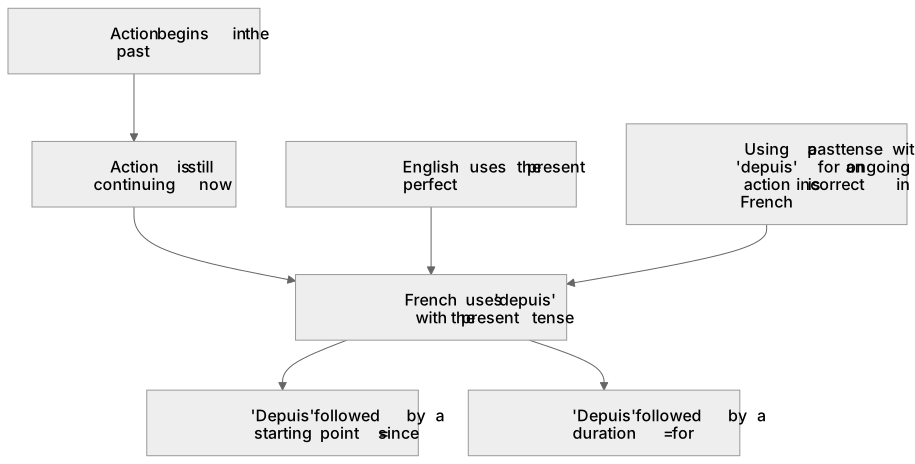
In French, the preposition 'depuis' (since/for) is used with the present tense to describe an action that began in the past and is still continuing.
- 2 key terms
Study notes
From the teaching notes for this specification point.
The idea
In French, the preposition 'depuis' (since/for) is used with the present tense to describe an action that began in the past and is still continuing. This contrasts with English, which uses the present perfect tense. For example, "J'habite à Paris depuis cinq ans" translates to "I have lived in Paris for five years", and "Je joue au tennis depuis 2018" means "I have been playing tennis since 2018". Using a past tense with 'depuis' in these contexts is grammatically incorrect in French if the action is ongoing. Understanding this structural difference is vital for accurate communication regarding time, dates, and quantities, and frequently appears in reading and listening comprehension tasks.
What earns the marks
- Identify the correct present tense verb form to use in a sentence containing 'depuis'.
- Distinguish between 'depuis' meaning 'since' and 'for' based on the surrounding context.
- Select the appropriate time phrase or date to logically follow 'depuis'.
- Recognise that an action described with 'depuis' and the present tense is still ongoing at the time of speaking.
Common mistakes and how to put them right
Using the perfect tense with 'depuis' for ongoing actions.
Put it right: Translating directly from English and using the perfect tense, whereas French requires the present tense.
Confusing 'depuis' with 'pendant'.
Put it right: 'depuis' indicates an action continuing from the past into the present, while 'pendant' refers to a completed duration of time.
Misinterpreting 'depuis' in reading tasks: assuming 'depuis' always means 'since' a specific date, forgetting it can also mean 'for' a duration of time.
Exam tips
- When you see 'depuis' in a sentence describing an ongoing action, ensure the accompanying verb is conjugated in the present tense.
- Pay attention to whether 'depuis' is followed by a specific starting point (since) or a duration (for) to translate accurately.
- Practice transforming English present perfect sentences into French using the present tense and 'depuis' to build a natural reflex.
Try the lesson
The start of the Number, quantity, dates and time: including use of depuis with present tense lesson, made from teaching notes for this specification point.
Have a go first
Choose the correct verb form to complete the sentence describing an ongoing action: "Nous _______ le français depuis trois ans."
Listen
In French, the preposition 'depuis' (since/for) is used with the present tense to describe an action that began in the past and is still continuing. This contrasts with English, which uses the present perfect tense. For example, "J'habite à Paris depuis cinq ans" translates to "I have lived in Paris for five years", and "Je joue au tennis depuis 2018" means "I have been playing tennis since 2018". Using a past tense with 'depuis' in these contexts is grammatically incorrect in French if the action is ongoing. Understanding this structural difference is vital for accurate communication regarding time, dates, and quantities, and frequently appears in reading and listening comprehension tasks. A strong answer earns marks for these points. Identify the correct present tense verb form to use in a sentence containing 'depuis'. Distinguish between 'depuis' meaning 'since' and 'for' based on the surrounding context. Select the appropriate time phrase or date to logically follow 'depuis'. Recognise that an action described with 'depuis' and the present tense is still ongoing at the time of speaking. Exam tip: When you see 'depuis' in a sentence describing an ongoing action, ensure the accompanying verb is conjugated in the present tense.
See it
Key words
Say what each word means before you turn the card.
depuis
Try answering aloud or in your head before turning the card.
Present tense
Try answering aloud or in your head before turning the card.
See every definition
- depuis
- A preposition meaning 'since' or 'for', used with the present tense to describe an action that began in the past and is still continuing.
- Present tense
- The tense French requires with 'depuis' for an ongoing action, contrasting with English, which uses the present perfect tense.
Label the diagram
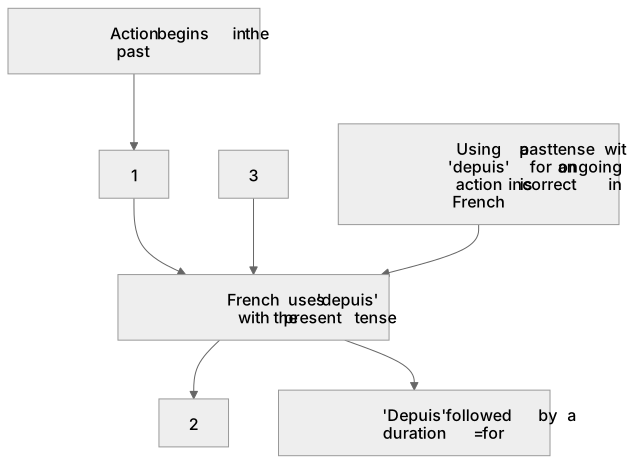
Some boxes have lost their names. Pick the right name for each number.
1Box 1
2Box 2
3Box 3
There is more to this lesson
The full lesson goes on to check your understanding and help you earn the marks. Create a free account to carry on, with your progress saved.
A week of Premium from your first lesson · Then the free plan continues · No card, no charge
Test your understanding of Number, quantity, dates and time: including use of depuis with present tense
Active recall beats re-reading. Take an instant quiz now to test what you’ve learned and lock it into long-term memory.
A week of Premium from your first lesson · Then the free plan continues · No card, no charge