AQA · A-Level · Geography
Course version: 7037 · Version from Sept 2018
Geomorphological processes: weathering, mass movement, erosion,…
Full specification wording
Hot desert systems and landscapes - 3.1.2.2 Systems and processes: Geomorphological processes: weathering, mass movement, erosion, transportation and deposition.
Desert landscapes are shaped by distinct geomorphological processes.
Checked against the AQA 7037 specification (opens in a new tab) on .
- Point 3 of 6
- 2 key terms
Study notes
From the checked teaching notes for this specification point.
The idea
Desert landscapes are shaped by distinct geomorphological processes. Weathering breaks down rock in situ, dominated by mechanical processes like insolation weathering (thermal expansion) and salt crystallisation, though chemical weathering occurs during pluvial periods. Mass movement, such as rockfalls, transfers material down steep slopes under gravity. Erosion involves the wearing away of surfaces via aeolian deflation and abrasion, alongside intense fluvial erosion during episodic flash floods. Transportation moves this material: wind carries fine particles in suspension, sand via saltation, and coarser grains through surface creep. Finally, deposition occurs when wind or water loses energy, forming features like alluvial fans or sand dunes.
What earns the marks
- Distinguish between mechanical weathering (e.g., insolation, salt weathering) and chemical weathering in arid environments.
- Describe mass movement processes relevant to deserts, particularly rockfalls on steep, unvegetated slopes.
- Explain aeolian and fluvial erosion mechanisms, including deflation, abrasion, and hydraulic action during flash floods.
- Detail the modes of sediment transportation: suspension (dust), saltation (sand grains), and surface creep (larger pebbles).
- Relate deposition to a loss of transport energy, leading to the formation of specific landforms like dunes or bajadas.
Common mistakes and how to put them right
Stating that chemical weathering does not occur in deserts.
Put it right: Note that chemical weathering does occur, often driven by dew, episodic rainfall, or past pluvial climates.
Confusing erosion with weathering.
Put it right: Define weathering as the in situ breakdown of rock, whereas erosion involves the removal and transport of material by a moving agent like wind or water.
Assuming wind is the only significant agent of erosion and transport.
Put it right: Emphasise that fluvial processes (water) are highly effective and often do more geomorphological work during rare flash floods.
Exam tips
- Always link a specific geomorphological process to the formation of a named desert landform (e.g., abrasion creating yardangs).
- Use precise terminology for transportation, distinguishing clearly between suspension, saltation, and surface creep.
- Highlight the episodic nature of fluvial processes in deserts compared to the more continuous nature of aeolian processes.
Try the lesson
The start of the Hot desert systems and landscapes - 3.1.2.2 Systems and processes: Geomorphological processes: weathering, mass movement, erosion, transportation and deposition. lesson, made from checked teaching notes for this specification point.
Have a go first
Which aeolian transportation process involves sand particles bouncing along the desert surface in a series of short leaps?
Listen
Desert landscapes are shaped by distinct geomorphological processes. Weathering breaks down rock in situ, dominated by mechanical processes like insolation weathering (thermal expansion) and salt crystallisation, though chemical weathering occurs during pluvial periods. Mass movement, such as rockfalls, transfers material down steep slopes under gravity. Erosion involves the wearing away of surfaces via aeolian deflation and abrasion, alongside intense fluvial erosion during episodic flash floods. Transportation moves this material: wind carries fine particles in suspension, sand via saltation, and coarser grains through surface creep. Finally, deposition occurs when wind or water loses energy, forming features like alluvial fans or sand dunes. A strong answer earns marks for these points. Distinguish between mechanical weathering (e.g., insolation, salt weathering) and chemical weathering in arid environments. Describe mass movement processes relevant to deserts, particularly rockfalls on steep, unvegetated slopes. Explain aeolian and fluvial erosion mechanisms, including deflation, abrasion, and hydraulic action during flash floods. Detail the modes of sediment transportation: suspension (dust), saltation (sand grains), and surface creep (larger pebbles). A common slip: Stating that chemical weathering does not occur in deserts. Instead, Note that chemical weathering does occur, often driven by dew, episodic rainfall, or past pluvial climates. Exam tip: Always link a specific geomorphological process to the formation of a named desert landform (e.g., abrasion creating yardangs).
See it
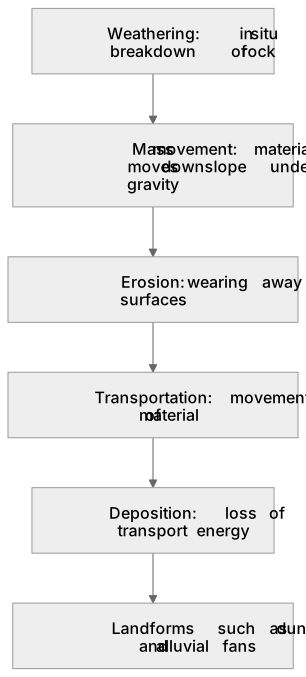
Put it in order
Put these steps in the order they happen.
- 1. Erosion: wearing away of surfaces
- 2. Mass movement: material moves downslope under gravity
- 3. Weathering: in situ breakdown of rock
- 4. Landforms such as dunes and alluvial fans
- 5. Deposition: loss of transport energy
- 6. Transportation: movement of material
Key words
Say what each word means before you turn the card.
Aeolian processes
Try answering aloud or in your head before turning the card.
Fluvial processes
Try answering aloud or in your head before turning the card.
See every definition
- Aeolian processes
- Work done by wind, including deflation and abrasion as erosion, and suspension, saltation and surface creep as transportation.
- Fluvial processes
- Work done by water, including intense erosion during episodic flash floods and deposition when water loses energy.
Label the diagram
Some boxes have lost their names. Pick the right name for each number.
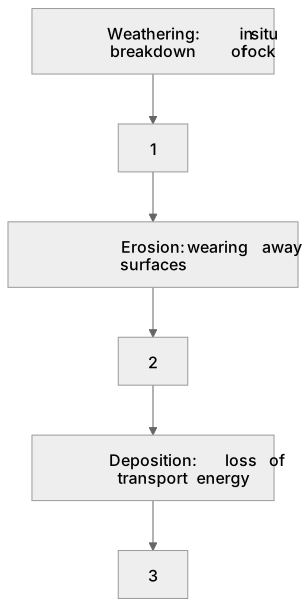
1Box 1
2Box 2
3Box 3
There is more to this lesson
The full lesson goes on to check your understanding and help you earn the marks. Create a free account to carry on, with your progress saved.
A week of Premium from your first lesson · Then the free plan continues · No card, no charge
Test your understanding of Hot desert systems and landscapes - 3.1.2.2 Systems and processes: Geomorphological processes: weathering, mass movement, erosion, transportation and deposition.
Active recall beats re-reading. Take an instant quiz now to test what you’ve learned and lock it into long-term memory.
A week of Premium from your first lesson · Then the free plan continues · No card, no charge