AQA · A-Level · History
Course version: 7042 · Version from Sept 2017
The 'Great Power', 1556–1598 (A-level only): The eclipsing of French…
Full specification wording
1B Spain in the Age of Discovery, 1469–1598 (A-level only) – Spain: The 'Great Power', 1556–1598 (A-level only): The eclipsing of French power: Italy; war and interference in France
The early years of Philip II’s reign saw the definitive eclipsing of French power, cemented by the Treaty of Cateau-Cambrésis in 1559.
Checked against the AQA 7042 specification (opens in a new tab) on .
- Point 2 of 6
- 4 key terms
Study notes
From the checked teaching notes for this specification point.
The idea
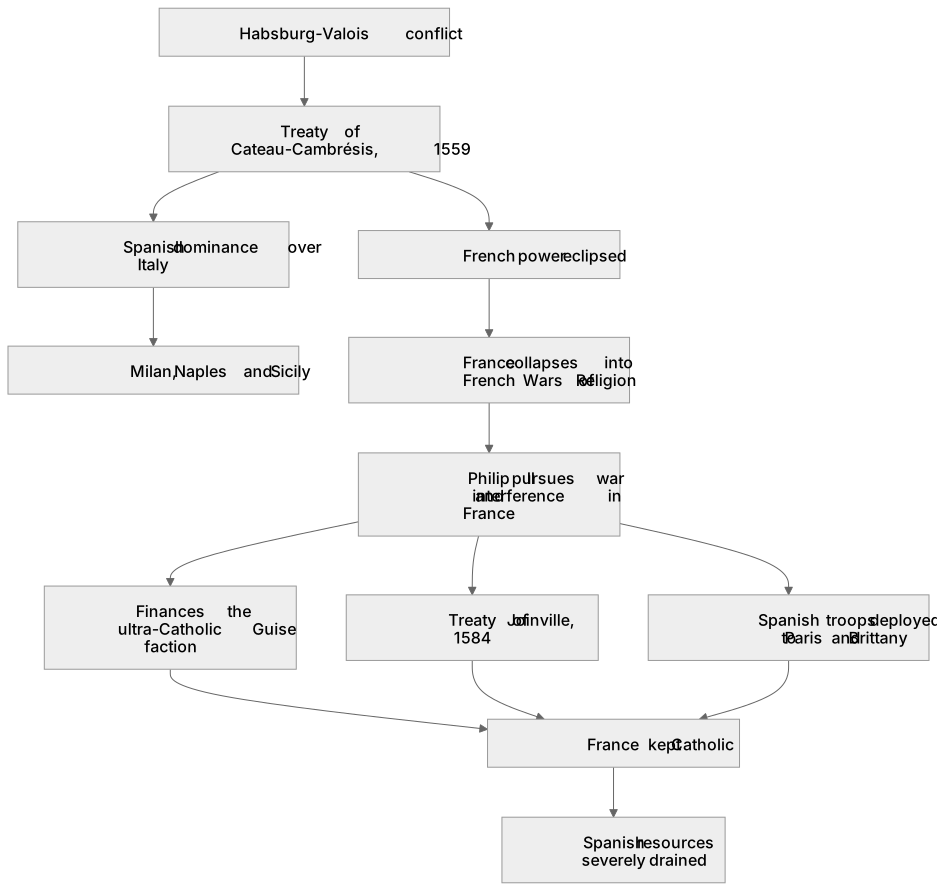
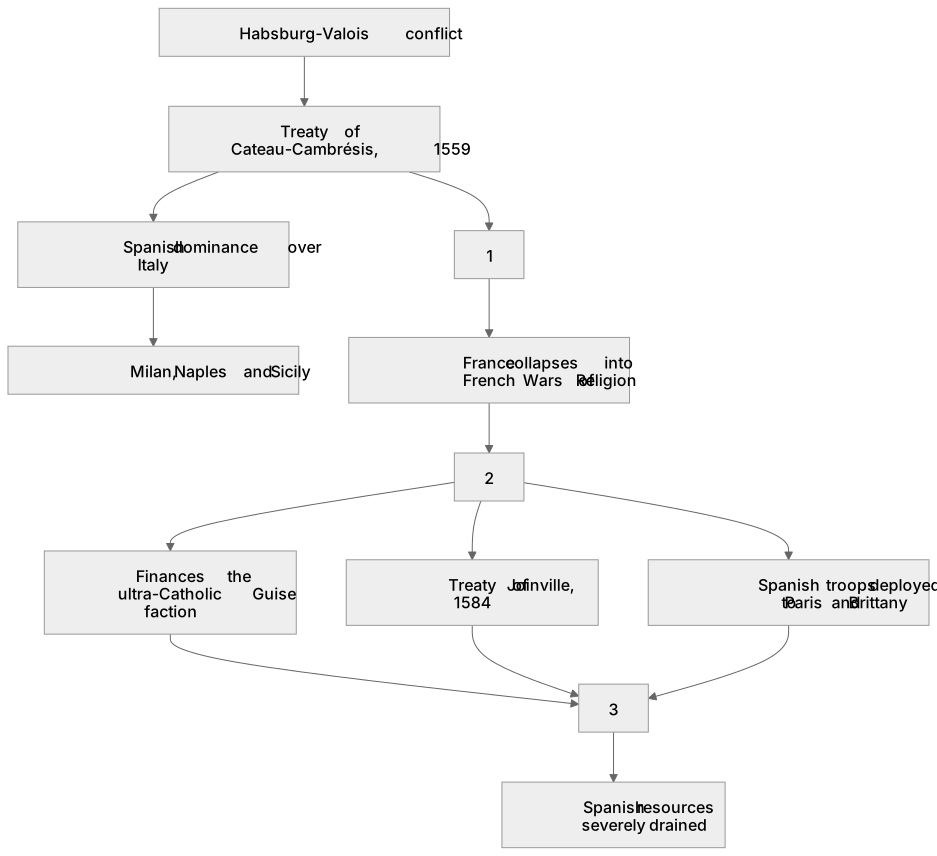
The early years of Philip II’s reign saw the definitive eclipsing of French power, cemented by the Treaty of Cateau-Cambrésis in 1559. This ended decades of Habsburg-Valois conflict and secured absolute Spanish dominance over Italy, confirming Philip’s control of Milan, Naples, and Sicily. As France collapsed into the internal chaos of the French Wars of Religion, it ceased to be a direct military rival. However, Philip actively pursued war and interference in France to prevent a Protestant succession. He financed the ultra-Catholic Guise faction, signed the Treaty of Joinville in 1584, and deployed Spanish troops to Paris and Brittany to block Henry of Navarre. This intervention successfully kept France Catholic but severely drained Spanish resources.
What earns the marks
- Explain the significance of the Treaty of Cateau-Cambrésis (1559) in establishing Spanish hegemony and eclipsing French power in Europe.
- Detail the extent of Spanish control in Italy, specifically the strategic importance of Milan, Naples, and Sicily.
- Analyse Philip II's motivations for interfering in the French Wars of Religion, focusing on his fear of a Protestant monarch on his border.
- Evaluate the methods of Spanish interference in France, including financial subsidies to the Catholic League and direct military intervention.
- Assess the outcomes of Philip's interference, noting that while France remained Catholic, the financial cost exacerbated Spain's economic crises.
Common mistakes and how to put them right
Confusing the Habsburg-Valois wars with the later French Wars of Religion.
Put it right: Distinguish between the international dynastic conflict ending in 1559 and the subsequent internal French religious civil wars that Philip interfered in.
Stating that Philip II conquered France.
Put it right: Clarify that Philip intervened to support the Catholic League and prevent a Protestant king, not to annex France into the Spanish Empire.
Ignoring the strategic role of Italy.
Put it right: Connect Spanish control of Italy to the wider eclipsing of French power, as Italy provided vital troops, taxes, and the 'Spanish Road' to the Netherlands.
Exam tips
- Use the Treaty of Joinville (1584) as key evidence of Philip's formal commitment to interfering in French domestic politics.
- Evaluate the success of Philip's French policy by weighing his ideological victory (Henry IV converting to Catholicism) against the massive financial drain on Spain.
- Connect Spanish dominance in Italy to the logistical functioning of the wider empire, particularly the movement of troops.
Try the lesson
The start of the 1B Spain in the Age of Discovery, 1469–1598 (A-level only) – Spain: The 'Great Power', 1556–1598 (A-level only): The eclipsing of French power: Italy; war and interference in France lesson, made from checked teaching notes for this specification point.
Have a go first
Which 1559 treaty marked the end of the Italian Wars, confirming Spanish dominance in Italy and the eclipsing of French power in the region?
Listen
The early years of Philip II’s reign saw the definitive eclipsing of French power, cemented by the Treaty of Cateau-Cambrésis in 1559. This ended decades of Habsburg-Valois conflict and secured absolute Spanish dominance over Italy, confirming Philip’s control of Milan, Naples, and Sicily. As France collapsed into the internal chaos of the French Wars of Religion, it ceased to be a direct military rival. However, Philip actively pursued war and interference in France to prevent a Protestant succession. He financed the ultra-Catholic Guise faction, signed the Treaty of Joinville in 1584, and deployed Spanish troops to Paris and Brittany to block Henry of Navarre. This intervention successfully kept France Catholic but severely drained Spanish resources. A strong answer earns marks for these points. Explain the significance of the Treaty of Cateau-Cambrésis (1559) in establishing Spanish hegemony and eclipsing French power in Europe. Detail the extent of Spanish control in Italy, specifically the strategic importance of Milan, Naples, and Sicily. Analyse Philip II's motivations for interfering in the French Wars of Religion, focusing on his fear of a Protestant monarch on his border. Evaluate the methods of Spanish interference in France, including financial subsidies to the Catholic League and direct military intervention. A common slip: Confusing the Habsburg-Valois wars with the later French Wars of Religion. Instead, Distinguish between the international dynastic conflict ending in 1559 and the subsequent internal French religious civil wars that Philip interfered in. Exam tip: Use the Treaty of Joinville (1584) as key evidence of Philip's formal commitment to interfering in French domestic politics.
See it
Key words
Say what each word means before you turn the card.
Diplomacy and treaties
Try answering aloud or in your head before turning the card.
Religious conflict and interventionism
Try answering aloud or in your head before turning the card.
Geopolitical hegemony
Try answering aloud or in your head before turning the card.
The balance of power in Europe
Try answering aloud or in your head before turning the card.
See every definition
- Diplomacy and treaties
- The Treaty of Cateau-Cambrésis in 1559 ended decades of Habsburg-Valois conflict and cemented the definitive eclipsing of French power.
- Religious conflict and interventionism
- Philip actively pursued war and interference in France to prevent a Protestant succession, financing the ultra-Catholic Guise faction and deploying Spanish troops.
- Geopolitical hegemony
- Absolute Spanish dominance over Italy was secured, confirming Philip's control of Milan, Naples, and Sicily.
- The balance of power in Europe
- As France collapsed into the internal chaos of the French Wars of Religion, it ceased to be a direct military rival to Spain.
Label the diagram
Some boxes have lost their names. Pick the right name for each number.
1Box 1
2Box 2
3Box 3
There is more to this lesson
The full lesson goes on to check your understanding and help you earn the marks. Create a free account to carry on, with your progress saved.
A week of Premium from your first lesson · Then the free plan continues · No card, no charge
Test your understanding of 1B Spain in the Age of Discovery, 1469–1598 (A-level only) – Spain: The 'Great Power', 1556–1598 (A-level only): The eclipsing of French power: Italy; war and interference in France
Active recall beats re-reading. Take an instant quiz now to test what you’ve learned and lock it into long-term memory.
A week of Premium from your first lesson · Then the free plan continues · No card, no charge