AQA · A-Level · History
Course version: 7042 · Version from Sept 2017
Foreign affairs: intervention in Poland; failure to secure the Crimea;…
Full specification wording
1E Russia in the Age of Absolutism and Enlightenment, 1682–1796 (A-level only) – The epoch of palace coups, 1725–1762: Foreign affairs: intervention in Poland; failure to secure the Crimea; involvement in the Seven Years War
Between 1725 and 1762, Russian foreign policy aimed to expand influence, yielding mixed results.
Checked against the AQA 7042 specification (opens in a new tab) on .
- Point 5 of 6
Study notes
From the checked teaching notes for this specification point.
The idea
Between 1725 and 1762, Russian foreign policy aimed to expand influence, yielding mixed results. Intervention in the War of the Polish Succession (1733–1735) successfully placed the Russian-backed Augustus III on the throne, securing western borders against French influence. Conversely, the Russo-Turkish War (1735–1739) ended in frustration. Despite costly victories under Münnich, Russian forces withdrew from the Crimea due to disease and logistical failures. The subsequent Treaty of Niš (1739) confirmed Russia's failure to secure the Crimea or a Black Sea fleet. Finally, involvement in the Seven Years War (1756–1763) demonstrated Russian military might at Kunersdorf. However, Peter III's sudden withdrawal in 1762 squandered these gains, saving Prussia from collapse and angering the military.
What earns the marks
- Assess the strategic motivations behind Russian intervention in the War of the Polish Succession to counter French influence.
- Evaluate the outcomes of the Russo-Turkish War (1735–1739), specifically the terms of the Treaty of Niš which denied Russia a Black Sea fleet and confirmed the failure to secure the Crimea.
- Analyse the impact of Russian military successes during the Seven Years War, such as the occupation of Berlin in 1760, on its status as a major European power.
- Examine the domestic and diplomatic consequences of Peter III's alliance with Frederick the Great in 1762, which nullified previous Russian sacrifices.
Common mistakes and how to put them right
Claiming Russia gained or relinquished the Crimea during the 1735-1739 war.
Put it right: Clarify that Russian forces withdrew due to logistics and disease, and the Treaty of Niš (1739) confirmed their failure to secure the Crimea or a Black Sea fleet.
Confusing the War of the Polish Succession with the later Partitions of Poland.
Put it right: Ensure focus remains on the 1733-1735 succession crisis involving Augustus III, not the territorial divisions under Catherine the Great.
Assuming Russia lost the Seven Years War militarily.
Put it right: Explain that Russia was militarily victorious and on the verge of crushing Prussia until Peter III voluntarily withdrew for personal dynastic reasons.
Exam tips
- Link foreign policy outcomes to domestic stability, noting how Peter III's withdrawal from the Seven Years War alienated the army and facilitated his overthrow.
- Contrast the successful projection of power in Poland with the logistical and diplomatic failures in the Crimea to provide a balanced assessment of foreign affairs.
- Use specific treaties, such as the Treaty of Niš (1739), to substantiate arguments about the limitations of Russian expansion in the south.
Try the lesson
The start of the 1E Russia in the Age of Absolutism and Enlightenment, 1682–1796 (A-level only) – The epoch of palace coups, 1725–1762: Foreign affairs: intervention in Poland; failure to secure the Crimea; involvement in the Seven Years War lesson, made from checked teaching notes for this specification point.
Have a go first
During the Russo-Turkish War of 1735–1739, what was the primary outcome for Russia regarding its strategic aims in the south?
Listen
Between 1725 and 1762, Russian foreign policy aimed to expand influence, yielding mixed results. Intervention in the War of the Polish Succession (1733–1735) successfully placed the Russian-backed Augustus III on the throne, securing western borders against French influence. Conversely, the Russo-Turkish War (1735–1739) ended in frustration. Despite costly victories under Münnich, Russian forces withdrew from the Crimea due to disease and logistical failures. The subsequent Treaty of Niš (1739) confirmed Russia's failure to secure the Crimea or a Black Sea fleet. Finally, involvement in the Seven Years War (1756–1763) demonstrated Russian military might at Kunersdorf. However, Peter III's sudden withdrawal in 1762 squandered these gains, saving Prussia from collapse and angering the military. A strong answer earns marks for these points. Assess the strategic motivations behind Russian intervention in the War of the Polish Succession to counter French influence. Evaluate the outcomes of the Russo-Turkish War (1735–1739), specifically the terms of the Treaty of Niš which denied Russia a Black Sea fleet and confirmed the failure to secure the Crimea. Analyse the impact of Russian military successes during the Seven Years War, such as the occupation of Berlin in 1760, on its status as a major European power. Examine the domestic and diplomatic consequences of Peter III's alliance with Frederick the Great in 1762, which nullified previous Russian sacrifices. A common slip: Claiming Russia gained or relinquished the Crimea during the 1735-1739 war. Instead, Clarify that Russian forces withdrew due to logistics and disease, and the Treaty of Niš (1739) confirmed their failure to secure the Crimea or a Black Sea fleet. Exam tip: Link foreign policy outcomes to domestic stability, noting how Peter III's withdrawal from the Seven Years War alienated the army and facilitated his overthrow.
See it
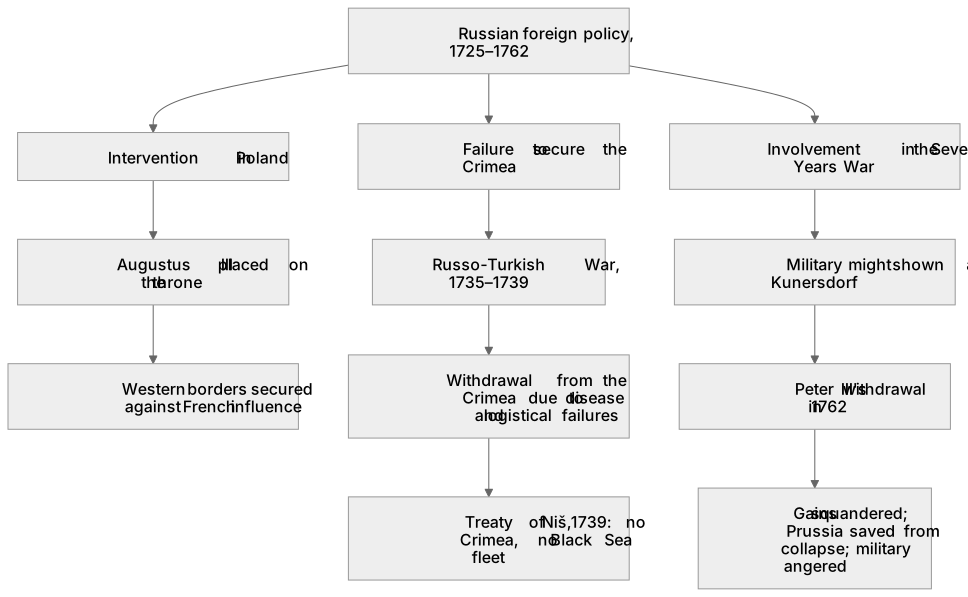
Label the diagram
Some boxes have lost their names. Pick the right name for each number.
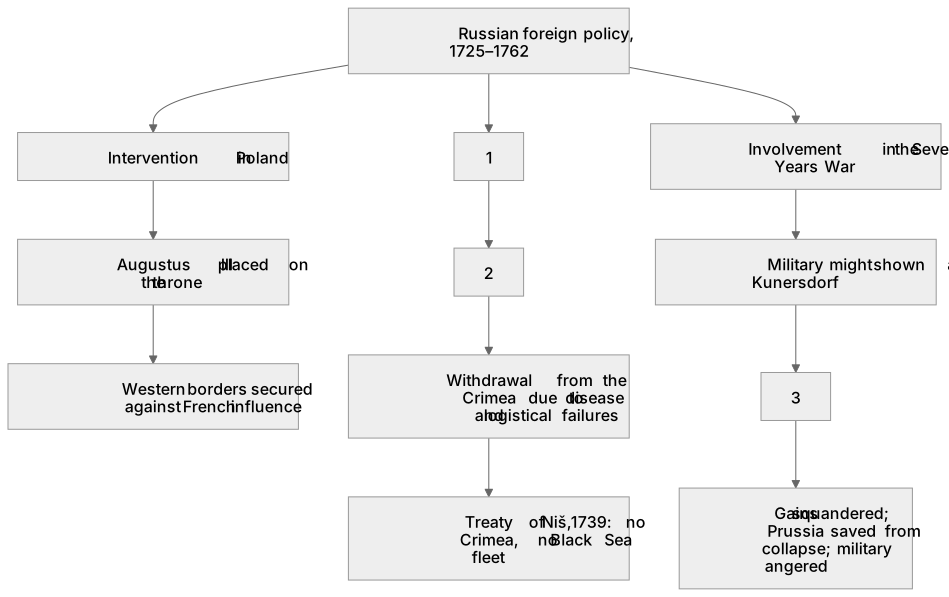
1Box 1
2Box 2
3Box 3
There is more to this lesson
The full lesson goes on to check your understanding and help you earn the marks. Create a free account to carry on, with your progress saved.
A week of Premium from your first lesson · Then the free plan continues · No card, no charge
Test your understanding of 1E Russia in the Age of Absolutism and Enlightenment, 1682–1796 (A-level only) – The epoch of palace coups, 1725–1762: Foreign affairs: intervention in Poland; failure to secure the Crimea; involvement in the Seven Years War
Active recall beats re-reading. Take an instant quiz now to test what you’ve learned and lock it into long-term memory.
A week of Premium from your first lesson · Then the free plan continues · No card, no charge