AQA · A-Level · History
Course version: 7042 · Version from Sept 2017
USA, 1865–1975 – Populism, progressivism and imperialism, 1890–1920:…
Full specification wording
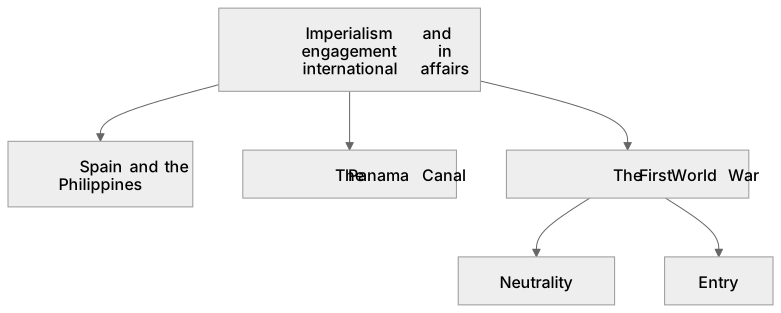
1K The making of a Superpower: USA, 1865–1975 – Populism, progressivism and imperialism, 1890–1920: Foreign affairs: imperialism; engagement in international affairs; Spain and the Philippines; the Panama Canal; the First World War, neutrality and entry
Between 1890 and 1920, US foreign policy shifted from continental expansion to global imperialism and active engagement in international affairs.
Checked against the AQA 7042 specification (opens in a new tab) on .
- Point 5 of 6
Study notes
From the checked teaching notes for this specification point.
The idea
Between 1890 and 1920, US foreign policy shifted from continental expansion to global imperialism and active engagement in international affairs. The 1898 Spanish-American War marked a turning point, resulting in the US acquiring the Philippines and establishing dominance in the Caribbean. Theodore Roosevelt's 'Big Stick' diplomacy drove the construction of the Panama Canal (completed 1914), securing vital naval and trade routes. When the First World War erupted, Woodrow Wilson initially maintained strict neutrality to avoid European entanglements. However, unrestricted submarine warfare, the Zimmermann Telegram, and economic ties forced US entry in 1917, fundamentally altering its global role.
What earns the marks
- Analyse the ideological and economic drivers of US imperialism, such as the need for new markets and the influence of 'Manifest Destiny' applied globally.
- Evaluate the causes and consequences of the 1898 war with Spain, specifically the annexation of the Philippines and the resulting Philippine-American War.
- Assess the strategic and economic significance of the Panama Canal, including the US role in Panamanian independence from Colombia.
- Examine the reasons for US neutrality at the outbreak of the First World War and the domestic pressures Wilson faced to stay out of the conflict.
- Explain the catalyst events that led to US entry into the First World War in 1917, such as the sinking of the Lusitania and the Zimmermann Telegram.
Common mistakes and how to put them right
Claiming the US entered the First World War immediately after the Lusitania sank.
Put it right by noting the sinking was in 1915, but the US did not declare war until 1917 following the resumption of unrestricted submarine warfare.
Confusing the Spanish-American War with the Philippine-American War.
Put it right by distinguishing the brief 1898 conflict with Spain from the subsequent brutal, multi-year suppression of Filipino independence fighters.
Stating the US built the Panama Canal without resistance.
Put it right by explaining the US had to support a Panamanian revolt against Colombia to secure the canal zone after Colombia rejected the initial treaty.
Exam tips
- Link the acquisition of the Philippines and the Panama Canal to broader economic goals, such as securing trade routes to Asian markets.
- When discussing Wilson's neutrality, contrast his idealistic rhetoric with the practical economic loans provided to the Allied powers before 1917.
- Use the Zimmermann Telegram as a key piece of evidence when evaluating the shift in American public opinion towards entering the First World War.
Try the lesson
The start of the 1K The making of a Superpower: USA, 1865–1975 – Populism, progressivism and imperialism, 1890–1920: Foreign affairs: imperialism; engagement in international affairs; Spain and the Philippines; the Panama Canal; the First World War, neutrality and entry lesson, made from checked teaching notes for this specification point.
Have a go first
Which event served as the immediate catalyst for the United States declaring war on Spain in 1898?
Listen
Between 1890 and 1920, US foreign policy shifted from continental expansion to global imperialism and active engagement in international affairs. The 1898 Spanish-American War marked a turning point, resulting in the US acquiring the Philippines and establishing dominance in the Caribbean. Theodore Roosevelt's 'Big Stick' diplomacy drove the construction of the Panama Canal (completed 1914), securing vital naval and trade routes. When the First World War erupted, Woodrow Wilson initially maintained strict neutrality to avoid European entanglements. However, unrestricted submarine warfare, the Zimmermann Telegram, and economic ties forced US entry in 1917, fundamentally altering its global role. A strong answer earns marks for these points. Analyse the ideological and economic drivers of US imperialism, such as the need for new markets and the influence of 'Manifest Destiny' applied globally. Evaluate the causes and consequences of the 1898 war with Spain, specifically the annexation of the Philippines and the resulting Philippine-American War. Assess the strategic and economic significance of the Panama Canal, including the US role in Panamanian independence from Colombia. Examine the reasons for US neutrality at the outbreak of the First World War and the domestic pressures Wilson faced to stay out of the conflict. A common slip: Claiming the US entered the First World War immediately after the Lusitania sank. Instead, noting the sinking was in 1915, but the US did not declare war until 1917 following the resumption of unrestricted submarine warfare. Exam tip: Link the acquisition of the Philippines and the Panama Canal to broader economic goals, such as securing trade routes to Asian markets.
See it
Put the events in order
Put these events in the order they happened, earliest first.
- 1. The United States enters the First World War
- 2. Spanish-American War marks a turning point in US foreign policy
- 3. The Lusitania is sunk
- 4. Construction of the Panama Canal is completed
Label the diagram
Some boxes have lost their names. Pick the right name for each number.
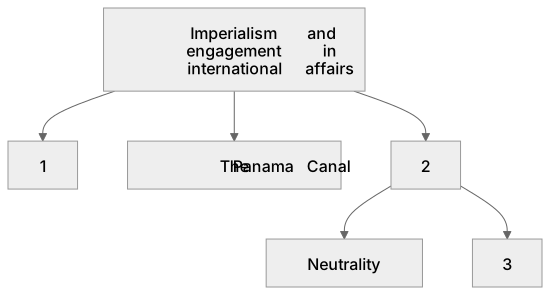
1Box 1
2Box 2
3Box 3
There is more to this lesson
The full lesson goes on to check your understanding and help you earn the marks. Create a free account to carry on, with your progress saved.
A week of Premium from your first lesson · Then the free plan continues · No card, no charge
Test your understanding of 1K The making of a Superpower: USA, 1865–1975 – Populism, progressivism and imperialism, 1890–1920: Foreign affairs: imperialism; engagement in international affairs; Spain and the Philippines; the Panama Canal; the First World War, neutrality and entry
Active recall beats re-reading. Take an instant quiz now to test what you’ve learned and lock it into long-term memory.
A week of Premium from your first lesson · Then the free plan continues · No card, no charge