AQA · A-Level · History
Course version: 7042 · Version from Sept 2017
USA, 1865–1975 – The Superpower, 1945–1975 (A-level only): Ideological,…
Full specification wording
1K The making of a Superpower: USA, 1865–1975 – The Superpower, 1945–1975 (A-level only): Ideological, social, regional and ethnic divisions: McCarthyism; civil rights; youth culture; protest and the mass media
Post-war America experienced profound ideological, social, regional, and ethnic divisions.
Checked against the AQA 7042 specification (opens in a new tab) on .
- Point 4 of 6
- 4 key terms
Study notes
From the checked teaching notes for this specification point.
The idea
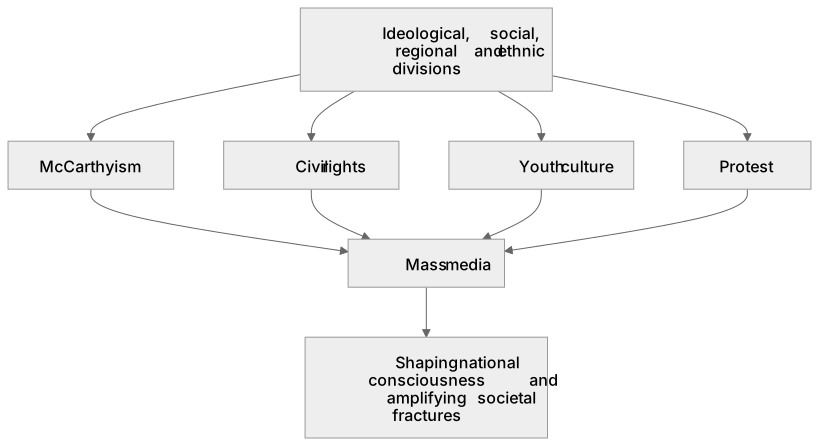
Post-war America experienced profound ideological, social, regional, and ethnic divisions. Ideologically, the Second Red Scare and McCarthyism created a climate of fear, targeting suspected communists. Ethnically and regionally, the civil rights movement exposed deep-seated segregation, particularly in the South, prompting landmark protests like the Montgomery Bus Boycott. Socially, a distinct youth culture emerged, later evolving into widespread student and anti-Vietnam War protests. The mass media played a crucial role across all these divisions, broadcasting both the televised Army-McCarthy hearings and the brutal suppression of civil rights activists, thereby shaping national consciousness and amplifying societal fractures.
What earns the marks
- Analyse how McCarthyism exploited ideological divisions and Cold War anxieties to suppress political dissent and target individuals in government and entertainment.
- Evaluate the role of the civil rights movement in challenging ethnic and regional divisions, focusing on key protests and the resistance they faced in the South.
- Explain the emergence of youth culture and student protest movements, noting their challenge to traditional social norms and government policies like the Vietnam War.
- Assess the impact of the mass media, particularly television, in exposing regional injustices and amplifying both civil rights campaigns and anti-war protests.
Common mistakes and how to put them right
Treating McCarthyism as an isolated event.
Put it right by contextualising it within broader ideological divisions and the pervasive Cold War fear of communism.
Viewing the civil rights movement as only a Southern issue.
Put it right by acknowledging regional divisions nationwide, including de facto segregation and urban riots in the North and West.
Underestimating the role of mass media.
Put it right: Explicitly linking television coverage to the shifting public opinion on civil rights and the Vietnam War.
Exam tips
- Draw explicit connections between the mass media and the success or failure of specific protest movements, such as the televised violence at Selma.
- Contrast the regional differences in ethnic divisions, comparing the de jure segregation of the South with the de facto segregation of Northern cities.
- Use McCarthyism as a prime example of how ideological divisions were weaponised for political gain during the early Cold War period.
Try the lesson
The start of the 1K The making of a Superpower: USA, 1865–1975 – The Superpower, 1945–1975 (A-level only): Ideological, social, regional and ethnic divisions: McCarthyism; civil rights; youth culture; protest and the mass media lesson, made from checked teaching notes for this specification point.
Have a go first
What was the primary focus of Senator Joseph McCarthy's investigations during the early 1950s?
Listen
Post-war America experienced profound ideological, social, regional, and ethnic divisions. Ideologically, the Second Red Scare and McCarthyism created a climate of fear, targeting suspected communists. Ethnically and regionally, the civil rights movement exposed deep-seated segregation, particularly in the South, prompting landmark protests like the Montgomery Bus Boycott. Socially, a distinct youth culture emerged, later evolving into widespread student and anti-Vietnam War protests. The mass media played a crucial role across all these divisions, broadcasting both the televised Army-McCarthy hearings and the brutal suppression of civil rights activists, thereby shaping national consciousness and amplifying societal fractures. A strong answer earns marks for these points. Analyse how McCarthyism exploited ideological divisions and Cold War anxieties to suppress political dissent and target individuals in government and entertainment. Evaluate the role of the civil rights movement in challenging ethnic and regional divisions, focusing on key protests and the resistance they faced in the South. Explain the emergence of youth culture and student protest movements, noting their challenge to traditional social norms and government policies like the Vietnam War. Assess the impact of the mass media, particularly television, in exposing regional injustices and amplifying both civil rights campaigns and anti-war protests. A common slip: Treating McCarthyism as an isolated event. Instead, contextualising it within broader ideological divisions and the pervasive Cold War fear of communism. Exam tip: Draw explicit connections between the mass media and the success or failure of specific protest movements, such as the televised violence at Selma.
See it
Key words
Say what each word means before you turn the card.
McCarthyism
Try answering aloud or in your head before turning the card.
civil rights
Try answering aloud or in your head before turning the card.
youth culture
Try answering aloud or in your head before turning the card.
mass media
Try answering aloud or in your head before turning the card.
See every definition
- McCarthyism
- The Second Red Scare created a climate of fear, targeting suspected communists and exploiting Cold War anxieties to suppress political dissent.
- civil rights
- A movement that exposed deep-seated segregation, particularly in the South, prompting landmark protests like the Montgomery Bus Boycott.
- youth culture
- A distinct social development that emerged and later evolved into widespread student and anti-Vietnam War protests.
- mass media
- A force that broadcast the televised Army-McCarthy hearings and the brutal suppression of civil rights activists, shaping national consciousness and amplifying societal fractures.
Label the diagram
Some boxes have lost their names. Pick the right name for each number.
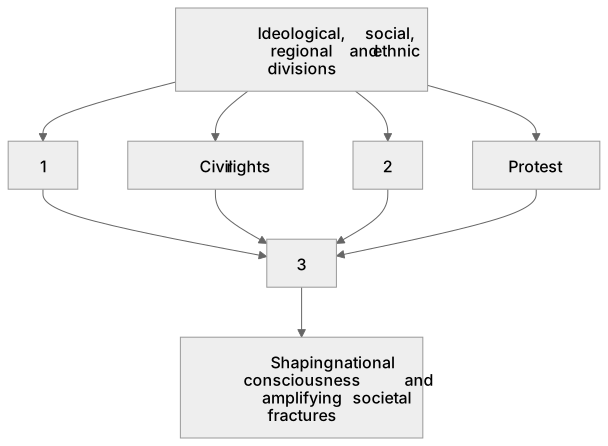
1Box 1
2Box 2
3Box 3
There is more to this lesson
The full lesson goes on to check your understanding and help you earn the marks. Create a free account to carry on, with your progress saved.
A week of Premium from your first lesson · Then the free plan continues · No card, no charge
Test your understanding of 1K The making of a Superpower: USA, 1865–1975 – The Superpower, 1945–1975 (A-level only): Ideological, social, regional and ethnic divisions: McCarthyism; civil rights; youth culture; protest and the mass media
Active recall beats re-reading. Take an instant quiz now to test what you’ve learned and lock it into long-term memory.
A week of Premium from your first lesson · Then the free plan continues · No card, no charge